
CNC Machining
Advantages
CNC machining delivers precision, repeatability, complex geometries and consistent quality across prototypes, low-volume production and serial manufacturing. Manufyn connects global buyers with qualified Indian CNC machining suppliers and manages the process from RFQ to delivery.
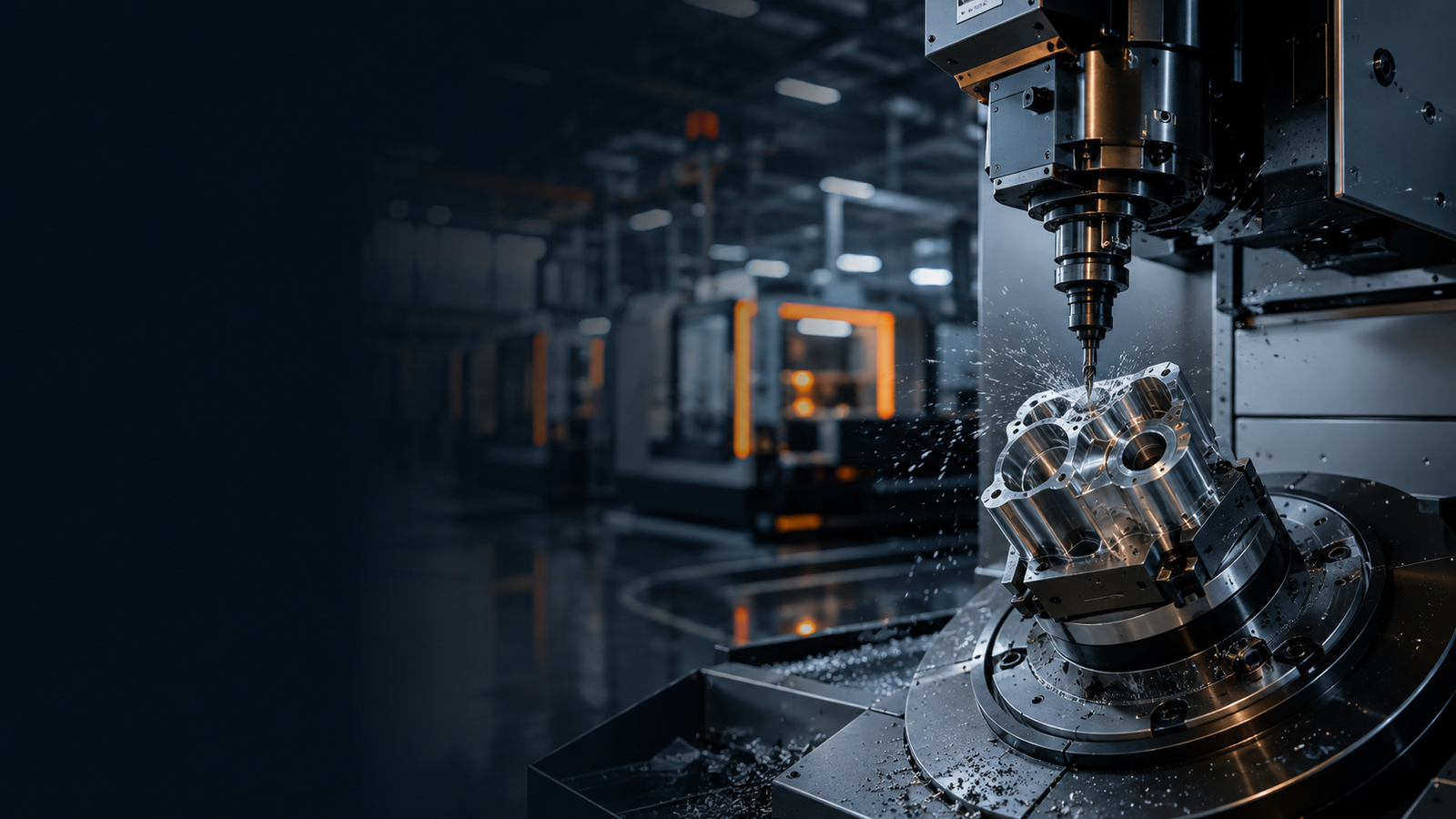
What Makes CNC Machining an Advantage for Modern Manufacturing?
CNC machining uses computer controlled equipment to manufacture components directly from digital CAD designs. Compared with many conventional manufacturing methods, CNC machining provides a high level of dimensional accuracy, repeatability and process control.
These advantages make CNC machining suitable for everything from rapid prototypes and engineering samples to production components used in automotive, robotics, industrial equipment, electronics, medical devices and other demanding applications.
The right machining process also depends on factors such as material, geometry, tolerances, quantity, surface finish and production volume. Explore Manufyn’s CNC machining services in India to understand how these factors influence manufacturing decisions.
8 Key Advantages of CNC Machining
CNC machining combines computer controlled production, precision tooling and repeatable processes to manufacture components with consistent quality. These advantages make CNC technology suitable for both demanding prototypes and production parts.
High Precision
CNC machines can produce complex components with tight dimensional requirements and controlled tolerances when the design, machine and process are properly specified.
Excellent Repeatability
Once a CNC program and process are validated, the same machining sequence can be repeated across multiple parts with consistent results.
Complex Geometries
Multi-axis CNC machining makes it possible to manufacture intricate contours, pockets, holes, slots and other features that can be difficult to produce using conventional methods.
Faster Production
Automated machining reduces manual intervention and can shorten production cycles, particularly when programs, tooling and inspection processes are already established.
Wide Material Selection
CNC machining can be used for aluminum, stainless steel, brass, copper, engineering plastics and many other engineering materials.
Reduced Human Error
Computer controlled tool movement reduces dependence on manual machining operations and helps create a more controlled and repeatable manufacturing process.
Scalable Production
CNC machining can support one-off prototypes, low-volume requirements and larger production batches without fundamentally changing the digital manufacturing workflow.
Multi-Axis Capability
3-axis, 4-axis and 5-axis machining provide different levels of access to a component, helping manufacturers produce complex parts while reducing multiple setups.
Have a CNC Part to Manufacture?
Send us your 2D drawing, 3D CAD model, material specification and quantity. Manufyn can coordinate supplier selection, quotation, quality control and delivery from India.
CNC Machining Advantages at Every Production Stage
One of the major advantages of CNC machining is its flexibility. The same fundamental digital manufacturing approach can support prototypes, low-volume components, production parts and repeat orders.
Rapid Prototypes
CNC machining is well suited to functional prototypes because parts can be produced directly from CAD data without waiting for dedicated production tooling.
Explore Rapid Prototyping →Low-Volume Parts
For small production quantities, CNC machining can avoid the upfront tooling investment associated with some alternative manufacturing processes.
CNC Machining Services →Production Components
Once machining programs, tooling and inspection methods are established, CNC production can provide consistent output for recurring manufacturing requirements.
Understand the CNC Process →Repeat Orders
Digital programs and documented processes make repeat manufacturing easier to manage when the same component needs to be produced again.
See the CNC Workflow →CNC Machining Gives Engineers More Design Freedom
CNC machining can manufacture a wide range of part geometries and engineering materials. However, good manufacturability still depends on the relationship between geometry, tooling access, tolerances, material and machining strategy.
Reviewing the design before quotation can help identify unnecessary complexity, difficult features and potentially avoidable manufacturing costs.
Read the Design for Manufacturability Guide →CNC Machining for a Wide Range of Engineering Materials
CNC machining is compatible with many metals and engineering plastics. The right material and machining strategy depend on the required strength, weight, corrosion resistance, thermal performance, surface finish, dimensional requirements and application.
Aluminum CNC Machining
Aluminum is widely used for lightweight precision components, housings, brackets, fixtures and prototypes because of its machinability and strength-to-weight ratio.
Aluminum CNC Machining →Stainless Steel CNC Machining
Stainless steel is suitable for components requiring corrosion resistance, mechanical strength and durability across industrial and demanding applications.
Stainless Steel CNC Machining →Brass CNC Machining
Brass offers good machinability and is commonly used for precision fittings, connectors, hardware, electrical components and decorative engineering parts.
Brass CNC Machining →Copper CNC Machining
Copper components can be CNC machined for applications where electrical conductivity, thermal conductivity and precision are important.
Copper CNC Machining →Engineering Plastics
CNC machining can also produce precision components from engineering plastics where low weight, electrical insulation, chemical resistance or dimensional stability is required.
Explore CNC Machining →Specialty Alloys
For demanding applications, CNC machining can be considered for harder or more difficult-to-machine alloys when the correct tooling, cutting parameters and machining strategy are selected.
Discuss Your Material →Where Are CNC Machined Parts Used?
CNC machining is used across industries where dimensional accuracy, repeatability and reliable component quality are important.
Manufyn works with manufacturing requirements ranging from prototype components to recurring production parts and supports global buyers through procurement, supplier coordination and quality oversight.
Explore Procurement Support →Related CNC resources: CNC Turning • CNC Turning vs Milling • High-Precision CNC Design Rules • Hole & Thread Design • CNC Toolpath Optimization
CNC Machining vs Conventional Machining
Conventional machining can still be useful for certain operations and production requirements. However, CNC machining offers significant advantages when precision, repeatability, complex geometry and production consistency are important.
| Manufacturing Factor | CNC Machining | Conventional Machining |
|---|---|---|
| Precision | High precision is achievable with appropriate machines, tooling, programming and process control. | Accuracy depends more heavily on operator skill and manual machine control. |
| Repeatability | Digital programs allow validated machining sequences to be repeated consistently. | Repeated parts can require greater operator involvement and adjustment. |
| Complex Geometries | Well suited to complex contours, pockets, holes and multi-axis features. | Complex features may require additional setups or manual operations. |
| Production Speed | Automated movements and optimized programs can reduce machining cycle time and manual intervention. | Production speed can be limited by manual operations and operator input. |
| Labor Dependency | Less direct manual intervention during the machining cycle after setup and programming. | Greater dependence on operator skill throughout the machining process. |
| Design Flexibility | CAD/CAM based workflows make design changes and program revisions easier to manage. | Design changes may require more manual adjustments and setup changes. |
| Production Scalability | Suitable for prototypes, low volumes and repeat production. | Often better suited to simpler jobs, repairs and certain one-off operations. |
| Multi-Axis Machining | 3-axis, 4-axis and 5-axis platforms can provide greater access to complex parts. | Multiple manual setups may be required for comparable complex features. |
So, Is CNC Machining Always Better?
Not necessarily. The best manufacturing process depends on the component, quantity, material, tolerances, geometry, surface finish, lead time and total production economics. CNC machining becomes particularly attractive when precision, repeatability, complex geometry and flexible production are important.
When CNC Machining Makes Sense
CNC machining is often a strong choice for precision components, functional prototypes, complex parts, low-to-medium production volumes and applications requiring consistent dimensional control.
Understand the CNC Process →When Design Decisions Matter
Before machining, engineers should consider tolerances, tool access, hole sizes, threads, material selection, surface finish and machining strategy to avoid unnecessary manufacturing cost.
Explore CNC Design Rules →How CNC Machining Can Help Control Manufacturing Cost
CNC machining is not automatically the lowest-cost manufacturing method for every component. However, its precision, automation, repeatability and flexibility can reduce total manufacturing cost when the process is correctly matched to the part and production volume.
Reduced Manual Labor
Automated machine movements reduce repetitive manual operations during production and can improve overall process efficiency.
Lower Rework Risk
Controlled machining processes and inspection plans can help reduce dimensional variation, scrap and costly rework.
No Dedicated Mold Required
For many machined components, production can begin without the dedicated tooling investment associated with processes such as injection molding.
Efficient Repeat Production
Once a machining process is established, repeat orders can benefit from existing programs, tooling strategies and inspection procedures.
Faster Design Changes
Digital CAD/CAM workflows make design revisions easier to incorporate than manufacturing methods requiring major physical tooling changes.
Suitable for Low Volumes
CNC machining can be economically attractive for prototypes and low-volume parts where high tooling investment would not be justified.
The Cheapest Part Is Not Always the Lowest-Cost Part
A low unit price can become expensive if it comes with poor quality, excessive rejection, long lead times, additional inspection or unreliable delivery.
For international buyers, the better comparison is often the total landed and manufacturing cost rather than the quoted machining price alone.
Explore Procurement Support →Want to Know What Your CNC Parts Will Cost?
Send your drawing or 3D CAD model, material, quantity and required delivery location. Manufyn can coordinate the RFQ with qualified Indian CNC machining suppliers.
CNC Precision Depends on More Than the Machine
Consistent CNC parts require the right machine, tooling, process planning and inspection. A controlled manufacturing process helps reduce variation and improve repeatability.
Engineering Review
Drawings, tolerances, material and critical features are reviewed before production.
CNC Design Rules →Process Control
Appropriate machining, tooling and workholding strategies help achieve consistent results.
CNC Process →Final Inspection
Finished parts can be checked against drawing requirements before dispatch.
Tolerances Explained →CNC Machining Works Across Different Production Volumes
One of the key advantages of CNC machining is its flexibility. The same basic manufacturing approach can support prototypes, development parts and repeat production without requiring dedicated production molds.
Rapid Prototypes
Produce functional metal or plastic prototypes directly from CAD data for design validation, testing and product development.
Rapid Prototyping →Low-Volume Production
CNC machining can be practical for low-volume components where investing in dedicated tooling is not economical.
CNC Machining Services →Repeat Production
Established programs, tooling strategies and inspection methods can support recurring orders with consistent production requirements.
CNC Machining →Have a CNC Part to Manufacture?
Share your drawing, material and quantity for an RFQ.
CNC Machining Advantages for Modern Manufacturing
CNC machining combines precision, repeatability and production flexibility, making it suitable for everything from functional prototypes to recurring industrial parts.
Accurate machining for demanding dimensions, features and tolerances.
Consistent programs and controlled processes support repeat production.
Complex geometries can be produced without dedicated production molds.
Suitable for prototypes, low volumes and recurring production requirements.
Need Precision CNC Machined Parts?
Share your drawing, 3D CAD model, material, quantity and delivery requirements. Manufyn can help coordinate CNC machining procurement from qualified Indian manufacturers.