CNC Machining

– CNC Machining Services

Precision CNC Machining
from India — Built to Spec

3-axis, 4-axis & 5-axis CNC milling, turning, and grinding from ISO-certified facilities in India. Tolerances to ±0.005mm. Aluminium, titanium, Inconel, PEEK. 40–60% below US/UK pricing.

Get Instant Quote View Capabilities

±0.005mm tolerance 5-axis capability5–10 day prototypes ISO 9001 certified5–10 day prototypesAS9100D aerospaceIATF 16949 automotive

Get Instant Quote


    What Is CNC Machining?

    CNC (Computer Numerical Control) machining is a precision subtractive manufacturing process. A computer program — derived from your CAD file — controls cutting tools that remove material from a solid billet to create your part. The result is a dimensionally accurate component that can be made from virtually any machinable material.

    Unlike casting or injection molding, CNC machining requires no tooling or moulds — making it the preferred choice for prototypes, low-to-medium volumes, and parts requiring tight tolerances or complex geometries that other processes cannot achieve.

    At Manufyn, we manage the complete CNC machining workflow from your DXF or STEP file through CAM programming, machining, inspection, finishing, and global delivery — under one contract, with one point of contact.

    End-to-End CNC Machining Services

    From file review to finished, inspected parts shipped to your door — one contract, one team.

    // 01

    DFM & Manufacturability Review

    Before cutting begins, our engineers analyse your CAD file for wall thickness, tool access, feature feasibility, and cost reduction opportunities. We flag potential issues and suggest geometry modifications that reduce machining time by 20–40% without compromising function.

    // 02

    CAM Programming & Simulation

    Toolpaths are programmed and verified in CAM software (Mastercam, Fusion 360) with full stock simulation before any material is touched. Collision detection, tool deflection analysis, and cutting strategy optimisation are standard — not optional.

    // 03

    Prototype & First-Article Production

    Prototype parts delivered in 5–10 business days. Each first-article is inspected against your drawing with a full CMM report before approval for production. No assumptions — every critical dimension is verified and reported.

    // 04

    High-Volume Production Machining

    Dedicated production cells with multi-pallet fixtures, robotic loading, and SPC-monitored processes for 500–50,000+ parts/year. Cycle time analysis and fixture investment are included in the production quotation.

    // 05

    Surface Finishing & Post-Processing

    Full post-processing in-network: anodizing (Type II and III), electroless nickel, zinc and chrome plating, powder coat, bead blast, polish, passivation, black oxide, PVD, heat treatment, and assembly. Receive finished parts — not raw machined blanks.

    // 06

    Quality Documentation & Certification

    Material certifications (mill certs with heat traceability), CMM dimensional reports, CoC, and PPAP support (levels 1–5 for automotive). AS9100D documentation for aerospace. Pre-dispatch inspection report on every order before it leaves the facility.

    3-Axis, 4-Axis & 5-Axis — and Beyond

    Select the process that matches your part geometry and complexity. We advise on the optimal choice for your application.

    3-Axis CNC Milling

    Best for prismatic parts and flat features

    The cutting tool moves along X, Y, and Z axes. Suitable for the majority of machined parts — flat surfaces, pockets, holes, slots, and external profiles. Highest throughput and lowest cost per part within its geometry range.

    • Brackets, plates, housings, and enclosures
    • Fixtures and jigs for production tooling
    • Electronic component heatsinks and chassis
    • High-volume production runs where part geometry allows
    ±0.025mm
    Standard tolerance
    Ra 1.6
    Typical surface finish
    3 setups
    Max per part typical
    Low
    Relative cost
    4-Axis CNC Milling

    Cylindrical and rotational features, fewer setups

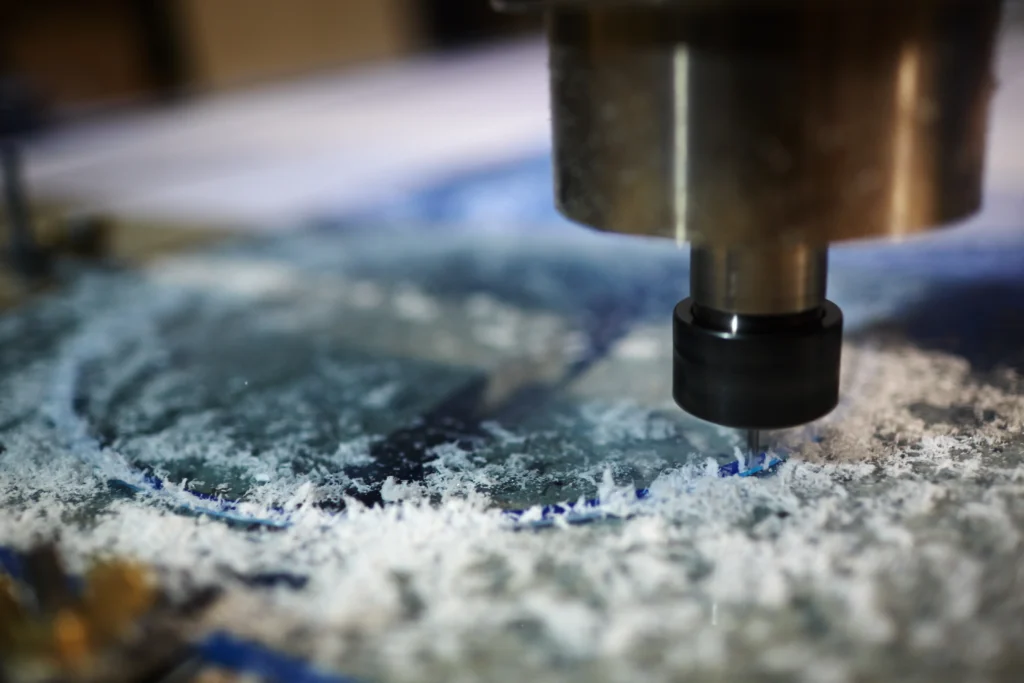
    Adds rotation around the A-axis to standard 3-axis movement. Parts can be indexed during machining, enabling features on multiple faces or around a diameter without re-fixturing — reducing setup errors and improving repeatability.

    • Camshafts, eccentric shafts, and cylindrical housings
    • Parts with features on multiple faces (4-sided machining)
    • Aerospace structural ribs and frames
    • Medical device bodies requiring multi-face access
    ±0.015mm
    Standard tolerance
    Ra 1.6
    Typical surface finish
    1 – 2 setups
    Typical per part
    Mid
    Relative cost

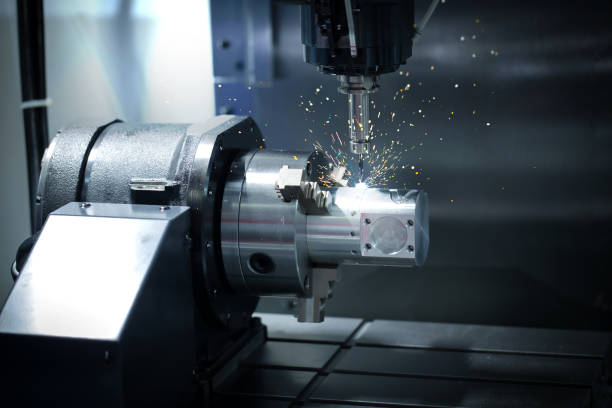
    5-Axis CNC Milling

    Complex surfaces, undercuts, and compound angles

    Simultaneous movement across all 5 axes (X, Y, Z + two rotational) enables machining of freeform surfaces, deep undercuts, compound angles, and intricate contoured geometry in a single setup. Essential for aerospace, medical, and high-performance automotive components.

    • Turbine blades, impellers, and aerospace structural parts
    • Medical implants, surgical instruments, and bone plates
    • Automotive engine heads, intake manifolds, and die inserts
    • Complex mould tool cavities and injection mould inserts
    ±0.005mm
    Best tolerance
    Ra 0.4
    With finishing pass
    1 setups
    Typical per part
    Premium
    Relative cost

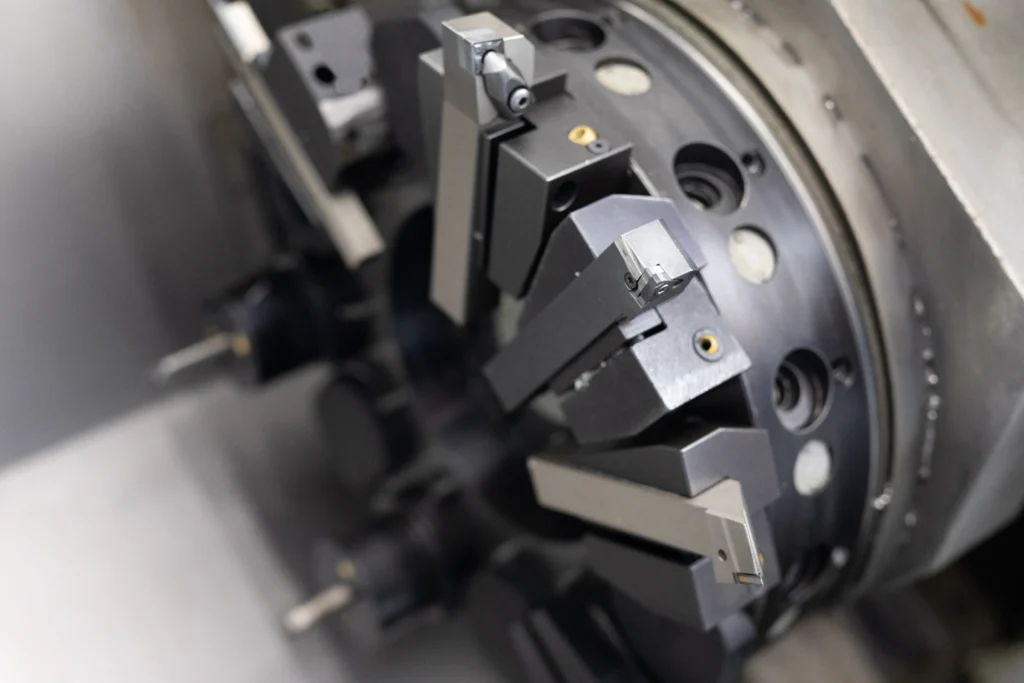
    CNC Turning & Turn-Mill

    Cylindrical and rotational parts at speed

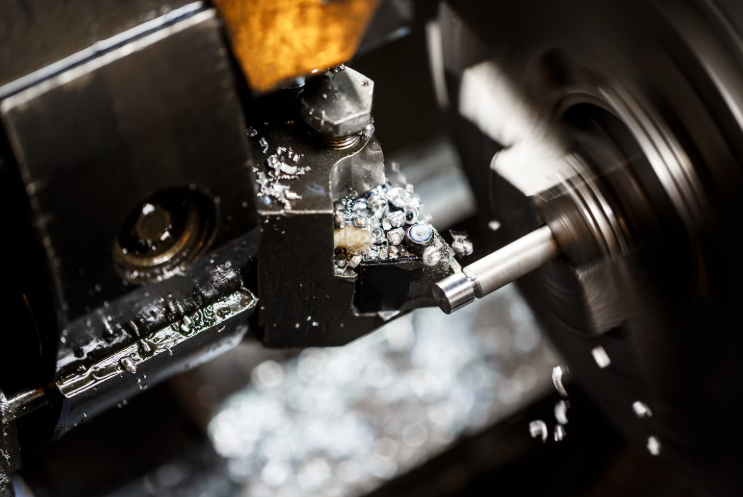
    The workpiece rotates while a fixed cutting tool removes material. CNC lathes produce shafts, pins, bushings, fittings, and other rotational components with exceptional concentricity. Turn-mill centres combine turning and milling in one machine for complex prismatic-cylindrical parts.

    • Shafts, spindles, pins, and axles
    • Threaded fasteners and precision fittings
    • Hydraulic and pneumatic valve bodies
    • Medical turned parts — bone screws, cannulas, implant stems
    ±0.010mm
    Diameter tolerance
    Ra 0.8
    Turned finish
    Ø2–500mm
    Diameter range
    Low-Mid
    Relative cost

    CNC Grinding & EDM

    Mirror-finish surfaces and hard-material precision

    Surface and cylindrical grinding achieves mirror-like finishes (Ra 0.1 or better) and sub-micron tolerances on hardened components — essential for bearing journals, gauge surfaces, and sealing faces. EDM (Electrical Discharge Machining) machines complex features in hardened tool steel, carbide, and conductive materials that cannot be cut conventionally.

    • Hardened tool steel components and die inserts
    • Bearing races, sealing surfaces, and precision slides
    • Wire EDM for complex contour cutting of hard materials
    • Sinker EDM for deep cavities and sharp internal corners
    ±0.002mm
    Grinding tolerance
    Ra 0.1
    Mirror finish
    65 HRC
    Max hardness (EDM)
    Specialist
    Relative cost
    ±0.005mm Best Tolerance (5-Axis)
    Ra 0.1 Mirror Finish (Grinding)
    5-10 days Prototype Lead Time
    1-50,000+ Quantity Range
    2-2000mm Part Size Range
    25+ Materials Machined

    CNC Machining Materials We Work With

    From soft aluminium to hardened tool steel, titanium alloys, and engineering plastics — we machine the full spectrum.

    Material Key Properties Typical Use
    Aluminium 6061-T6Lightweight, corrosion-resistantAerospace, general machining
    Aluminium 7075-T6High strength-to-weightAerospace structural parts
    Stainless 316LCorrosion-resistant, weldableMarine, medical, food-grade
    Stainless 17-4PHHigh strength, hardenableAerospace fasteners, shafts
    Titanium Grade 5High strength, biocompatibleAerospace, orthopaedic implants
    Inconel 718High temp, oxidation-resistantTurbine blades, jet engines
    Tool Steel (H13, D2)High hardness post heat treatDie inserts, mould tooling
    Brass (C360)Free-machining, conductiveFittings, electrical terminals
    Material Key Properties Typical Use
    PEEK240°C rating, inert, strongAerospace, medical implants
    Delrin (POM)Low friction, dimensionally stableGears, bushings, precision parts
    Nylon (PA6/PA66)Tough, wear-resistantStructural components, housings
    PTFE (Teflon)Chemical inert, low frictionSeals, lab equipment
    UHMW-PEAbrasion-resistant, FDA-gradeFood machinery, wear strips
    Polycarbonate (PC)Transparent, impact-resistantOptical housings, guards
    CFRP (Carbon Fibre)Ultra-light, high stiffnessAerospace, motorsport, UAV
    G10 / FR4Electrically insulatingPCB fixtures, electrical parts

    Surface Finishing & Post-Processing

    Receive fully finished parts — not raw machined blanks that need separate processing.

    Anodizing (Type II & III)

    Corrosion protection and colour for aluminium. Type III (hard anodize) for wear-resistant surfaces up to 70 HRC equivalent surface hardness.

    Electroless Nickel Plating

    Uniform coating of complex geometries. Excellent corrosion and wear resistance. Common on hydraulic components and precision instruments.

    Zinc & Chrome Plating

    Corrosion protection and cosmetic finishing for steel components. Trivalent chrome available for RoHS compliance.

    Powder Coating

    Durable, colour-consistent coating for aluminium and steel. RAL colour matching. Commonly used on structural and enclosure components.

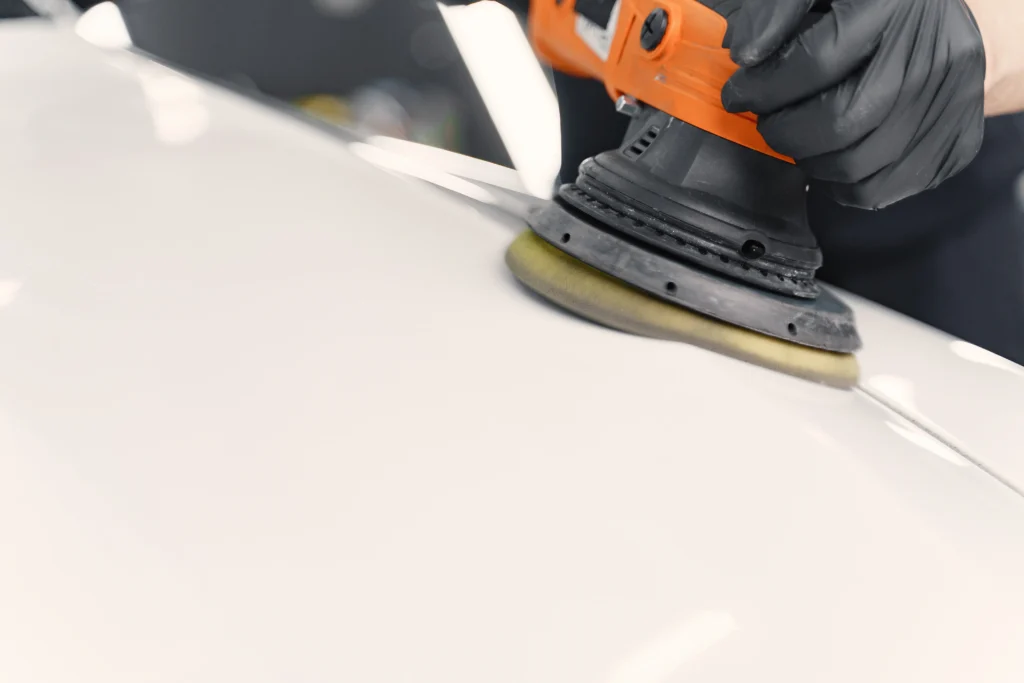
    Bead Blasting & Polishing

    Bead blast for uniform matte texture. Mechanical polishing for Ra 0.4–0.1 mirror finish. Electropolishing for stainless steel medical components.

    Heat Treatment

    Annealing, normalising, hardening (up to 65 HRC), case hardening, stress relief, and solution heat treatment for aerospace alloys.

    Passivation

    Chemical passivation per ASTM A967 for stainless steel medical and food-contact components. Removes free iron contamination from the surface.

    Black Oxide & PVD

    Black oxide for mild steel (low-cost, dimensional neutral). PVD coatings (TiN, TiAlN, DLC) for cutting tools and wear-critical surfaces.

    How We Deliver Your CNC Parts

    Six steps. Full transparency at every stage. No surprises.

    01
    RFQ & DFM Review

    Upload your file. We assess geometry, tolerances, and suggest optimisations.

    02
    Quote & Approval

    Detailed quote with material, process, finish, and lead time. 24-hour turnaround.

    03
    CAM Programming

    Toolpaths programmed and simulated. Fixtures designed for production runs.

    04
    Machining

    CNC machining under process control. In-process inspection at critical stages.

    05
    Finishing & QC

    Post-processing applied. Full CMM inspection and dimensional report generated.

    06
    Pack & Ship

    Export-packed with full documentation. International delivery to your facility.

    CNC Machining Across 25+ Industries

    Every industry has its own certification, tolerance, and documentation requirements. We know them.

    Why Outsource CNC Machining to India

    40–60% Cost Savings. Zero Quality Compromise.

    • Machining hour rates 60–70% lower

      Skilled CNC operators and modern 5-axis machines at significantly lower hourly rates than the US, UK, or Germany — without the quality differential that once justified the price gap.

    • ISO 9001, AS9100D & IATF 16949 certified

      All Manufyn partner facilities carry internationally recognised quality certifications — the same ones demanded by Boeing, Airbus, BMW, and major OEMs globally.

    • One partner — full supply chain ownership

      Manufyn manages vendor selection, CAM review, production scheduling, quality inspection, and export logistics. You get finished parts — not the complexity of managing a foreign supply chain.

    • Fast lead times with air freight options

      5–10 day prototype delivery. Production runs in 3–6 weeks. Air freight to US/UK in 5–7 days; sea freight in 18–22 days. Express delivery available for critical requirements.

    Relative CNC Machining Cost
    // Illustrative – aluminium part, 5-axis, 50 units
    US United States Baseline 100%
    GB United Kingdom ~88%
    DE Germany ~82%
    CN China ~62%
    IN India via Manufyn ~42%
    * Indicative benchmark. Actual savings vary by complexity, material, volume.

    Ready to Machine Your Parts in India?

    Upload your STEP or DXF file and our engineering team will respond within 24 hours with a detailed, itemised quote.

    +91-84840-32262   |  info@manufyn.com

    Serving clients in the US, UK, UAE, Australia, Canada, Germany & 40+ countries worldwide.

    Get Instant Quote


      Frequently Asked Questions

      Answers to everything engineers and buyers ask before their first CNC machining order.

      CNC (Computer Numerical Control) machining is a subtractive manufacturing process where computer-controlled machines precisely remove material from a solid block (billet) using cutting tools. G-code programs derived from your CAD/CAM file guide the machine’s movements to produce parts with tight tolerances. It works across metals (aluminium, steel, titanium, brass, Inconel), engineering plastics (PEEK, Delrin, Nylon, PTFE), and composites (CFRP, G10).

      Manufyn’s partner facilities achieve standard tolerances of ±0.025mm for general machining and precision tolerances down to ±0.005mm for high-precision 5-axis aerospace and medical components. CNC grinding can achieve ±0.002mm and surface finishes of Ra 0.1 (mirror) or better. All first-article inspections include a full CMM-generated dimensional report.

      3-axis moves the cutting tool along X, Y, and Z axes — ideal for flat, prismatic parts with features on one face. 4-axis adds rotation around one axis (A-axis), enabling cylindrical features and multi-face access without re-fixturing. 5-axis simultaneously moves across all 5 axes, allowing complex curved surfaces, undercuts, and compound angles to be machined in a single setup — critical for aerospace impellers, turbine blades, and complex medical implants. More axes = more geometric complexity, tighter effective tolerances, and fewer setups (which reduces cumulative error).

      We machine a wide range of materials including: Metals — Aluminium (6061, 7075, 2024, 5052), Stainless Steel (303, 304, 316L, 17-4PH, 15-5PH), Carbon and Alloy Steels, Titanium (Grade 2 and Grade 5/Ti-6Al-4V), Brass, Copper, Inconel 625/718, Hastelloy, and Duplex Stainless. Engineering Plastics — PEEK, Delrin (POM), Nylon (PA6/PA66), PTFE, UHMW-PE, Polycarbonate, Acetal. Composites — CFRP (carbon fibre), G10/FR4. Contact us if you have a specialist alloy requirement.

      Standard prototype lead time is 5–10 business days depending on part complexity, material availability, number of setups, and surface finish requirements. Rush orders (3–5 business days) are available on request and subject to capacity. Production runs of 100–10,000+ parts are typically delivered in 3–6 weeks including finishing. Air freight to the US or UK takes 5–7 days from despatch.

      CNC machining through Manufyn’s certified partner network in India typically delivers 40–60% cost savings compared to equivalent machining in the US, UK, or Germany. Lower operator labour rates, competitive machine hour rates, and lower overhead costs drive this advantage — not lower quality. All partner facilities carry ISO 9001, AS9100D, or IATF 16949 certifications and produce to the same dimensional and material specifications expected by global OEMs.

      Standard documentation includes: material certifications (mill certs with heat and lot traceability), first article inspection (FAI) report with full CMM-generated dimensional data, Certificate of Conformance (CoC), surface roughness measurement report, and pre-despatch quality inspection report. For aerospace: AS9100D documentation and traceability records. For automotive: PPAP levels 1–5 including PFMEA, control plan, and Gauge R&R studies. For medical: ISO 13485 records and biocompatibility material declarations.

      We offer a comprehensive range: Anodizing (Type II and Type III hard anodize in black, natural, and custom colours), electroless nickel plating, zinc and chrome plating, powder coating, bead blasting, mechanical and electropolishing, passivation (ASTM A967) for stainless steel, black oxide, PVD coatings (TiN, DLC), heat treatment (annealing, hardening, stress relief), and press-fit insert installation. Thread milling, knurling, and sub-assembly are also available.

      Yes. We support single-piece prototypes through to production runs of 50,000+ parts per year. For prototypes, we prioritise speed and DFM feedback. For production, we invest in dedicated fixtures, multi-pallet setups, and robotic loading to achieve competitive cycle times and consistent quality at volume. The same quality documentation framework applies across all volumes.

      Choose CNC machining when you need: production-grade mechanical properties (machined parts have full, isotropic material strength — 3D printed parts are anisotropic), tight tolerances (±0.025mm is routine for CNC; ±0.1–0.3mm is typical for SLS/SLA), specific materials (especially metals, high-performance plastics), or regulated industry compliance (aerospace, medical, automotive). Choose 3D printing for: highly complex internal geometries (lattices, internal channels), very low quantities (1–5 parts), early-stage concept models, or parts where mechanical property requirements are relaxed. Many clients use 3D printing for concept validation and CNC machining for functional prototypes and production — Manufyn supports both.

      Frequently Asked Questions

      Answers to everything engineers and buyers ask before their first CNC machining order.

      CNC (Computer Numerical Control) machining is a subtractive manufacturing process where computer-controlled machines precisely remove material from a solid block (billet) using cutting tools. G-code programs derived from your CAD/CAM file guide the machine’s movements to produce parts with tight tolerances. It works across metals (aluminium, steel, titanium, brass, Inconel), engineering plastics (PEEK, Delrin, Nylon, PTFE), and composites (CFRP, G10).

      Manufyn’s partner facilities achieve standard tolerances of ±0.025mm for general machining and precision tolerances down to ±0.005mm for high-precision 5-axis aerospace and medical components. CNC grinding can achieve ±0.002mm and surface finishes of Ra 0.1 (mirror) or better. All first-article inspections include a full CMM-generated dimensional report.

      3-axis moves the cutting tool along X, Y, and Z axes — ideal for flat, prismatic parts with features on one face. 4-axis adds rotation around one axis (A-axis), enabling cylindrical features and multi-face access without re-fixturing. 5-axis simultaneously moves across all 5 axes, allowing complex curved surfaces, undercuts, and compound angles to be machined in a single setup — critical for aerospace impellers, turbine blades, and complex medical implants. More axes = more geometric complexity, tighter effective tolerances, and fewer setups (which reduces cumulative error).

      We machine a wide range of materials including: Metals — Aluminium (6061, 7075, 2024, 5052), Stainless Steel (303, 304, 316L, 17-4PH, 15-5PH), Carbon and Alloy Steels, Titanium (Grade 2 and Grade 5/Ti-6Al-4V), Brass, Copper, Inconel 625/718, Hastelloy, and Duplex Stainless. Engineering Plastics — PEEK, Delrin (POM), Nylon (PA6/PA66), PTFE, UHMW-PE, Polycarbonate, Acetal. Composites — CFRP (carbon fibre), G10/FR4. Contact us if you have a specialist alloy requirement.

      Standard prototype lead time is 5–10 business days depending on part complexity, material availability, number of setups, and surface finish requirements. Rush orders (3–5 business days) are available on request and subject to capacity. Production runs of 100–10,000+ parts are typically delivered in 3–6 weeks including finishing. Air freight to the US or UK takes 5–7 days from despatch.

      CNC machining through Manufyn’s certified partner network in India typically delivers 40–60% cost savings compared to equivalent machining in the US, UK, or Germany. Lower operator labour rates, competitive machine hour rates, and lower overhead costs drive this advantage — not lower quality. All partner facilities carry ISO 9001, AS9100D, or IATF 16949 certifications and produce to the same dimensional and material specifications expected by global OEMs.

      Standard documentation includes: material certifications (mill certs with heat and lot traceability), first article inspection (FAI) report with full CMM-generated dimensional data, Certificate of Conformance (CoC), surface roughness measurement report, and pre-despatch quality inspection report. For aerospace: AS9100D documentation and traceability records. For automotive: PPAP levels 1–5 including PFMEA, control plan, and Gauge R&R studies. For medical: ISO 13485 records and biocompatibility material declarations.

      We offer a comprehensive range: Anodizing (Type II and Type III hard anodize in black, natural, and custom colours), electroless nickel plating, zinc and chrome plating, powder coating, bead blasting, mechanical and electropolishing, passivation (ASTM A967) for stainless steel, black oxide, PVD coatings (TiN, DLC), heat treatment (annealing, hardening, stress relief), and press-fit insert installation. Thread milling, knurling, and sub-assembly are also available.

      Yes. We support single-piece prototypes through to production runs of 50,000+ parts per year. For prototypes, we prioritise speed and DFM feedback. For production, we invest in dedicated fixtures, multi-pallet setups, and robotic loading to achieve competitive cycle times and consistent quality at volume. The same quality documentation framework applies across all volumes.

      Choose CNC machining when you need: production-grade mechanical properties (machined parts have full, isotropic material strength — 3D printed parts are anisotropic), tight tolerances (±0.025mm is routine for CNC; ±0.1–0.3mm is typical for SLS/SLA), specific materials (especially metals, high-performance plastics), or regulated industry compliance (aerospace, medical, automotive). Choose 3D printing for: highly complex internal geometries (lattices, internal channels), very low quantities (1–5 parts), early-stage concept models, or parts where mechanical property requirements are relaxed. Many clients use 3D printing for concept validation and CNC machining for functional prototypes and production — Manufyn supports both.

      Related Manufacturing Services