Technical Brief: Precision Machining 7075-T6 Aluminum Spacer for Aerospace Applications
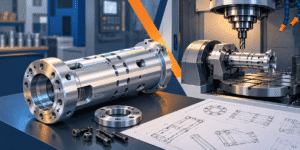
Manufyn delivered a zero-defect aerospace spacer in 7075-T6 aluminum, achieving 0.05 mm positional tolerance across a 156 mm component through stress-controlled machining.
Project Context
An aerospace and defense manufacturer required a high-performance spacer component for critical flight hardware. The part demanded tight dimensional and geometric tolerances with zero margin for deviation — any instability at the bore or mounting interfaces would directly impact assembly reliability and in-service performance.
Engineering Challenges
7075-T6 aluminum’s high strength makes it prone to residual stress release during aggressive material removal. Maintaining coaxiality between the 38 mm internal bore and outer diameters across a lathe-to-VMC transition was a primary concern. Tool deflection risked bore tapering over the 156 mm depth, while reduced wall sections introduced chatter and dimensional instability during finishing.
Process and Solution
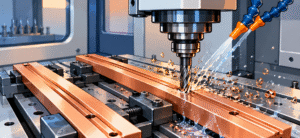
Manufyn applied an Integrated Deformation Control strategy built around a Rough-then-Relax approach. Initial aggressive cuts with carbide tooling released residual stresses inherent in the T6 temper condition. The component was then allowed to thermally and mechanically stabilize before any finish machining began. High-speed finishing passes with optimized feed and spindle parameters produced accurate cylindricity across the full bore depth. M4 and M6 hole patterns were interpolated on the VMC to maintain positional accuracy, while continuous coolant application controlled cutting temperatures and prevented material adhesion throughout.
How Manufyn achieved stress-controlled dimensional accuracy for a critical high-performance component
Client Overview
This project involved precision machining 7075 T6 aluminum for a leading aerospace and defense innovator developing high-performance flight hardware. The client operates in an environment where every component must meet strict reliability, safety, and performance standards.
For this application, 7075-T6 aluminum was selected due to its high fatigue strength and superior strength-to-weight ratio. The objective of this precision machining 7075 T6 aluminum project was to deliver a zero-defect spacer component with tight dimensional and geometric tolerances.
Project Challenge
The key challenge in precision machining 7075 T6 aluminum was managing aggressive material removal while maintaining dimensional stability and structural integrity, especially around the critical internal bore.
Major challenges included:
- Maintaining coaxiality between the 38 mm internal bore and outer diameters during transition from lathe to VMC
- Preventing deep-bore tapering across the 156 mm length due to tool deflection
- Controlling thin-wall deflection, where reduced wall thickness caused vibration (chatter) and dimensional instability
Since this component functions as a high-stress interface, even minor deviations during precision machining 7075 T6 aluminum could impact performance and assembly reliability.
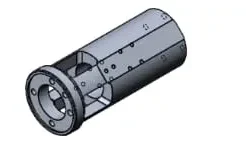
Engineering Approach for Precision Machining 7075 T6 Aluminum
Manufyn implemented an Integrated Deformation Control strategy specifically designed for precision machining 7075 T6 aluminum components.
- A “Rough-then-Relax” strategy was used, where aggressive initial machining relieved internal stresses
- The component was allowed to stabilize to reach thermal and mechanical equilibrium before finishing
- High-speed finishing passes were executed using optimized spindle speeds and feed rates
- Critical features, including the Ø38 mm bore and M4/M6 hole patterns, were maintained within 0.05 mm positional tolerance
This ensured dimensional consistency and geometric stability across the full component length.
Manufacturing Process
Stock Preparation and Rough Machining
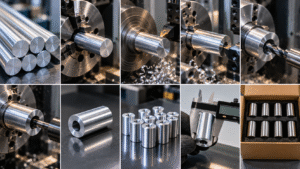
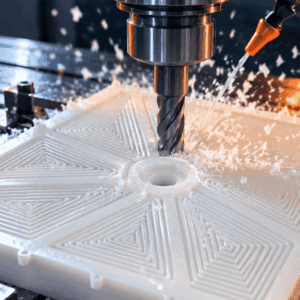
Initial material removal was performed using carbide tooling on lathe and VMC setups to release residual stresses inherent in 7075-T6 aluminum.
Stress Relief and Stabilization
Following roughing, the component underwent natural stabilization to prevent dimensional drift during finishing stages of precision machining 7075 T6 aluminum.
Bore Finishing
The 38 mm internal bore was finished using high-speed machining techniques to achieve:
- Accurate cylindricity
- Uniform diameter across depth
- High surface integrity
Feature Machining
M4 and M6 hole patterns were machined using interpolated drilling cycles on the VMC, ensuring positional accuracy and minimal thermal distortion.
Thermal Management
Continuous coolant application ensured:
- Reduced material adhesion
- Controlled cutting temperatures
- Maintenance of tight tolerances during precision machining 7075 T6 aluminum
Results Achieved
The precision machining 7075 T6 aluminum strategy delivered strong technical and production outcomes:
- Achieved Ø38 mm bore and hole patterns within 0.05 mm tolerance
- Maintained perfect geometric concentricity across the 156 mm component
- Delivered superior surface finish and structural integrity
- Reduced scrap rates and eliminated rework
- Completed production within the planned timeline
Value Delivered by Manufyn
- Expertise in precision machining 7075 T6 aluminum for aerospace applications
- Control over stress-induced deformation and dimensional variation
- High repeatability for critical tolerance components
- Cost efficiency through reduced scrap and rework
- Reliable delivery aligned with stringent aerospace standards
Conclusion
This case study highlights Manufyn’s capability in precision machining 7075 T6 aluminum for high-performance aerospace components. By combining stress-controlled machining strategies with optimized process sequencing, Manufyn ensured full dimensional stability and compliance with strict engineering tolerances.
The process is now a validated and repeatable standard, enabling consistent quality and long-term performance for critical aerospace applications.
Working on precision machining 7075 T6 aluminum or other high-performance materials?
Share your drawings to evaluate the most efficient machining strategy.