
Aluminum for Prototypes: Grades, Machining and Applications
Aluminum is widely used for functional prototypes because it combines low weight, useful mechanical properties and machinability. Learn how to select the right alloy, manufacturing process and finish for your next prototype.
A practical engineering guide to aluminum grades, CNC machining, tolerances, design for manufacturability and prototype cost.
Explore Aluminum Grades More Prototyping Guides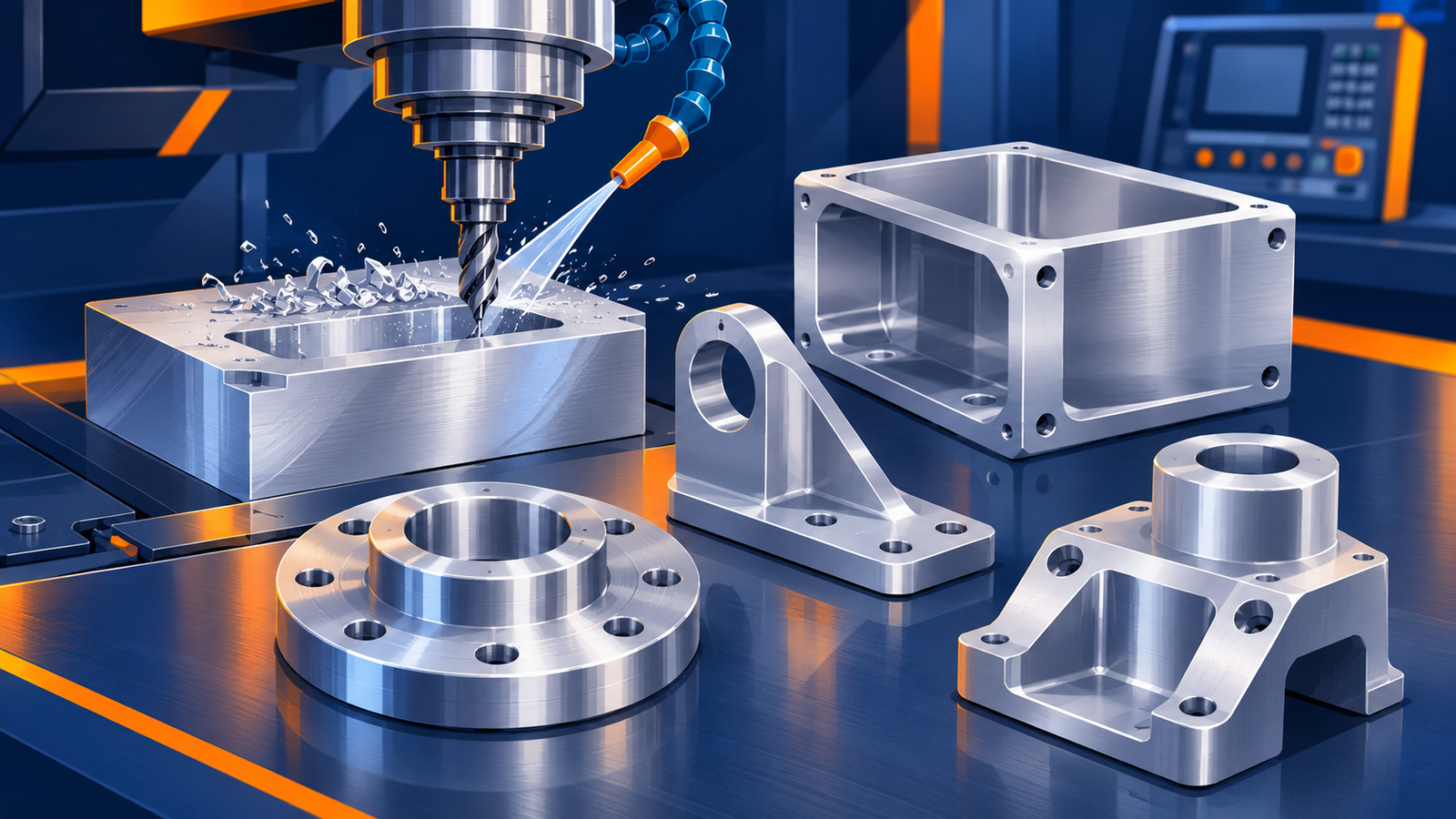
What Is Aluminum Prototyping?
Aluminum prototyping is the process of manufacturing sample parts from aluminum alloys to evaluate a product’s design, fit, function and performance before moving into production.
Engineers use aluminum prototypes for mechanical assemblies, robotics, industrial equipment, electronic enclosures, thermal management systems and product development. Depending on the part, manufacturing can involve CNC milling, CNC turning, sheet metal fabrication or metal additive manufacturing.
CNC machining is particularly useful when a prototype requires accurately located holes, machined faces, pockets, threads or functional mating surfaces. The part is manufactured from suitable aluminum stock, allowing the engineer to evaluate a metal component without investing in dedicated production tooling.
However, aluminum is not automatically the best material for every prototype. Selection depends on the intended function, operating environment, strength requirements, quantity, budget and whether the prototype must represent the final production material.
Why Use Aluminum for Prototype Parts?
Low weight
Aluminum is useful for weight-sensitive brackets, housings, mounts and moving components. Actual component mass depends on geometry and material density.
Machinability
Many aluminum alloys can be milled, turned and drilled efficiently, supporting detailed features and relatively short prototype manufacturing routes.
Thermal conductivity
Aluminum is often used for heat sinks, enclosures and thermal management parts where heat transfer is an important design consideration.
Mechanical performance
The right alloy and temper can provide useful strength for functional testing. Different grades have significantly different mechanical properties.
Surface finishing
Depending on the alloy, aluminum parts can receive treatments such as anodizing, bead blasting and other specified finishes.
No dedicated mold required
CNC-machined aluminum prototypes generally do not require injection mold tooling, which can be advantageous for small quantities of metal components.
Common Aluminum Grades for Prototypes
Choosing an aluminum grade requires balancing strength, corrosion resistance, machinability, formability and availability. The grade should be specified on the engineering drawing or RFQ rather than identified simply as aluminum.
| Grade | Key characteristics | Typical prototype applications | Important consideration |
|---|---|---|---|
| 6061-T6 | Good machinability, useful strength and corrosion resistance | Brackets, fixtures, housings, robotic mounts and general CNC parts | A versatile starting point for many machined prototypes |
| 6082 | Good strength and corrosion resistance | Structural components, industrial mounts and machine parts | Confirm temper, stock availability and drawing requirements |
| 7075-T6 | High strength and good strength-to-weight performance | High-load and weight-sensitive mechanical components | Consider corrosion protection and material cost |
| 2024 | High strength and useful fatigue performance in suitable tempers | Specialized high-performance and aerospace-related parts | Corrosion protection and application-specific requirements |
| 5052 | Good formability and corrosion resistance | Sheet metal enclosures, panels and covers | Often preferred for formed sheet applications |
| 5083 | Good corrosion resistance and weldability in suitable applications | Marine and fabricated components | Confirm fabrication route and material condition |
How to Choose the Right Aluminum Alloy
- Identify the loads, stiffness and weight requirements.
- Determine whether corrosion resistance or thermal performance is critical.
- Confirm the manufacturing process and available stock form.
- Review surface treatment, inspection and traceability requirements.
- Check material availability and total manufacturing cost.
Which Process Is Best for Aluminum Prototypes?
The correct manufacturing route depends on part geometry, required material properties, dimensional accuracy and order quantity. CNC machining is common, but it is not the only option.
CNC milling
Used for brackets, housings, pockets, mounting faces, slots and complex prismatic components. Tool access and workholding affect both feasibility and machining time.
Read the CNC prototype setup guideCNC turning
Suitable for shafts, spacers, bushings, cylindrical housings and rotational parts. Additional milling may be necessary for flats, slots or cross holes.
Understand prototype machining timeSheet metal fabrication
Cutting, bending and joining sheet aluminum can be more economical than machining an enclosure from solid stock.
Metal 3D printing
Additive manufacturing can produce selected complex geometries. Material properties, support removal and post-machining must be considered.
Hybrid manufacturing
CNC machining combined with finishing or other secondary processes may be appropriate when a part requires both precise features and a specified surface appearance.
Alternative materials
Plastic prototypes may be more appropriate when electrical insulation, low mass, chemical resistance or production material representation takes priority.
Explore rapid prototyping methodsDesign Considerations for CNC Aluminum Prototypes
A CAD model defines the intended geometry, but the manufacturing process determines how efficiently and accurately that geometry can be produced. A design for manufacturability review helps identify costly features before production begins.
Wall thickness and part rigidity
Thin walls can deflect under cutting forces and vibrate during machining. Where the design allows, improve stiffness, reduce unsupported wall height or discuss suitable workholding and finishing strategies with the manufacturer.
Internal corners and deep pockets
CNC cutting tools are generally cylindrical, so internal corners require a radius. Deep pockets and narrow slots can require longer tools, slower machining or multiple operations.
Datum selection and tolerances
Define functional datums and apply tight tolerances only where needed. Critical dimensions should relate to how the component fits, locates or functions in the final assembly.
Workholding and setup planning
Parts with features on multiple faces may require several setups. Accessible feature placement and practical clamping surfaces can reduce handling and improve repeatability.
Read: CNC Prototype WorkholdingThreads, deburring and finishing
Specify thread standards, thread depth, edge breaks and any critical surface finish. Include coating or anodizing requirements early because finishing can affect dimensions and fit.
Inspecting Aluminum Prototype Parts
Inspection requirements should follow the drawing and intended application. A visual prototype may need basic dimensional checks, while a precision assembly component may require detailed geometric inspection and documented material conformity.
| Inspection item | What to verify | Possible method |
|---|---|---|
| Dimensions | Lengths, diameters, hole sizes and positions | Calipers, micrometers, bore gauges or CMM |
| Geometric tolerances | Position, flatness and perpendicularity where specified | CMM or suitable dedicated measuring equipment |
| Material | Specified alloy and temper | Material certificates and agreed verification methods |
| Surface finish | Specified roughness, coating or cosmetic condition | Roughness tester, coating measurement or visual inspection |
| Part condition | Burrs, scratches, dents and contamination | Visual inspection against agreed criteria |
For automotive, aerospace or other regulated applications, identify the required traceability, documentation and approval process before placing the order. Formal production approvals should be applied where required by the customer or project.
What Affects Aluminum Prototype Cost?
Aluminum prototype pricing depends on the complete manufacturing route rather than material weight alone. Complex geometry, multiple setups and difficult inspection requirements can significantly affect the total quotation.
Material and stock availability
Alloy, temper, stock dimensions, minimum purchase quantities and material waste influence material cost.
Machining complexity
Deep pockets, thin walls, small tools, complex contours and additional setups can increase machining time.
Tolerances and inspection
Tight tolerances, geometric controls and documented inspection may require additional process control.
Finishing and logistics
Anodizing, coating, packaging, export handling and international freight contribute to total delivered cost.
How long does aluminum prototype machining take?
Lead time depends on design complexity, material availability, supplier capacity, setup count, machining, finishing and inspection. International delivery also requires transit and customs planning. Request a part-specific schedule instead of relying on a generic turnaround estimate.
Where Are Aluminum Prototypes Used?
Robotics and automation
Robot mounts, end-effector brackets, actuator housings, fixtures and precision mounting components.
Industrial machinery
Machine brackets, structural supports, mounting plates and mechanical housings.
Electronics
Enclosures, heat sinks, mounting interfaces and thermal management components.
Automotive development
Selected lightweight components, prototype fixtures, brackets and mechanical housings.
Medical equipment
Equipment housings, instrument fixtures and non-implantable development components, subject to application requirements.
Aerospace development
Selected high-strength, lightweight components where material specifications and traceability requirements are established.
Related Manufacturing Resources
Explore these related Manufyn resources to understand the manufacturing decisions that influence prototype quality, machining time and delivery.
Editorial note: Add links here to published aluminum CNC machining case studies and relevant technical manufacturing blogs when their live URLs are available. Prioritize content that explains real design, quality or process decisions rather than adding unrelated links.
Frequently Asked Questions
Which aluminum grade is best for prototypes?
6061-T6 is a common starting point for general-purpose CNC prototypes because of its useful strength, machinability and corrosion resistance. 7075-T6 may suit applications requiring higher strength. The correct choice depends on design loads, environment, availability and specifications.
Is aluminum suitable for functional prototypes?
Yes. Aluminum prototypes can support fit checks, assembly trials and functional testing when the selected alloy, temper and manufacturing process match the intended requirements.
Is CNC machining better than aluminum 3D printing?
Neither is universally better. CNC machining is suitable for many parts made from wrought aluminum stock. Metal additive manufacturing can be useful for selected complex geometries. Compare mechanical requirements, finish, geometry, cost and delivery time before selecting a process.
What files are needed for an aluminum prototype RFQ?
Provide a 3D CAD file and a 2D drawing with dimensions and tolerances. Include the alloy and temper, quantity, finishing, inspection requirements and required delivery date.
Can aluminum prototypes be anodized?
Many aluminum alloys can be anodized, but appearance and treatment response vary by alloy and process. Confirm the finish specification, color, thickness and any dimensional effects with the finishing supplier.
What determines aluminum prototype lead time?
Material availability, part complexity, machine capacity, setup requirements, finishing, inspection and shipping all influence delivery. A supplier should confirm the schedule for the specific drawing and quantity.
Can aluminum prototypes move into low-volume production?
Yes. CNC machining can support both prototypes and low-volume production. Before scaling, review repeatability, material supply, inspection methods, process capability and whether an alternative production process becomes economical.
Make Better Prototype Material Decisions
Select aluminum based on the engineering requirements, not just machinability or price. A clear material specification, manufacturable design and suitable inspection plan help produce prototypes that deliver useful validation results.
Explore More Technical Guides