Manufyn manufactures ABS parts in-house — molding, printing & machining
ABS Material Guide: Properties, Grades, and Manufacturing Uses
ABS material (Acrylonitrile Butadiene Styrene) is a rigid, impact-resistant thermoplastic used for injection molding, 3D printing, CNC machining, and thermoforming. It combines the chemical resistance of acrylonitrile, the toughness of butadiene rubber, and the gloss and easy processing of styrene — making ABS the most widely used engineering plastic for enclosures, housings, and consumer products.
This ABS material guide covers everything an engineer or buyer needs before specifying ABS: exact properties, the grades available, which manufacturing process suits which application, how ABS compares with PLA, PETG, polycarbonate, and nylon, and what ABS parts cost.
Manufyn manufactures ABS parts in-house — plastic injection molding, 3D printing, and CNC machining — with a free DFM review on every quote and dispatch to 30+ countries.
What Is ABS Material Made Of?
ABS is a terpolymer — a plastic built from three monomers, each contributing a distinct property. Typical commercial ABS contains roughly 15–35% acrylonitrile, 5–30% butadiene, and 40–60% styrene.
- Acrylonitrile — chemical resistance, heat stability, and surface hardness.
- Butadiene — a rubbery phase dispersed through the material that absorbs impact; this is why ABS survives drops that crack polystyrene or PLA.
- Styrene — rigidity, glossy surface finish, and easy melt-flow during molding.
Because manufacturers can shift the ratio of these three monomers, ABS is available in dozens of grades tuned for impact, heat, flame retardance, or plating — covered in the grades section below.
What Are the Properties of ABS Material?
ABS material offers a balanced property profile: moderate strength, excellent impact resistance, good dimensional stability, and a processing window that suits nearly every plastic manufacturing method. The table below gives typical values for general-purpose injection molding grade ABS.
| Property | Typical Value | What It Means in Practice |
|---|---|---|
| Density | 1.04–1.06 g/cm³ | Lighter than PC (1.20) and PETG (1.27) — lower part weight and shipping cost |
| Tensile strength | 40–50 MPa | Adequate for housings, brackets, covers; not for structural load |
| Flexural modulus | 2.1–2.4 GPa | Stiff enough to hold shape in thin-wall enclosures |
| Izod impact (notched) | 200–400 J/m | The standout property — several times tougher than PLA or polystyrene |
| Elongation at break | 10–50% | Deforms before it fractures — forgiving in snap-fits |
| Glass transition temp (Tg) | ~105 °C | Parts soften above this — the practical upper service limit |
| Heat deflection temp (HDT, 0.45 MPa) | 90–100 °C | Continuous-use ceiling of roughly 80–90 °C |
| Processing (“melting”) temp | 200–250 °C | ABS is amorphous — no sharp melting point; this is the molding/printing window |
| Mold shrinkage | 0.4–0.7% | Low and predictable — why ABS holds tight tolerances in molding |
| Water absorption (24 h) | 0.2–0.45% | Low — dimensionally stable in humid environments (unlike nylon) |
| Hardness | Rockwell R 102–115 | Scratch-resistant enough for consumer-facing surfaces |
Because ABS is amorphous, it has no true melting point — engineers searching “ABS melting point” are really asking for the 200–250 °C processing window above, and the ~105 °C glass transition temperature that defines its service limit. Both numbers matter when choosing between ABS and higher-heat plastics.
Which ABS Grades Are Available?
Selecting the right ABS grade matters more than selecting ABS itself. The wrong grade fails certification (flame tests, plating adhesion) even when the geometry is perfect. These are the six grades Manufyn most commonly molds and machines:
| Grade | Key Trait | Choose It For |
|---|---|---|
| General purpose (GP-ABS) | Balanced impact / stiffness / cost | Enclosures, covers, consumer products — the default |
| High impact | Higher butadiene content | Power-tool housings, protective gear, parts that get dropped |
| Flame retardant (FR-ABS, UL94 V-0) | Passes vertical burn tests | Electrical enclosures, appliance internals, EV components |
| High heat | HDT raised to ~110 °C | Automotive interiors, parts near motors or lighting |
| Plating grade | Etchable butadiene surface | Chrome-look automotive trim, plumbing fixtures, badges |
| PC-ABS blend | PC toughness + ABS processability | Laptop and phone housings, automotive structural trim — when GP-ABS is not quite tough or heat-resistant enough |
Not sure which grade your drawing needs? Send it for a free review — Manufyn’s engineers confirm the grade against your certification requirements before quoting. See how we validated grade selection for a medical startup’s injection molded assembly in record time.
Unsure which ABS grade your part needs?
Send your CAD — Manufyn confirms grade, flame rating, and compliance before quoting.
How Is ABS Material Manufactured into Parts?
ABS is one of the few plastics that performs well across all four mainstream manufacturing processes. The right choice depends on quantity, geometry, and surface requirements.
ABS Injection Molding — for Production Volumes
Injection molding is how the overwhelming majority of ABS parts are made. ABS flows easily at 200–250 °C, fills thin walls, reproduces textured mold surfaces, and shrinks a predictable 0.4–0.7%. It is the process for quantities from a few hundred to millions of parts. Manufyn’s in-house plastic injection molding covers tooling, molding, and finishing under one roof — see the injection molding design guide for process fundamentals, or how a 3-plate injection mold prototype cut a client’s development cycle.
ABS 3D Printing (FDM) — for Prototypes
ABS was one of the first FDM filaments and remains the standard for functional prototypes that must survive handling, screwing, and drop testing — things PLA prototypes cannot. It prints at 230–250 °C on a heated bed (90–110 °C) and can be vapor-smoothed with acetone for a near-molded finish. For printer settings and technology selection, see Manufyn’s 3D printing guides. Ready to prototype in ABS? Manufyn’s rapid prototyping service delivers printed, machined, or molded ABS prototypes in 5–10 days — quote in 24 hours, no minimum order.
CNC Machining ABS — for Precision One-Offs
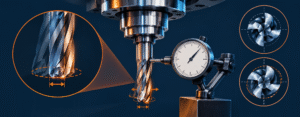
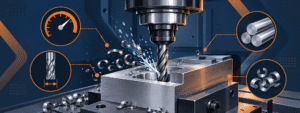
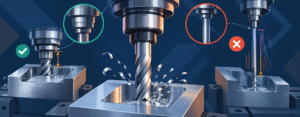
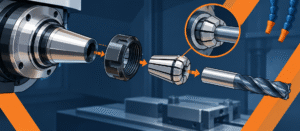
ABS machines cleanly with sharp tooling and produces excellent surface finishes, making CNC the best route for one-off fixtures, jigs, and prototypes that need tolerances tighter than ±0.1 mm — beyond what FDM printing holds. Feeds, speeds, and workholding for ABS are covered in the CNC machining plastics guide.
Thermoforming ABS — for Large Panels
ABS sheet thermoforms easily, which is why vehicle interior panels, luggage shells, and equipment covers are so often ABS. When a part is large, shallow, and needed in low-to-mid volumes, thermoforming beats injection molding on tooling cost by an order of magnitude.
Ready to prototype or produce in ABS?
Printed, machined, or molded ABS parts in 5–10 days. Quote in 24 hours. No minimum order.
ABS vs PLA, PETG, Polycarbonate, and Nylon — Which Should You Choose?
ABS sits in the middle of the commodity-to-engineering plastic spectrum: tougher and more heat-resistant than PLA and PETG, cheaper and easier to process than polycarbonate and nylon. The table settles the most common material shortlists.
| Criterion | ABS | PLA | PETG | PC | Nylon (PA6/66) |
|---|---|---|---|---|---|
| Impact resistance | Very good | Poor — brittle | Good | Excellent | Excellent |
| Max service temp | ~85 °C | ~55 °C | ~70 °C | ~115 °C | ~100 °C+ |
| UV / outdoor | Poor (yellows) | Poor | Good | Fair | Fair |
| Moisture stability | Very good | Good | Very good | Good | Poor — absorbs water |
| Ease of molding/printing | Very good | Excellent | Very good | Demanding | Demanding |
| Choose it when… | Enclosures, housings, consumer parts | Visual models only | Outdoor + food-adjacent parts | High heat + extreme impact | Wear parts, gears, hinges |
Rule of thumb: if the part lives indoors, gets handled, and must survive a drop — ABS. If it lives outdoors — PETG or ASA (the UV-stable ABS cousin). If it must survive above 100 °C or extreme impact — PC or PC-ABS. If it slides, wears, or flexes millions of cycles — nylon.
For the full plastic-and-metal selection framework, see Manufyn’s prototyping material guide.
Design Guidelines for ABS Parts
ABS is forgiving, but five rules separate a first-shot-approved part from three tooling revisions:
- Wall thickness 1.2–3.5 mm, kept uniform — uneven walls cause sink marks and warping; see the wall thickness design guide.
- Draft angle 1–2° per side (3°+ on textured surfaces) so parts eject cleanly — rules in the draft angles guide.
- Design for 0.4–0.7% shrinkage — low for a thermoplastic, but it must be in the tool dimensions; see shrinkage rates.
- Ribs at 50–60% of wall thickness to add stiffness without sink — covered in ribs and bosses design.
- Radius internal corners at ≥ 0.5× wall thickness — sharp corners concentrate stress exactly where ABS’s impact advantage is lost.
Have a drawing ready?
Send it to Manufyn’s engineers for a free DFM review — we flag wall, draft, and rib issues before tooling is cut, and respond within 4 hours.
What Is ABS Material Used For? Applications by Industry
ABS appears in more everyday products than any other engineering plastic. Across the industries Manufyn serves, the most common ABS applications are:
| Industry | Typical ABS Parts |
|---|---|
| Consumer electronics | Device enclosures, keyboard housings, remote controls, router shells |
| Automotive | Dashboard components, interior trim, wheel covers, chrome-plated badges (plating grade) |
| Appliances | Refrigerator liners (thermoformed sheet), vacuum housings, control panels |
| Medical (non-implant) | Device housings, diagnostic equipment shells, lab consumable bodies |
| Industrial | Protective housings, machine guards, jigs and fixtures, cable management |
| Toys & consumer goods | Interlocking building blocks — the most famous ABS application — luggage shells, sports equipment |
Two Manufyn examples: precision injection molded building blocks held to toy-industry interlock tolerances, and enclosure development for consumer electronics and IoT devices.
Is ABS Safe, UV-Stable, and Recyclable? (The Honest Limitations)
No material guide is complete without the drawbacks. ABS has three you must design around:
- UV degradation. ABS yellows and embrittles outdoors. For exterior parts, specify ASA (an ABS variant with UV-stable acrylate rubber) or PETG instead — or paint/plate the ABS.
- Food contact is grade-specific. ABS is BPA-free, but only specific FDA/EU-compliant grades are approved for food contact. Never assume — specify the compliance on the drawing.
- Solvent sensitivity. Acetone and ketones attack ABS (useful for vapor smoothing, a liability in chemical environments).
On sustainability: ABS is recyclable (resin code 7 / ABS stream) and increasingly available as certified recycled-content grades. It is not biodegradable. Industrial regrind — remolding sprues and runners at controlled percentages — is standard practice at Manufyn and reduces both cost and waste.
How Much Does ABS Material Cost?
ABS resin trades at roughly USD 1.50–2.50 per kg for general-purpose grade — among the cheapest engineering plastics. Specialty grades (FR, plating, PC-ABS) run 1.5–3× that. But resin is rarely the cost driver: for molded ABS parts, tooling amortization, cycle time, and labor dominate — the full breakdown is in our guide to injection molding vs 3D printing cost.
This is exactly where sourcing from India changes the math: Manufyn’s in-house tooling and molding typically deliver 40–60% savings against US, UK, and EU suppliers at identical ISO 9001 quality — the economics are detailed in the plastic injection parts guide.
ABS Material — Frequently Asked Questions
1. What is ABS material in simple terms?
ABS (Acrylonitrile Butadiene Styrene) is a tough, rigid plastic made from three combined monomers. It is the material of LEGO-style building blocks, keyboard housings, and car dashboards — chosen when a part must be stiff, hold detail, and survive impacts without shattering.
2. What is the melting point of ABS?
ABS has no sharp melting point because it is amorphous. It softens above its ~105 °C glass transition temperature and is processed (molded or printed) at 200–250 °C. Its practical continuous-use limit is about 80–85 °C.
3. Is ABS plastic safe?
ABS is BPA-free and safe for consumer products in normal use. For food contact, only specific FDA/EU-compliant grades qualify — the compliance requirement must be stated on your drawing. Fumes during printing or molding should always be ventilated.
4. Is ABS stronger than PLA?
ABS is far more impact-resistant and heat-resistant than PLA — it bends and absorbs energy where PLA snaps, and survives ~85 °C versus PLA’s ~55 °C. PLA is slightly stiffer and easier to print, which suits visual models; ABS suits functional parts.
5. What is the difference between ABS and PC-ABS?
PC-ABS blends polycarbonate into ABS, raising impact strength and heat deflection (to roughly 110–125 °C) while keeping ABS’s easy molding. It costs more and is chosen for laptop housings, automotive trim, and parts where GP-ABS falls just short.
6. Can ABS be used outdoors?
Unprotected ABS degrades in sunlight — it yellows and turns brittle. For outdoor parts, use ASA (a UV-stable ABS relative), PETG, or paint/plate the ABS surface.
7. Is ABS recyclable?
Yes — ABS is recyclable and widely reprocessed as industrial regrind; recycled-content grades are commercially available. It is not biodegradable.
8. What tolerances can ABS parts hold?
Injection molded ABS typically holds ±0.05–0.1 mm on small features thanks to its low 0.4–0.7% shrinkage. CNC-machined ABS can hold tighter. FDM-printed ABS is looser — typically ±0.2–0.5 mm — suitable for prototypes.
9. Which ABS grade do I need for electrical enclosures?
Specify flame-retardant ABS rated UL94 V-0 for electrical and appliance enclosures. General-purpose ABS is typically rated only UL94 HB and will fail vertical burn certification.
10. What is the minimum order for ABS parts from Manufyn?
There is no minimum order. Manufyn quotes ABS parts from a single 3D-printed or CNC-machined prototype up to million-piece injection molding runs, with a quote returned in 24 hours.
Get Your ABS Parts Quoted in 24 Hours
Manufyn is India’s ISO 9001 certified in-house manufacturer for ABS injection molding, 3D printing, and CNC machining — serving the US, UK, Australia, UAE, and 30+ countries with 40–60% cost savings and no minimum order. Free DFM review on every enquiry. WhatsApp: +91 84840 32262