The rapid prototyping process is an eight-stage workflow that converts a digital CAD file into a quality-inspected, globally shipped prototype typically within 5–14 working days from drawing submission. Understanding each stage helps engineers prepare better files, avoid costly revision cycles, and choose the right manufacturing partner. Manufyn follows these eight steps for every prototype order, for every customer, from every country.
Manufyn handles all 8 steps in-house CNC, 3D printing, sheet metal, and casting. Free DFM review on every order. Get a 24-hour quote.
Why the Process Matters as Much as the Technology
Most procurement managers focus on technology when evaluating rapid prototyping suppliers, CNC vs 3D printing, for example. But the process behind the technology determines whether the first article matches the drawing. If you haven’t already reviewedwhat rapid prototyping is and the types of rapid prototyping available, those guides provide essential context for understanding where each step below fits into the bigger picture.
A manufacturer with world-class machines but a weak DFM review process will produce scrap. A manufacturer with a rigorous eight-step process will produce consistent, correctly dimensioned parts even on complex geometries. Manufyn’s process was developed over years of supplying engineers across 30+ countries and is applied to every order regardless of size.
Step 1: CAD File Submission and Design Review
The process begins when the customer submits their CAD files through Manufyn’s online quote form. Accepted formats: STEP, IGES, DXF, SolidWorks (.sldprt / .sldasm), Parasolid (.x_t), STL, OBJ, 3MF, DWG, and PDF engineering drawings.
The customer should also specify: material, required tolerances (ISO 2768 grade or specific GD&T callouts), surface finish, quantity, and required delivery date. The more complete the submission, the faster and more accurate the quote. Manufyn confirms receipt within 2 hours and flags any missing information before DFM analysis begins.
Step 2: DFM (Design for Manufacturability) Analysis
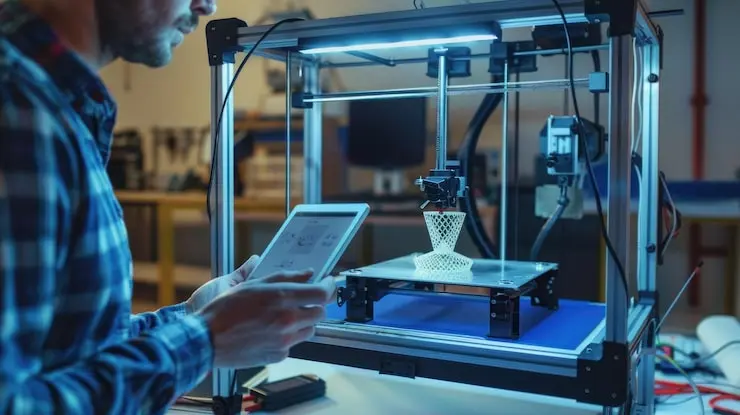
DFM review is the most commercially valuable step in the process and the step most often skipped by lower-cost competitors. At Manufyn, every drawing receives a free DFM review before the quote is issued. For sheet metal parts, Manufyn’s DFM review follows the guidelines covered in the sheet metal fabrication design guide. Common issues flagged include:
- Bend radii too tight for the material thickness and grade
- Hole diameters smaller than standard drill sizes — adding cost without benefit
- Thread callouts requiring non-standard tooling
- Internal corner radii not accounting for end mill diameter in CNC operations
- Wall thicknesses below the minimum for the selected 3D printing process
- Tolerance callouts tighter than what the process achieves cost-effectively
Manufyn’s DFM report is delivered with the quote. Customers can accept recommendations, modify the design, or proceed with the original design — the choice is always theirs.
Step 3: Technology and Process Selection
Once DFM is complete, Manufyn’s engineers recommend the most suitable technology. For a detailed explanation of how to choose between all eight methods, see the complete types of rapid prototyping guide. The primary technologies at Manufyn are:
| Technology | Best For | Typical Tolerance |
|---|---|---|
| FDM 3D Printing | Concept models, ABS functional parts | ±0.3–0.5mm |
| SLA / PolyJet | High-detail visual / functional prototypes | ±0.1–0.2mm |
| SLS / MJF | Functional nylon, complex geometry | ±0.2–0.3mm |
| DMLS | Metal prototypes — Al, SS, titanium | ±0.1–0.2mm |
| CNC Machining | Tight tolerance, end-use material | ±0.05mm |
| Sheet Metal | Enclosures, brackets, HVAC parts | ±0.1mm cut / ±0.5° bend |
| Vacuum Casting | Production-equivalent plastic, 1–50 pcs | ±0.3mm |
Technology selection also considers future production: if the production part will be injection moulded, prototyping in SLA or vacuum casting closely mimics production finish. If the production part will be CNC machined, see the CNC rapid prototyping guide for how to specify requirements correctly. For sheet metal production parts, see the sheet metal rapid prototyping guide.
Step 4: Material Selection and Procurement
Material is procured from certified suppliers and checked against mill certificates on arrival. For guidance on which material to specify for your application, see Manufyn’s rapid prototyping materials guide. For specialist applications medical-grade PEEK, titanium Grade 5, Inconel 625 procurement is confirmed before order acceptance. For medical device orders requiring biocompatible materials, see rapid prototyping for medical devices.
For orders requiring full material traceability (aerospace, medical, defence), Manufyn provides mill certificates, material test reports, and heat/lot number documentation as part of the delivery package. Traceability is established at procurement not retrospectively.
Every Manufyn order includes free DFM review, material traceability on request, and a First Article Inspection Report. No minimum order. Quote in 24 hours.
Step 5: Prototype Fabrication
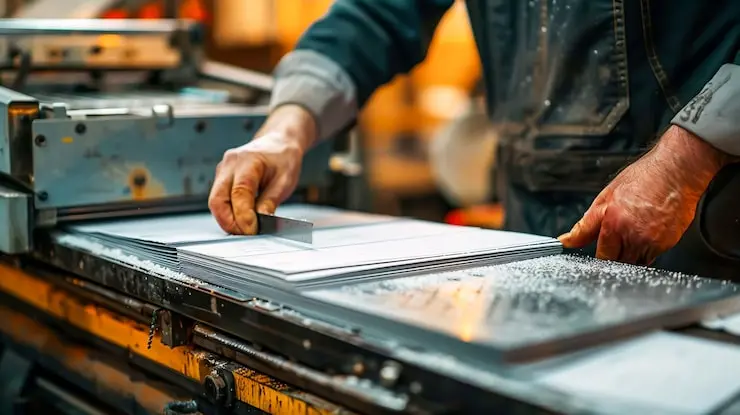
Fabrication begins once DFM is approved, technology is confirmed, and materials are in stock. For CNC: toolpaths are programmed by Manufyn’s CAM engineers directly from the 3D model, with the 2D drawing used to verify all critical dimensions. For sheet metal: laser cutting programs are generated from DXF flat patterns, and CNC press brake bend sequences are programmed from the 3D model.
All fabrication is performed at Manufyn’s in-house facility in Pune, India. Manufyn does not sub-contract to third parties. The engineer who reviews your drawing oversees the machine that makes your part. This is a fundamental difference from broker-model competitors.
Step 6: Post-Processing and Surface Finishing
Post-processing converts a fabricated part into a finished part. For 3D-printed parts, post-processing options range from support removal and sanding to full painting and UV coating detailed in the 3D printing rapid prototyping guide. For sheet metal parts, the full finishing range anodising, powder coating, electropolishing is covered in the sheet metal rapid prototyping guide. Available finishing at Manufyn includes:
- Anodising (Type II and Type III hard anodise) — for aluminium CNC and sheet metal parts
- Powder coating — any RAL colour, gloss or matt, for steel and aluminium
- Electropolishing / passivation — for stainless steel in medical or food-grade applications
- Bead blasting and brushing — for uniform matte or satin surface finish
- Painting and priming — for customer-facing samples requiring specific colour or texture
- Thread tapping, Helicoil inserts, PEM nut installation — post-machining operations
Step 7: Quality Inspection and FAIR
Every Manufyn prototype is dimensionally inspected before shipment. For tight-tolerance parts, CMM (Coordinate Measuring Machine) inspection is available. The First Article Inspection Report (FAIR) is Manufyn’s standard quality deliverable. For aerospace and medical orders, FAIR is strongly recommended see theaerospace rapid prototyping guide and medical device rapid prototyping guide for documentation requirements specific to each sector.
Manufyn’s quality management system is ISO 9001 certified. For PPAP, AS9100, or ISO 13485 documentation requirements, discuss at the quoting stage.
Step 8: Packaging and Global Delivery
Parts are packaged to survive international air freight — foam-lined boxes for precision CNC parts, protective wrap for sheet metal assemblies. Shipping via DHL, FedEx, or UPS express. Typical door-to-door times:
- USA (East Coast): 4–5 days air | USA (West Coast): 5–6 days air
- UK (London, Birmingham, Manchester): 3–4 days air
- UAE (Dubai, Abu Dhabi): 1–2 days air
- Australia (Melbourne, Sydney, Brisbane): 5–7 days air
- Canada (Toronto, Vancouver, Edmonton): 5–7 days air
- Germany (Frankfurt, Munich, Berlin): 4–6 days air
- Singapore: 2–3 days air | Malaysia (KL, Penang): 2–3 days air
DDP (Delivered Duty Paid) shipping is available for all markets. For country-specific shipping, customs, and import details, see the relevant regional guides: USA | UK | UAE | Australia | Canada | Germany.
From Prototype to Production The Natural Next Step
Once a prototype is approved, Manufyn transitions the same part to small-batch or volume production using the same engineers, materials, and quality processes. For OEM partnerships, see Manufyn’s sheet metal OEM guide at manufyn.com/resources/sheet-metal-fabrication/oem-sheet-metal-fabrication. For casting and moulding routes to production, see the casting and moulding guide.
Submit your CAD file and get a detailed quote in 24 hours DFM review, FAIR, and DDP shipping all available from Manufyn India.
Frequently Asked Questions Rapid Prototyping Process
DFM review is completed as part of the quoting process and typically takes 4–8 hours for standard parts. Complex assemblies may take up to 24 hours. The DFM report and quote are delivered together.
Manufyn flags the specific issue, explains the cost or quality implication, and suggests a design modification. You can accept the recommendation, proceed with the original design at understood risk, or ask Manufyn’s engineers to propose a change. No charge for DFM recommendations.
Changes are best made before fabrication begins. Once material is cut or machining has started, changes require a new order. Communicate anticipated changes at the quoting stage.
Yes, FAIR is available on request for all prototype orders. For aerospace, medical, and defence orders, FAIR is strongly recommended and included in the quote at no additional charge.
Express lead times: FDM 1–2 working days, SLA/SLS 2–3 working days, CNC 3–5 working days, sheet metal 3–5 working days. Express adds approximately 30–50% to standard pricing. Contact Manufyn to confirm express availability before submitting.
Manufyn holds ISO 9001 certification for its quality management system, covering design review, material traceability, inspection, and delivery. For aerospace and medical applications, discuss AS9100 or ISO 13485 documentation requirements at the quoting stage.
Under DDP (Delivered Duty Paid) terms, Manufyn handles all export documentation, international freight, customs clearance at the destination country, and import duty payment. The buyer receives parts at their facility with no additional charges or paperwork.
Yes. All Manufyn shipments are via DHL, FedEx, or UPS express with full tracking. Tracking information is shared by email as soon as the shipment departs Pune. Account managers assist with any customs or delivery queries.