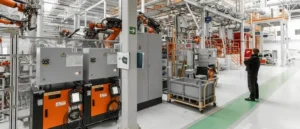
Rapid prototyping is the fast fabrication of a physical part or assembly directly from a 3D CAD file, produced in days, not weeks, using technologies such as 3D printing, CNC machining, sheet metal fabrication, or casting. Its primary purpose is to validate a design before investing in production tooling or volume manufacturing. Manufyn’s rapid prototyping service covers every method described in this guide, with a 24-hour quote and free DFM review on every order.
Manufyn’s rapid prototyping service covers CNC, 3D printing, sheet metal, and casting all in-house. Free DFM review on every quote.
Why Rapid Prototyping Has Become a Business Requirement
Product development timelines have compressed dramatically. Where engineers once waited months for a prototype from a traditional toolroom, rapid prototyping compresses that cycle to days. The financial case is equally clear: catching a design flaw in a prototype costs a fraction of what it costs to discover the same flaw after tooling has been cut or production has started.
Understanding the full rapid prototyping process — from CAD submission to delivered part is the first step any engineer or procurement manager should take before placing a prototype order. The process directly affects lead time, cost, and first-article quality.
Companies that embed rapid prototyping into their development cycle consistently report three outcomes: faster time to market, lower rework costs, and higher confidence at production sign-off. For hardware startups, medical device firms, automotive OEMs, and industrial equipment manufacturers, rapid prototyping is no longer optional it is a competitive requirement.
The 8-Step Rapid Prototyping Process Overview
A full breakdown of the rapid prototyping process is available in Manufyn’s step-by-step guide. In summary, the workflow covers eight stages:
- CAD file submission — STEP, DXF, IGES, SolidWorks, or PDF drawing submitted with material, tolerance, and quantity details.
- DFM analysis — free Design for Manufacturability review that identifies cost-driving features before fabrication begins.
- Technology selection — CNC, 3D printing, sheet metal, or casting selected based on material and tolerance requirements.
- Material procurement — materials sourced and verified against mill certificates.
- Prototype fabrication — produced in-house at Manufyn’s Pune facility.
- Post-processing and finishing — anodising, powder coating, bead blasting, or painting applied.
- Quality inspection — dimensional inspection against drawing; FAIR report available.
- Packaging and global delivery — air freight to USA, UK, UAE, Australia, Canada, Germany, Singapore, Malaysia in 2–7 days.

The Main Types of Rapid Prototyping
Rapid prototyping is not a single technology. For a complete comparison of all eight methods, see Manufyn’s types of rapid prototyping guide. The main technology families are summarised below.
3D Printing (Additive Manufacturing)
The most widely recognised rapid prototyping method. For a complete guide to using 3D printing for rapid prototyping covering FDM, SLA, SLS, DMLS, MJF, and PolyJet — see Manufyn’s dedicated technology guide.
- FDM — lowest cost, ABS/PLA/ASA concept models, ±0.3–0.5mm tolerance
- SLA — finest surface detail, engineering resins, ±0.1–0.2mm tolerance. Used for investment casting patterns see the jewelry and investment casting guide
- SLS / MJF — durable nylon functional prototypes, ±0.2–0.3mm tolerance
- DMLS — metal prototypes in aluminium, stainless steel, titanium. Used inaerospace rapid prototyping and medical device prototyping
CNC Rapid Prototyping
CNC machining is the preferred rapid prototyping method when end-use material properties and tight tolerances (±0.05mm) are required. See Manufyn’s complete CNC rapid prototyping guide for a full comparison of when CNC beats 3D printing, materials, lead times, and pricing. CNC is the standard approach for medical device prototypes, aerospace brackets and housings, and high-precision automotive components.
Sheet Metal Rapid Prototyping
When the production part will be made from sheet metal, prototyping in sheet metal from the start is the only reliable way to validate fit, assembly, and hardware installation. See Manufyn’s sheet metal rapid prototyping guide for full details on processes, materials, and tolerances. Also see the sheet metal fabrication resource hub for the broader context of Manufyn’s sheet metal capabilities.
Casting and Moulding for Prototypes
Vacuum casting (urethane casting) and rapid injection moulding bridge the gap between one-off CNC prototypes and full production tooling. See Manufyn’s casting and moulding rapid prototyping guide for details on batch sizes, materials, and lead times.
Not sure which rapid prototyping method your part needs? Manufyn’s engineers review your drawing free and recommend the most cost-effective technology.
Rapid Prototyping Materials Choosing the Right One
Material selection is covered in depth in Manufyn’s rapid prototyping materials guide. In summary: the material specified for the prototype should match the end-use production material as closely as possible especially for functional testing and regulatory submissions.
| Material | Best Method | Typical Application | Industries |
|---|---|---|---|
| Aluminium 6061 / 7075 | CNC / DMLS | Aerospace, automotive, enclosures | Aerospace, Electronics |
| Stainless Steel 304 / 316L | CNC / DMLS | Medical, food-grade, structural | Medical, Marine |
| Titanium Grade 5 | CNC / DMLS | Aerospace, medical implants | Aerospace, Medical |
| ABS / ASA | FDM | Concept models, housings | Consumer products |
| Nylon PA12 | SLS / MJF | Functional parts, hinges, clips | Automotive, Industrial |
| PEEK | CNC | High-temp, chemical-resistant | Medical, Aerospace |
| Castable Resin | SLA | Investment casting patterns | Jewelry, Investment casting |
How Much Does Rapid Prototyping Cost?
For full cost breakdowns with sample calculations across all technologies, see Manufyn’s rapid prototyping cost guide. In summary: cost is driven by technology, material, part complexity, quantity, surface finishing, and lead time. Manufyn’s India-based prototyping costs run 40–65% lower than equivalent US or UK domestic rates.
| Technology | Indicative Cost (1 piece) | India vs US/UK Saving |
|---|---|---|
| FDM 3D Printing | USD 15–50 | 50–60% saving |
| SLA (engineering resin) | USD 30–120 | 45–55% saving |
| SLS Nylon | USD 40–180 | 45–55% saving |
| CNC Aluminium | USD 80–350 | 40–65% saving |
| Sheet Metal Enclosure | USD 80–300 | 40–60% saving |
| DMLS Titanium | USD 300–1,200 | 40–55% saving |
Rapid Prototyping Lead Times End-to-End
| Technology | Fabrication Lead Time | Door-to-Door (India to USA) |
|---|---|---|
| FDM 3D Printing | 1–3 working days | 6–9 days total |
| SLA / SLS / MJF | 2–5 working days | 7–11 days total |
| CNC Machining | 3–7 working days | 8–13 days total |
| Sheet Metal | 5–10 working days | 10–16 days total |
| DMLS Metal Printing | 7–12 working days | 12–18 days total |
| Vacuum Casting | 10–14 working days | 15–20 days total |

Who Uses Rapid Prototyping from Manufyn?
Manufyn supplies rapid prototypes to engineers and procurement managers across eight target markets. Each market has a dedicated regional guide:
- USA — rapid prototyping services in the USA
- UK — rapid prototyping services in the UK
- UAE — rapid prototyping services in the UAE
- Australia — rapid prototyping services in Australia
- Canada — rapid prototyping services in Canada
- Germany — rapid prototyping services in Germany
- Singapore — rapid prototyping services in Singapore
- Malaysia — rapid prototyping services in Malaysia
Industry-Specific Rapid Prototyping
Manufyn serves six primary industry verticals with dedicated rapid prototyping expertise. Each has a dedicated guide:
- Medical devices — FDA, ISO 13485, biocompatible materials, full documentation
- Automotive — concept cars, functional parts, EV battery enclosures
- Aerospace — AS9100, material traceability, DMLS titanium
- Consumer electronics and IoT — enclosures, multi-material, speed-to-market
- Defence and aerospace suppliers — commercial defence parts, drone components
- Jewelry and luxury goods — SLA castable resin, lost-wax investment casting
Advantages and Disadvantages of Rapid Prototyping
For an honest, balanced analysis of the advantages and disadvantages of rapid prototyping including when rapid prototyping is not the right approach see Manufyn’s dedicated guide. In brief: the main advantages are speed, low iteration cost, and early design validation. The main disadvantage is that prototype parts are not always production-equivalent in strength or surface finish, which is why technology selection (covered in the types guide) is critical.
Rapid Prototyping vs 3D Printing vs Additive Manufacturing Clarifying the Terms
These three terms are often used interchangeably but have distinct meanings. See Manufyn’s detailed disambiguation at rapid prototyping vs 3D printing vs additive manufacturing for a full explanation. In short: rapid prototyping is the goal; 3D printing and CNC are methods; additive manufacturing is the industry-grade term for production 3D printing.
Need rapid prototypes shipped globally in 10–18 days? Manufyn is India’s ISO 9001 certified in-house rapid prototyping manufacturer. No brokers, no middlemen. Get your quote in 24 hours.
Frequently Asked Questions What is Rapid Prototyping
Rapid prototyping is producing a physical part from a CAD file quickly typically in days using digital manufacturing technologies such as 3D printing, CNC machining, or sheet metal fabrication. The goal is to produce a part fast enough that engineers can test, iterate, and improve the design before committing to production tooling.
No. 3D printing is one of several technologies used for rapid prototyping. For a full explanation of the differences, see rapid prototyping vs 3D printing vs additive manufacturing.
Accuracy depends on technology. CNC: ±0.05mm. SLA/DMLS: ±0.1–0.2mm. SLS/MJF: ±0.2–0.3mm. FDM: ±0.3–0.5mm. For a full tolerance breakdown by process, see the types of rapid prototyping guide.
There is no minimum order quantity. Manufyn accepts single-piece prototype orders with no additional surcharge beyond the per-unit prototype pricing.
Yes, in many cases. CNC machined prototypes from production-grade material and DMLS metal parts are often used directly in initial testing, regulatory submissions, or low-volume production runs.
Submit your CAD file through Manufyn’s prototyping service at manufyn.com/services/sourcing-from-india/prototyping/. Include material, tolerances, surface finish, and quantity. Quote within 24 hours, free DFM review included.
Yes. Manufyn signs an NDA before any drawings are reviewed. Your IP remains yours at all times. Tooling and fixtures are owned by you and stored exclusively for your account.
Air freight from Pune, India: USA 4–6 days, UK 3–5 days, UAE 1–2 days, Australia 5–7 days, Canada 5–7 days, Germany 4–6 days, Singapore 2–3 days, Malaysia 2–3 days. DDP (Delivered Duty Paid) available for all markets Manufyn handles customs clearance.