For Indian manufacturers exploring clean energy options, understanding solar powered factory ROI is key to making an informed decision. Electricity is more than just a utility — it’s a major operating cost that can decide competitiveness. With tariffs increasing year after year and production demands rising, many factories are struggling to keep their energy expenses under control.
For manufacturers evaluating clean energy options, understanding solar powered factory ROI helps them see solar not just as a green upgrade but as a smart financial decision.
By shifting to solar energy, factories can convert unused roof or land space into a profitable power asset. Instead of renting electricity from the grid, they begin generating it themselves — achieving both cost savings and energy independence.
However, most manufacturers still hesitate to make the switch because they’re unsure about the ROI (Return on Investment) and payback period of solar projects. The truth? When designed and executed correctly, industrial solar systems often pay for themselves within just a few years — and continue producing free power for decades.
This blog breaks down the real ROI and payback period for solar-powered factories, helping manufacturers make data-backed decisions before investing.
Why More Factories Are Going Solar
Across India, factories in sectors like automotive, textiles, engineering, and plastics are turning to solar EPC solutions to manage energy costs and meet sustainability goals.
There are three main reasons driving this shift:
- Cost Efficiency: Solar power immediately reduces dependency on expensive grid electricity. With minimal maintenance, factories can lower monthly power bills by up to 60%.
- Energy Security: Solar systems provide consistent power during working hours, reducing the risk of downtime and grid instability.
- Sustainability: Many clients and export markets now prefer suppliers with green operations. Using solar energy strengthens a manufacturer’s brand and compliance readiness.
In short, going solar is no longer just a sustainability choice — it’s a business decision that directly improves profit margins.
At Manufyn, we help manufacturers understand the complete financial picture — from initial investment to long-term returns — ensuring every solar project delivers predictable, measurable results.
Understanding ROI in Industrial Solar Projects

Before investing in solar, every factory owner asks the same question — “How much will I actually save?” That’s where ROI (Return on Investment) becomes the key factor.
In simple terms, ROI measures how quickly your solar system earns back what you spend on it — and how much profit it generates afterward. For manufacturers, this depends on three major elements. These factors play a key role in determining your solar powered factory ROI and how fast your investment turns profitable.
- Energy Consumption Pattern: Factories with consistent daytime power use benefit the most, since solar panels generate maximum energy during sunlight hours.
- Electricity Tariff: The higher your grid tariff, the faster your solar savings add up.
- System Design & Efficiency: A well-engineered solar EPC solution ensures maximum generation and minimal losses.
Industrial solar ROI is typically calculated as:
ROI (%) = (Annual Energy Savings ÷ Total Investment) × 100
For most factories, solar projects deliver an annual ROI between 20% and 35%, depending on plant load, size, and location. That means manufacturers can recover their investment within a few years and enjoy nearly 25 years of free electricity afterward.
When executed properly, solar is not just a green initiative — it’s a reliable financial asset with predictable returns.
Breaking Down the Payback Period
The payback period tells you how long it will take for your solar investment to pay for itself through energy savings. On average, industrial solar projects achieve payback within 3 to 5 years, while the system continues producing electricity for over two decades.
Let’s break this down further:
- Factories with high electricity costs and large daytime operations usually recover costs faster — often within 3 years.
- Medium-scale industries typically reach payback in 4 years.
- Low-consumption or partial-load setups may take 5 years or slightly more.
After the payback period, every unit of solar energy generated is pure profit — directly reducing monthly power bills.
With government incentives, accelerated depreciation, and lower equipment costs, the actual payback can be even shorter. Plus, modern solar systems require minimal maintenance, further enhancing lifetime returns.
At Manufyn, our team uses detailed site assessments and energy modeling tools to calculate accurate ROI and payback periods before installation — ensuring manufacturers know exactly what to expect from their investment.
Key Factors That Impact ROI
The payback period tells you how long it will take for your solar investment to pay for itself through energy savings. On average, industrial solar projects achieve payback within 3 to 5 years, while the system continues producing electricity for over two decades.
Let’s break this down further:
- Factories with high electricity costs and large daytime operations usually recover costs faster — often within 3 years.
- Medium-scale industries typically reach payback in 4 years.
- Low-consumption or partial-load setups may take 5 years or slightly more.
After the payback period, every unit of solar energy generated is pure profit — directly reducing monthly power bills.
With government incentives, accelerated depreciation, and lower equipment costs, the actual payback can be even shorter. Plus, modern solar systems require minimal maintenance, further enhancing lifetime returns.
At Manufyn, our team uses detailed site assessments and energy modeling tools to calculate accurate ROI and payback periods before installation — ensuring manufacturers know exactly what to expect from their investment.
Ready to Discover Your Factory’s Real Solar ROI?
Every factory’s energy pattern is different — and so is its solar powered factory ROI.
At Manufyn, our experts conduct a detailed ROI and payback assessment to show you exactly how much you can save before you invest.
Get a free solar ROI report tailored for your factory today.
Real Example – Typical ROI for a 500 kW Industrial Solar Plant
Let’s look at an example to understand real numbers.
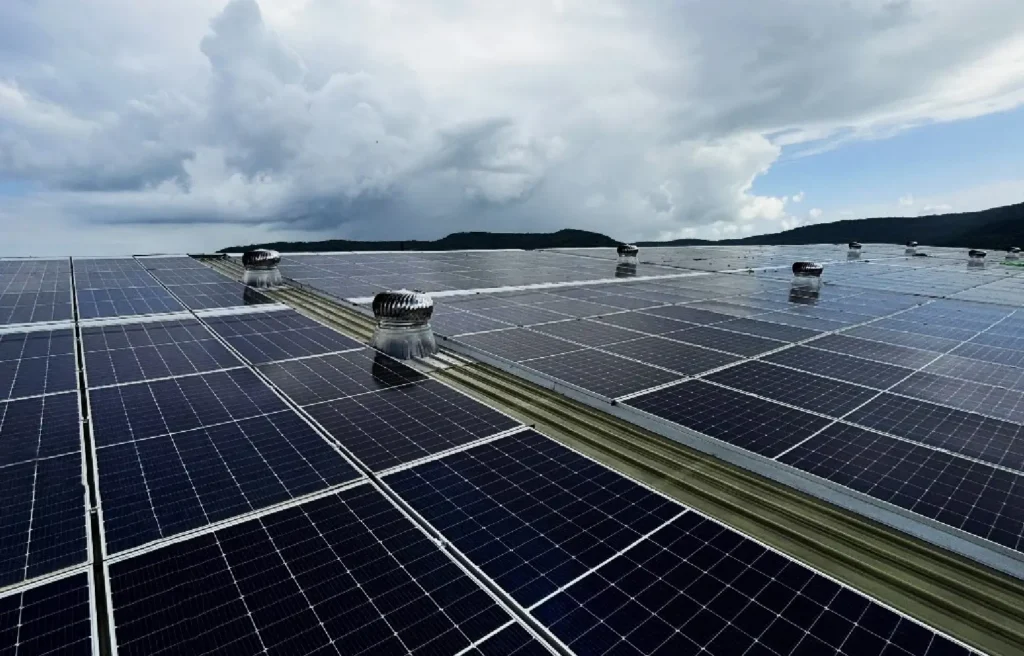
A 500 kW on-grid solar plant for a mid-sized factory typically requires an investment of around ₹2.2–₹2.5 crore (depending on components and EPC scope). Here’s how the math works out:
- Average Generation: ~2.2 lakh units/month
- Electricity Cost Saved: ₹11–₹12 per unit (depending on tariff)
- Monthly Savings: ₹24–₹26 lakh/year
- Payback Period: 3.5–4 years
- System Life: 25 years
After the payback period, the same system continues generating savings for the next 20+ years with minimal O&M costs. Over its lifetime, this factory could save over ₹5–6 crore in electricity bills. Such results clearly show how solar powered factory ROI improves with proper EPC design, load matching, and performance monitoring.
This example highlights that solar isn’t just an environmental investment — it’s a long-term financial strategy that strengthens industrial competitiveness and profitability.
At Manufyn, we specialize in custom-designed solar EPC systems that are engineered for maximum yield and faster ROI, helping factories convert every ray of sunlight into business growth.
How to Calculate Your Factory’s Payback Period
While every solar project is unique, manufacturers can get a quick idea of how soon their investment will pay off using a simple formula.
Payback Period (Years) = Total Investment ÷ Annual Savings
For example, if your factory invests ₹2.5 crore and saves ₹60 lakh annually on electricity, your payback period will be:
₹2.5 crore ÷ ₹60 lakh = 4.1 years
After that, all your solar-generated power is pure profit.
However, a more accurate calculation considers factors like system degradation, inflation, tariff escalation, and maintenance costs. That’s why Manufyn uses detailed solar ROI and payback modeling tools during project planning.
Here’s what we analyze before installation:
- Historical electricity usage (to size the system correctly)
- Tariff escalation trends (to estimate future savings)
- Performance ratio and expected energy yield (based on solar irradiance)
- Financial benefits like accelerated depreciation and tax credits
The result: a clear, data-backed payback timeline — often between 3 and 5 years — depending on the factory’s location, energy use, and operational hours.
With this insight, manufacturers can confidently plan cash flows and justify solar investments to stakeholders or boards.
Boosting ROI with Smart Solar Integration

Getting the best returns from solar isn’t just about installing panels — it’s about integrating solar power intelligently into your factory’s overall energy strategy.
Here’s how industries can further boost ROI and shorten payback time:
- Use Solar During Peak Hours:
Align high-load processes (like machining, molding, or HVAC systems) with solar generation hours to maximize utilization. - Combine Solar with Automation:
Smart energy management systems automatically switch loads between grid and solar to reduce wastage and optimize cost savings. - Invest in Real-Time Monitoring:
Modern SCADA-based monitoring systems help detect faults early, maintain performance, and prevent revenue loss. - Leverage Net Metering:
Feed excess power back into the grid and offset it in your monthly bill — turning your factory into a mini power station. - Plan for Long-Term Maintenance:
A proactive O&M plan ensures steady generation and sustained returns for 20+ years.
At Manufyn, we combine EPC expertise with advanced automation and data monitoring — helping industries achieve faster returns, reliable generation, and measurable carbon savings.
The Long-Term Business Impact of Going Solar
While ROI and payback are the most discussed financial metrics, the true value of going solar extends far beyond the first few years of savings. For manufacturing businesses, solar energy delivers a long-term strategic advantage.
1. Lower Operational Costs for Decades
Once the payback period ends, factories enjoy nearly two decades of low-cost or free power generation. This makes operating costs more predictable — a big advantage in industries where margins are tight and energy costs fluctuate.
2. Improved Profit Margins
With lower energy expenses, the same production output yields higher margins. Solar essentially reduces your “cost per product,” giving you an edge over competitors relying solely on grid electricity.
3. Sustainability and Brand Value
More global clients now prefer suppliers with green operations. Solar-powered manufacturing improves ESG scores, enhances credibility, and opens up new opportunities in export markets.
4. Protection Against Tariff Hikes
Electricity prices tend to rise annually, while your solar energy cost stays almost constant. This creates a natural hedge against inflation, ensuring financial stability for years to come.
When seen from this perspective, solar energy isn’t just an expense — it’s a strategic asset that strengthens business resilience, brand reputation, and bottom-line growth.
Conclusion – Invest Once, Save for Decades
Switching to solar power is one of the most practical and high-ROI investments a factory can make today. With the right EPC partner, clear ROI modeling, and efficient system design, solar can help industries recover costs in under five years — and enjoy sustainable savings for 20+ years after that. When executed strategically, solar powered factory ROI can outperform traditional energy investments — combining sustainability with measurable business growth.
At Manufyn, we go beyond installation. Our end-to-end solar EPC services include:
- Site feasibility and financial modeling
- System design and engineering
- Installation, testing, and commissioning
- Smart monitoring and O&M for consistent yield
We help manufacturers turn their factory roofs into profit-generating energy assets — creating long-term economic and environmental value.
Frequently Asked Questions
Most industrial solar projects deliver an ROI of 20–35% annually, depending on energy consumption, tariff rates, and system efficiency. This means factories usually recover their investment within 3–5 years.
ROI is calculated using the formula:
ROI (%) = (Annual Energy Savings ÷ Total Investment) × 100.
This helps determine how much your solar system earns back each year in comparison to its cost.
For most manufacturing units, the payback period is between 3 to 5 years, after which the solar plant continues to produce free power for 20+ years.
ROI is influenced by electricity tariff rates, system size, equipment quality, government incentives, and maintenance practices. Optimizing these factors ensures higher and faster returns.
Yes. Even small and medium enterprises (SMEs) can significantly reduce their energy bills through rooftop solar systems, achieving attractive paybacks with minimal maintenance.
Yes. Manufacturers can benefit from accelerated depreciation under Section 32, net metering, and various state-level subsidies that improve overall ROI.
High-quality solar systems have a lifespan of 25 years or more, with minimal performance degradation — ensuring steady power generation for decades.
Solar plants require periodic cleaning, monitoring, and preventive maintenance to sustain 95%+ performance efficiency and maximize returns over time.
In most cases, factories use a hybrid setup — solar during the day and grid power at night or during low sunlight. However, solar can offset a major share of daily consumption, reducing dependency on the grid.
Manufyn provides end-to-end solar EPC services — from feasibility analysis and ROI modeling to installation and monitoring — ensuring each project delivers maximum energy generation and a faster payback period.
Ready to know your factory’s solar ROI?
Our team at Manufyn can create a customized ROI and payback report for your facility — showing exactly how much you’ll save and how fast.
👉 Book your free solar ROI assessment today.