Stainless steel 410 is a martensitic stainless steel known for its high strength, hardness, and moderate corrosion resistance. It contains around 11.5–13.5% chromium, which provides basic corrosion protection while allowing the material to be heat treated for improved mechanical performance.
Unlike austenitic stainless steels such as 304 and 316, grade 410 can be hardened through heat treatment. This makes it suitable for engineering applications where wear resistance, structural strength, and durability are more important than maximum corrosion resistance.
Because of its balanced mechanical properties and cost efficiency, stainless steel 410 is commonly used in components such as pump shafts, valves, fasteners, turbine blades, and industrial machinery parts. Industries including oil and gas, power generation, automotive manufacturing, and industrial equipment production frequently rely on this grade.
This guide explains the key characteristics of stainless steel 410, including its chemical composition, mechanical properties, corrosion resistance, heat treatment behavior, fabrication considerations, and industrial applications.
Need Help Selecting the Right Stainless Steel Grade?
Our engineering team can help you choose the best material based on strength, corrosion resistance, and manufacturing requirements.
What is Stainless Steel 410?
Stainless steel 410 is a martensitic stainless steel alloy designed to provide high strength and hardness through heat treatment. It is one of the most widely used martensitic grades because it offers a practical balance between mechanical durability, machinability, and corrosion resistance.
Martensitic stainless steels are different from austenitic and ferritic grades because their microstructure can transform during heat treatment. When heated and rapidly cooled, the steel forms a martensitic structure that increases hardness and strength.
Classification of Stainless Steel 410
Stainless steel grades are typically grouped into austenitic, ferritic, duplex, and martensitic families based on their microstructure. Grade 410 belongs to the martensitic category, which includes stainless steels that can be hardened through quenching and tempering.
Martensitic stainless steels generally contain moderate chromium and higher carbon content compared to ferritic grades. This composition allows them to achieve high hardness after heat treatment. These steels are also magnetic in both annealed and hardened conditions.
Key Characteristics of SS 410
Stainless steel 410 is widely used because it provides a useful combination of mechanical strength and corrosion resistance. One of its most important advantages is its ability to be heat treated, allowing manufacturers to increase hardness for wear-resistant components.
The material also offers good wear resistance and reasonable corrosion protection in atmospheric and mildly corrosive environments. In the annealed condition it can be machined relatively easily, which helps manufacturers produce complex parts before the final heat treatment process.
These characteristics make stainless steel 410 suitable for applications that require strength, durability, and resistance to mechanical wear.
How SS 410 Differs from Austenitic Stainless Steels
Stainless steel 410 differs from austenitic stainless steels such as 304 and 316 mainly in its structure and heat treatment behavior. Austenitic grades cannot be hardened by heat treatment, while martensitic steels like 410 can be quenched and tempered to achieve high hardness levels.
Another difference is magnetism. Austenitic stainless steels are typically non-magnetic, whereas stainless steel 410 is magnetic due to its martensitic structure.
While grade 410 offers higher strength and hardness, its corrosion resistance is lower than that of chromium-nickel stainless steels. For this reason, it is commonly selected for mechanical and structural components rather than environments that require maximum corrosion resistance.
Looking for Custom Stainless Steel Components?
Manufyn connects businesses with trusted manufacturers for precision-machined and fabricated stainless steel parts.
Chemical Composition of Stainless Steel 410
The chemical composition of stainless steel 410 is designed to provide a balance between corrosion resistance, strength, and heat treatment capability. The alloy primarily relies on chromium to improve oxidation resistance, while carbon contributes to hardness and strength after heat treatment.
Compared to austenitic stainless steels, grade 410 contains lower chromium content and does not include significant amounts of nickel. This composition allows the material to form a martensitic structure during heat treatment, which increases hardness and mechanical strength.
The controlled balance of alloying elements also helps maintain machinability and structural integrity in industrial components.
Elemental Composition of SS 410
The typical chemical composition of stainless steel 410 is shown below.
| Element | Percentage |
|---|---|
| Carbon (C) | 0.08 – 0.15% |
| Chromium (Cr) | 11.5 – 13.5% |
| Manganese (Mn) | ≤ 1.0% |
| Silicon (Si) | ≤ 1.0% |
| Phosphorus (P) | ≤ 0.04% |
| Sulfur (S) | ≤ 0.03% |
| Iron (Fe) | Balance |
These elements work together to determine the corrosion resistance, mechanical performance, and heat treatment behavior of stainless steel 410.
Role of Chromium in Corrosion Resistance
Chromium is the primary alloying element responsible for the corrosion resistance of stainless steel 410. When chromium content exceeds about 10.5 percent, a thin oxide layer forms on the surface of the steel. This passive layer protects the material from oxidation and environmental corrosion.
In grade 410, chromium content typically ranges between 11.5 and 13.5 percent. This provides moderate corrosion resistance in atmospheric environments and mildly corrosive conditions. However, the chromium level is lower than that found in austenitic stainless steels, which means corrosion resistance is more limited in aggressive environments.
Role of Carbon in Hardness and Strength
Carbon plays an important role in increasing the hardness and strength of stainless steel 410. When the material undergoes heat treatment, carbon helps form the martensitic structure that gives the alloy its high hardness and wear resistance.
Higher carbon levels increase hardness but may slightly reduce corrosion resistance. The controlled carbon range in stainless steel 410 allows the alloy to achieve a good balance between mechanical strength and durability.
Alloy Balance in Martensitic Stainless Steel
The overall alloy balance in stainless steel 410 is designed to support heat treatment, mechanical performance, and moderate corrosion resistance. Chromium provides oxidation resistance, carbon enables hardening, and smaller amounts of manganese and silicon improve strength and manufacturing stability.
This composition makes stainless steel 410 suitable for components that require structural strength, wear resistance, and reliable performance in industrial environments.
Turn Your Engineering Designs into Manufactured Parts
Upload your drawings and get connected with manufacturers capable of producing high-precision stainless steel components.
Mechanical Properties of Stainless Steel 410
The mechanical properties of stainless steel 410 are one of the main reasons it is widely used in engineering and industrial applications. The alloy can achieve high strength and hardness after heat treatment, making it suitable for components that experience mechanical stress, friction, or wear.
The exact mechanical properties depend on the heat treatment condition of the material. In the annealed state, stainless steel 410 is relatively soft and easier to machine. After hardening and tempering, the material becomes significantly stronger and more resistant to wear.
Strength and Hardness Characteristics
Stainless steel 410 is known for its ability to develop high hardness through heat treatment. Quenching followed by tempering allows the material to achieve the strength required for structural and mechanical applications.
This characteristic makes it suitable for components such as shafts, fasteners, valve parts, and industrial machinery components where mechanical durability is important.
Tensile Strength
Tensile strength measures the maximum stress that a material can withstand before breaking. Stainless steel 410 typically provides high tensile strength compared to many other stainless steel grades.
In hardened conditions, the alloy can support heavy loads and mechanical stresses, making it suitable for structural components.
Yield Strength
Yield strength refers to the amount of stress a material can handle before permanent deformation occurs. Stainless steel 410 offers good yield strength, which allows it to maintain structural stability under mechanical loads.
This property is particularly important for components used in machinery, industrial equipment, and mechanical systems.
Hardness Range
Hardness is one of the most important characteristics of martensitic stainless steels. Stainless steel 410 can achieve significantly higher hardness levels than austenitic stainless steels after heat treatment.
The hardness level can be adjusted depending on the tempering process used after quenching. This flexibility allows engineers to tailor the material for different performance requirements.
Mechanical Properties Table
|
Property |
Typical Value |
|
Tensile Strength |
480 – 700 MPa |
|
Yield Strength |
~275 MPa |
|
Elongation |
~20% |
|
Hardness (Annealed) |
≤ 200 HB |
|
Hardness (Hardened) |
Up to ~40 HRC |
These mechanical properties make stainless steel 410 a practical choice for applications that require strength, wear resistance, and moderate corrosion protection.
Physical Properties of Stainless Steel 410
The physical properties of stainless steel 410 influence how the material behaves under different temperatures, electrical conditions, and mechanical environments. These properties are important for engineers when selecting materials for industrial equipment, mechanical systems, and structural components.
Compared with austenitic stainless steels, martensitic grades such as 410 generally have slightly higher thermal conductivity and lower corrosion resistance. However, they provide good mechanical stability and maintain their strength across a range of operating temperatures.
Understanding the physical characteristics of stainless steel 410 helps engineers determine whether the material is suitable for applications involving heat transfer, thermal expansion, or electrical conductivity.
Density
Density represents the mass of a material per unit volume. Stainless steel 410 has a density similar to most stainless steel alloys, making it suitable for structural components where weight and strength must be balanced.
The typical density of stainless steel 410 is approximately 7.75 g/cm³. This property is important when calculating the weight of components used in machinery, automotive systems, or industrial equipment.
Thermal Conductivity
Thermal conductivity measures how effectively heat can move through a material. Stainless steel 410 offers moderate thermal conductivity compared with other stainless steel grades.
This allows the material to handle moderate heat transfer in industrial environments while maintaining structural stability.
Electrical Resistivity
Electrical resistivity describes how strongly a material resists the flow of electrical current. Stainless steel generally has higher electrical resistance than metals such as copper or aluminum.
Stainless steel 410 is therefore not typically used for electrical conduction applications, but its resistivity can be useful in environments where electrical insulation from structural components is required.
Thermal Expansion
Thermal expansion refers to how much a material expands when exposed to increasing temperatures. Stainless steel 410 exhibits moderate thermal expansion, which is important when designing components exposed to temperature fluctuations.
Engineers must consider thermal expansion in applications involving turbines, valves, pumps, and mechanical assemblies to ensure dimensional stability during operation.
Physical Properties Table
|
Property |
Typical Value |
|
Density |
7.75 g/cm³ |
|
Melting Point |
1480 – 1530 °C |
|
Thermal Conductivity |
~24.9 W/m·K |
|
Electrical Resistivity |
~0.57 µΩ·m |
|
Thermal Expansion |
~9.9 µm/m·K |
These physical characteristics make stainless steel 410 suitable for many mechanical and structural applications where strength and moderate heat resistance are required.
Heat Treatment of Stainless Steel 410
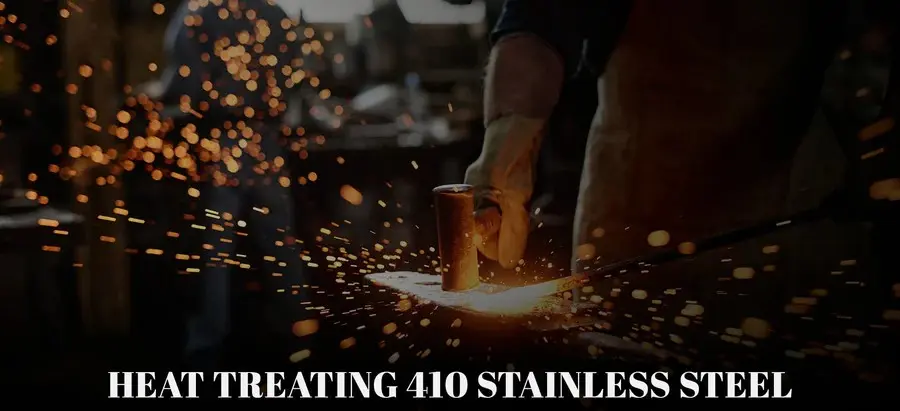
Heat treatment is one of the most important processes used to enhance the mechanical properties of stainless steel 410. Unlike austenitic stainless steels, which cannot be hardened by heat treatment, martensitic stainless steels such as grade 410 can be strengthened through controlled thermal processing.
The heat treatment process modifies the internal microstructure of the steel, allowing engineers to improve hardness, strength, and wear resistance while maintaining adequate toughness.
Different heat treatment methods can be used depending on the desired mechanical performance of the final component.
Annealing Process
Annealing is performed to soften stainless steel 410 and improve its machinability. During this process, the material is heated to a high temperature and then cooled slowly.
Annealing relieves internal stresses and reduces hardness, making the material easier to machine or form before further processing. Components are often annealed before machining operations to improve manufacturing efficiency.
Hardening Process
Hardening is used to increase the strength and hardness of stainless steel 410. The process involves heating the material to a high temperature followed by rapid cooling, usually through quenching in air or oil.
This rapid cooling transforms the internal structure of the steel into martensite, which significantly increases hardness and wear resistance.
Hardening is commonly used for components that require high durability, such as shafts, valves, and mechanical parts exposed to friction.
Tempering Process
Tempering is typically performed after hardening to reduce brittleness and improve toughness. During tempering, the steel is reheated to a lower temperature and held for a specific period before cooling.
This process allows engineers to balance hardness with toughness, ensuring the material maintains mechanical strength while avoiding excessive brittleness.
Heat Treatment Temperature Ranges
Typical heat treatment temperatures for stainless steel 410 include:
- Annealing: approximately 815–900°C
- Hardening: approximately 925–1010°C
- Tempering: typically 150–650°C depending on desired hardness
Careful control of these temperature ranges ensures the material achieves the required mechanical performance for industrial applications.
Effect of Heat Treatment on Mechanical Properties
Heat treatment significantly improves the performance characteristics of stainless steel 410. After hardening and tempering, the material can achieve higher hardness levels and improved wear resistance.
This ability to modify mechanical properties through heat treatment is one of the key reasons stainless steel 410 is widely used in mechanical components, industrial equipment, and structural applications.
Looking for Custom Stainless Steel Components?
Manufyn connects businesses with trusted manufacturers for precision-machined and fabricated stainless steel parts.
Corrosion Resistance of Stainless Steel 410
Stainless steel 410 provides moderate corrosion resistance due to its chromium content, which typically ranges between 11.5% and 13.5%. Chromium forms a passive oxide layer on the surface of the steel, protecting it from oxidation and environmental corrosion.
While stainless steel 410 performs well in atmospheric conditions and mildly corrosive environments, it does not provide the same level of corrosion resistance as austenitic stainless steels such as 304 or 316. The lower chromium and lack of significant nickel content limit its resistance in highly corrosive or chloride-rich environments.
Despite these limitations, stainless steel 410 remains a practical choice for many industrial applications where mechanical strength and wear resistance are more critical than maximum corrosion protection.
Resistance in Atmospheric Environments
Stainless steel 410 performs well in dry environments and moderate atmospheric conditions. The chromium content allows the material to resist oxidation and surface corrosion when exposed to air, moisture, and mild industrial conditions.
This makes the material suitable for structural components, industrial machinery parts, and mechanical systems operating in normal environmental conditions.
Resistance to Mild Chemicals
The alloy offers limited resistance to certain mild chemicals and organic compounds. It can perform adequately in environments where exposure to corrosive substances is moderate.
However, in strongly acidic or chloride-rich environments, corrosion resistance may decrease significantly.
Limitations in Highly Corrosive Environments
Compared with austenitic stainless steels, stainless steel 410 is more vulnerable to corrosion in aggressive chemical environments. Exposure to seawater, strong acids, or high chloride concentrations can lead to pitting or surface corrosion.
For applications requiring superior corrosion resistance, grades such as 304 or 316 are typically preferred.
Comparison with Austenitic Stainless Steels
Austenitic stainless steels contain higher chromium and nickel content, which provides superior corrosion resistance. In contrast, stainless steel 410 prioritizes strength and hardness over corrosion protection.
This difference explains why grade 410 is commonly used in mechanical components and structural parts, while grades such as 304 and 316 are used in chemical processing or marine environments.
Need Help Choosing the Right Stainless Steel for Your Project?
Our engineering team can help you select the right material for strength, corrosion resistance, and manufacturing efficiency.
Machining Stainless Steel 410
Machining stainless steel 410 requires careful consideration of tool selection, cutting speed, and cooling methods. In its annealed condition, the material offers relatively good machinability compared with hardened martensitic grades.
However, once hardened through heat treatment, machining becomes significantly more challenging due to the increased hardness of the material.
Proper machining practices help manufacturers produce precision components while minimizing tool wear and production delays.
Machinability Characteristics
In the annealed state, stainless steel 410 offers reasonable machinability and can be processed using conventional machining methods such as turning, milling, and drilling.
The material produces continuous chips during machining, which requires proper chip control to prevent tool damage or surface defects.
Cutting Tool Recommendations
Carbide cutting tools are typically recommended for machining stainless steel 410 because they can withstand higher temperatures and cutting forces.
Using appropriate cutting speeds and feed rates helps improve surface finish while reducing excessive tool wear.
Machining Challenges
One of the main challenges when machining stainless steel 410 is work hardening. If improper cutting parameters are used, the material surface may harden, making further machining more difficult.
Adequate lubrication and cooling are important to control heat generation and maintain tool performance.
Tips for Efficient Machining
Manufacturers can improve machining performance by:
- machining the material in the annealed condition whenever possible
- using rigid machine setups
- selecting appropriate cutting speeds and feeds
- applying effective coolant systems
Following these practices helps maintain precision and extend tool life during machining operations.
Welding Stainless Steel 410
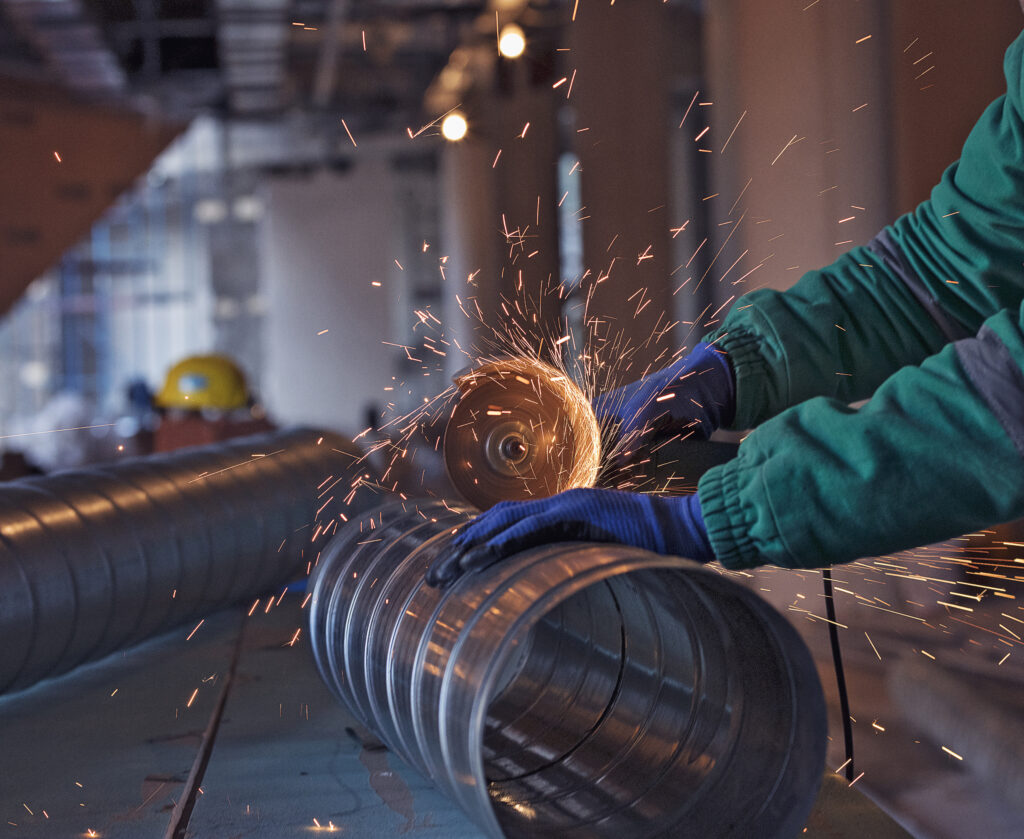
Welding stainless steel 410 requires controlled procedures because martensitic stainless steels are more sensitive to cracking than austenitic grades. The higher carbon content and hardenable structure can lead to brittleness if welding is not performed carefully.
Proper welding practices help maintain the mechanical strength and structural integrity of the material while minimizing the risk of cracking in the heat-affected zone.
Weldability Characteristics
Stainless steel 410 has moderate weldability, but it is generally considered more difficult to weld compared with grades such as 304 or 316. The martensitic structure formed during cooling can increase hardness near the weld area, which may lead to reduced toughness.
For this reason, welding procedures must be carefully controlled to prevent cracking and maintain the desired mechanical properties.
Preheating Requirements
Preheating is commonly recommended before welding stainless steel 410. Preheating reduces thermal stress and slows the cooling rate, helping prevent the formation of brittle microstructures.
Typical preheating temperatures range between 150°C and 320°C, depending on the thickness of the material and the welding method used.
Post-Weld Heat Treatment
Post-weld heat treatment is often necessary to relieve internal stresses and improve toughness in the welded region. Tempering the material after welding helps reduce brittleness and restore more balanced mechanical properties.
This step is particularly important for components that will experience mechanical loading or vibration during operation.
Common Welding Methods
Several welding techniques can be used for stainless steel 410 when proper precautions are followed. These include:
- gas tungsten arc welding (TIG)
- gas metal arc welding (MIG)
- shielded metal arc welding (stick welding)
Selecting the appropriate filler material and controlling heat input are important factors for achieving high-quality welds.
Turn Your Engineering Designs into Manufactured Parts
Upload your drawings and get connected with manufacturers capable of producing high-precision stainless steel components.
Forming and Fabrication of Stainless Steel 410
Forming and fabrication processes for stainless steel 410 must account for the material’s strength and martensitic structure. While the alloy can be formed and shaped during manufacturing, it is generally easier to work with in the annealed condition.
Proper forming methods help prevent cracking and ensure dimensional accuracy in finished components.
Cold Forming
Cold forming stainless steel 410 is possible but requires greater force compared with austenitic stainless steels. Because the material has lower ductility, forming operations should be carefully controlled to avoid cracking.
Components that require extensive deformation are usually formed before heat treatment.
Hot Forming
Hot forming can be used to shape stainless steel 410 more easily. The material is typically heated to temperatures between 950°C and 1200°C, allowing it to be formed without excessive stress.
After hot forming, the material may undergo heat treatment to achieve the required mechanical properties.
Fabrication Considerations
During fabrication, manufacturers must consider factors such as machining sequence, heat treatment requirements, and potential distortion caused by thermal processes.
Planning fabrication steps carefully helps maintain dimensional accuracy and ensures the final component meets performance requirements.
Applications of Stainless Steel 410
Stainless steel 410 is widely used in industries where components must withstand mechanical stress, wear, and moderate corrosion exposure. Its ability to be hardened through heat treatment makes it particularly useful for structural and mechanical parts.
The alloy is commonly selected for applications that require strength, durability, and resistance to abrasion.
Industrial Equipment
Many types of industrial machinery rely on stainless steel 410 for structural components and moving parts. The material’s strength and wear resistance allow it to perform reliably in demanding mechanical environments.
Pump and Valve Components
Pump shafts, valve parts, and related mechanical components frequently use stainless steel 410. These parts must resist mechanical wear while maintaining structural integrity during continuous operation.
Oil and Gas Industry Components
In oil and gas operations, equipment components must tolerate mechanical stress and exposure to industrial environments. Stainless steel 410 is often used for mechanical parts such as shafts, fasteners, and structural supports.
Automotive Parts
The automotive industry uses stainless steel 410 in components that require durability and resistance to wear. Examples include engine components, fasteners, and structural hardware.
Turbine Blades
Power generation systems sometimes use stainless steel 410 in turbine components where strength and heat resistance are required.
Cutlery and Kitchen Equipment
Because stainless steel 410 can achieve high hardness after heat treatment, it is also used in the production of knives and cutting tools.
Fasteners and Structural Components
Bolts, nuts, shafts, and other structural components often use stainless steel 410 due to its strength and moderate corrosion resistance.
Looking for Stainless Steel Components for Your Manufacturing Project?
Manufyn helps businesses source precision-manufactured metal components with the right materials and engineering expertise.
Advantages of Stainless Steel 410
Stainless steel 410 offers several advantages that make it suitable for a wide range of industrial and engineering applications. Its ability to combine strength, hardness, and moderate corrosion resistance allows it to perform well in mechanical environments where durability is important.
One of the most significant advantages of stainless steel 410 is its ability to be heat treated. Through processes such as hardening and tempering, the material can achieve higher hardness levels and improved wear resistance. This flexibility allows manufacturers to tailor the material properties based on specific application requirements.
Another advantage is its strong mechanical performance. Stainless steel 410 provides good tensile strength and structural stability, making it suitable for components exposed to mechanical loads, friction, and impact.
The alloy also offers moderate corrosion resistance in atmospheric environments and mild industrial conditions. While it does not match the corrosion resistance of austenitic stainless steels, it still performs better than many carbon steels in similar environments.
Cost efficiency is another reason industries use stainless steel 410. Compared with higher alloy stainless steels, it is often more economical while still providing reliable mechanical performance.
Key advantages include:
- high strength and hardness after heat treatment
- good wear resistance for mechanical components
- moderate corrosion resistance in atmospheric environments
- good machinability in the annealed condition
- cost-effective alternative to high-alloy stainless steels
These advantages make stainless steel 410 suitable for components used in industrial machinery, automotive systems, power generation equipment, and manufacturing applications.
Limitations of Stainless Steel 410
Although stainless steel 410 provides several useful mechanical properties, it also has limitations that engineers must consider when selecting materials for specific applications.
One of the main limitations is its lower corrosion resistance compared with austenitic stainless steels such as 304 and 316. The chromium content in grade 410 provides basic corrosion protection, but it may not be sufficient in highly corrosive environments, particularly those containing chlorides or strong chemicals.
Another limitation is reduced toughness after hardening. When stainless steel 410 is heat treated to achieve high hardness, the material can become more brittle if not properly tempered. This requires careful control of the heat treatment process to maintain an appropriate balance between strength and toughness.
Weldability can also be challenging. Because the material forms a hard martensitic structure during cooling, welding without proper preheating and post-weld heat treatment can lead to cracking in the heat-affected zone.
The alloy also has lower ductility compared with many other stainless steel grades. This can make forming and shaping operations more difficult, especially in cold forming processes.
Common limitations include:
- lower corrosion resistance compared with austenitic stainless steels
- risk of brittleness if heat treatment is not properly controlled
- welding challenges that require careful procedures
- lower ductility than many other stainless steel grades
Because of these limitations, stainless steel 410 is typically selected for applications where mechanical strength and wear resistance are more important than maximum corrosion protection.
Stainless Steel 410 vs Other Stainless Steel Grades
Stainless steel 410 is often compared with other stainless steel grades when engineers or procurement teams are selecting materials for industrial applications. These comparisons usually focus on differences in corrosion resistance, mechanical strength, hardness, and heat treatment capability.
Understanding how stainless steel 410 performs compared with other commonly used grades helps determine whether it is the right material for a specific application.
Stainless Steel 410 vs 304
Stainless steel 304 is one of the most widely used austenitic stainless steels and is known for its excellent corrosion resistance and good formability. In contrast, stainless steel 410 is a martensitic stainless steel that focuses more on strength and hardness.
The main difference between these two grades lies in their corrosion resistance and heat treatment capability. Stainless steel 304 contains higher chromium and nickel content, which gives it superior corrosion resistance in many environments. However, it cannot be hardened through heat treatment.
Stainless steel 410, on the other hand, can be heat treated to achieve higher hardness and wear resistance. This makes it more suitable for mechanical components such as shafts, fasteners, and valves.
|
Property |
Stainless Steel 410 |
Stainless Steel 304 |
|
Structure |
Martensitic |
Austenitic |
|
Corrosion Resistance |
Moderate |
High |
|
Heat Treatment |
Can be hardened |
Not heat treatable |
|
Strength |
Higher after heat treatment |
Moderate |
|
Magnetism |
Magnetic |
Non-magnetic |
Stainless Steel 410 vs 316
Stainless steel 316 is another austenitic stainless steel that offers superior corrosion resistance, particularly in environments containing chlorides or marine exposure.
Compared with grade 316, stainless steel 410 has lower corrosion resistance but higher hardness and strength after heat treatment. This makes stainless steel 410 better suited for mechanical components, while 316 is typically used in chemical processing, marine equipment, and pharmaceutical industries.
|
Property |
Stainless Steel 410 |
Stainless Steel 316 |
|
Corrosion Resistance |
Moderate |
Very high |
|
Strength |
High after heat treatment |
Moderate |
|
Heat Treatment |
Hardening possible |
Not heat treatable |
|
Typical Applications |
Mechanical parts |
Marine and chemical equipment |
Stainless Steel 410 vs 420
Stainless steel 420 is another martensitic stainless steel that contains a higher carbon content than grade 410. This allows 420 to achieve higher hardness levels after heat treatment.
However, the increased carbon content can reduce corrosion resistance and machinability compared with stainless steel 410.
Stainless steel 410 is generally used when a balance of strength, machinability, and corrosion resistance is required, while grade 420 is often selected for cutting tools and components that require very high hardness.
|
Property |
Stainless Steel 410 |
Stainless Steel 420 |
|
Carbon Content |
Lower |
Higher |
|
Hardness |
High |
Very high |
|
Corrosion Resistance |
Moderate |
Slightly lower |
|
Typical Uses |
Industrial components |
Cutlery and tools |
Martensitic vs Austenitic Stainless Steel
The difference between martensitic and austenitic stainless steels is primarily related to their microstructure and mechanical behavior.
Martensitic stainless steels such as 410 can be hardened through heat treatment, allowing them to achieve high strength and wear resistance. However, they typically offer lower corrosion resistance compared with austenitic grades.
Austenitic stainless steels such as 304 and 316 provide superior corrosion resistance and better formability but cannot be hardened through heat treatment.
Because of these differences, martensitic grades are commonly used for mechanical components, while austenitic grades are preferred for corrosion-resistant applications.
Stainless Steel 410 Standards and Specifications
Stainless steel 410 is produced according to several international standards that define its chemical composition, mechanical properties, and manufacturing requirements. These standards ensure consistent material performance across different industries and suppliers.
Engineers and procurement teams often refer to these standards when specifying materials for industrial components.
ASTM Standards
Several ASTM standards cover stainless steel 410 for different forms such as bars, plates, and forgings. These standards define the acceptable chemical composition and mechanical property ranges.
Common ASTM specifications include:
- ASTM A276 – stainless steel bars and shapes
- ASTM A240 – stainless steel plates, sheets, and strips
- ASTM A479 – stainless steel bars for pressure vessels and boilers
These standards ensure that stainless steel 410 materials meet consistent quality and performance requirements.
AISI Classification
The American Iron and Steel Institute (AISI) classification system identifies grade 410 as a martensitic stainless steel with moderate chromium content.
The AISI designation helps engineers easily identify the material’s composition and expected mechanical behavior.
International Equivalent Grades
Different countries may use alternative designation systems for stainless steel 410. These equivalent grades provide similar chemical composition and mechanical properties.
|
Standard |
Equivalent Grade |
|
AISI |
410 |
|
UNS |
S41000 |
|
EN |
1.4006 |
|
JIS |
SUS 410 |
|
DIN |
X12Cr13 |
These international equivalents allow stainless steel 410 to be sourced and used globally across multiple industries.
Industrial Use Cases of Stainless Steel 410
Stainless steel 410 is widely used in industries where components must withstand mechanical stress, wear, and moderate environmental exposure. Its ability to achieve high hardness through heat treatment makes it suitable for structural and mechanical parts that require durability and reliability.
Industries often choose stainless steel 410 when strength and wear resistance are more important than maximum corrosion protection. Its balanced performance and cost efficiency make it a practical option for many industrial applications.
Power Generation Equipment
In power generation systems, components such as turbine parts, shafts, and fasteners must operate under high mechanical loads. Stainless steel 410 is used for these parts because it can provide the required strength and durability after heat treatment.
Pump and Valve Components
Pump shafts, valve parts, and related mechanical components frequently use stainless steel 410. These parts require resistance to wear and mechanical stress while maintaining dimensional stability during continuous operation.
Oil and Gas Equipment
In oil and gas operations, equipment components are often exposed to mechanical forces and industrial environments. Stainless steel 410 is used for parts such as shafts, fasteners, and structural components that require strength and moderate corrosion resistance.
Automotive Components
Automotive systems use stainless steel 410 for parts that require durability and resistance to mechanical wear. Examples include engine components, structural fasteners, and hardware used in mechanical assemblies.
Industrial Machinery
Manufacturing equipment and industrial machinery rely on stainless steel 410 for various structural and moving parts. The alloy’s strength and wear resistance help maintain reliable performance in demanding mechanical environments.
Cutlery and Tool Manufacturing
Because stainless steel 410 can achieve high hardness after heat treatment, it is also used in knives, cutting tools, and other equipment that require sharp edges and wear resistance.
How to Choose Stainless Steel 410 for Engineering Applications
Selecting the right stainless steel grade depends on the specific performance requirements of the application. Stainless steel 410 is often chosen when mechanical strength, hardness, and wear resistance are key priorities.
Engineers must evaluate several factors before selecting this material, including the operating environment, mechanical loads, and manufacturing processes.
When to Choose Stainless Steel 410
Stainless steel 410 is a good choice for applications where components must withstand mechanical stress, friction, or wear. It is also suitable for parts that require higher hardness through heat treatment.
Typical situations where stainless steel 410 is selected include:
- mechanical components requiring high strength
- parts exposed to friction or wear
- industrial equipment operating in moderate environments
- applications where heat treatment is required to improve hardness
When to Avoid Stainless Steel 410
Although stainless steel 410 provides good mechanical performance, it may not be suitable for environments that require high corrosion resistance.
Applications involving seawater exposure, strong acids, or high chloride concentrations often require stainless steels such as 304 or 316.
Engineers may also avoid grade 410 when applications require high ductility or extensive forming processes.
Key Design Considerations
When designing components with stainless steel 410, engineers should consider factors such as heat treatment requirements, machining sequence, and environmental exposure.
Planning these aspects during the design stage helps ensure the material performs effectively and meets the required durability and reliability standards.
Need Precision-Manufactured Stainless Steel Components?
Manufyn connects businesses with trusted manufacturers for high-quality stainless steel parts and industrial components.
Why Manufacturers Choose Manufyn for Stainless Steel Components
Selecting the right material is only one part of a successful manufacturing project. Equally important is working with a manufacturing partner that understands material behavior, production processes, and quality control requirements.
Manufyn helps businesses source high-precision metal components from a trusted network of manufacturers specializing in industrial production. Whether a project requires stainless steel machining, fabricated assemblies, or large-scale component production, Manufyn connects companies with the right manufacturing capabilities.
The platform focuses on simplifying the sourcing process while ensuring that materials such as stainless steel 410 are processed according to engineering specifications and industry standards.
Engineering Support for Material Selection
Choosing the correct stainless steel grade can significantly affect product performance and manufacturing costs. Manufyn works with manufacturers that understand material properties, heat treatment requirements, and fabrication considerations.
This support helps engineering teams select the most suitable material based on factors such as strength requirements, corrosion exposure, machining complexity, and production scale.
Access to Trusted Manufacturing Partners
Manufyn provides access to a network of vetted manufacturing partners capable of producing precision metal components. These manufacturers specialize in processes such as CNC machining, fabrication, and industrial component manufacturing.
By working with experienced suppliers, businesses can ensure consistent quality and reliable production timelines.
Scalable Manufacturing Solutions
From small production runs to large-scale industrial manufacturing, Manufyn supports projects across different production volumes. This flexibility helps companies manage prototyping, product development, and full production efficiently.
Manufacturers in the network follow strict quality standards to ensure that stainless steel components meet performance and durability requirements.
Simplified Industrial Sourcing
Sourcing industrial components often involves multiple suppliers and complex procurement processes. Manufyn simplifies this by connecting businesses with the right manufacturing partners through a centralized platform.
This approach reduces sourcing friction while improving transparency and production coordination.
Need Custom Stainless Steel Parts for Your Next Project?
Work with trusted manufacturers through Manufyn to produce high-quality stainless steel components built to your engineering specifications.
Conclusion
Stainless steel 410 is a versatile martensitic stainless steel that provides a strong balance between mechanical strength, hardness, and moderate corrosion resistance. Its ability to be heat treated makes it particularly valuable for components that must withstand wear, friction, and mechanical stress.
Although it does not offer the same level of corrosion resistance as austenitic stainless steels such as 304 or 316, stainless steel 410 remains a practical and cost-effective material for many engineering and industrial applications.
Industries ranging from power generation and oil and gas to automotive manufacturing and industrial equipment rely on stainless steel 410 for durable components that require strength and reliability.
Understanding the composition, properties, and fabrication considerations of stainless steel 410 helps engineers select the right material for applications that demand performance, durability, and manufacturing efficiency.
Frequently Asked Questions About Stainless Steel 410
Stainless steel 410 is commonly used for mechanical components that require strength, hardness, and wear resistance. Typical applications include pump shafts, valve components, industrial fasteners, turbine parts, and machinery components. The material is also used in cutlery and tools because it can achieve high hardness after heat treatment.
Yes, stainless steel 410 is magnetic. It belongs to the martensitic stainless steel family, which has a crystal structure that allows magnetic behavior. Unlike austenitic stainless steels such as 304 and 316, grade 410 remains magnetic in both annealed and hardened conditions.
The hardness of stainless steel 410 depends on its heat treatment condition. In the annealed state, it typically has a hardness below 200 HB, making it easier to machine. After hardening and tempering, the material can reach hardness levels of around 40 HRC, improving wear resistance and strength.
Stainless steel 410 offers moderate corrosion resistance but can rust in highly corrosive environments. Its chromium content helps form a protective oxide layer that resists oxidation in atmospheric conditions. However, exposure to saltwater, strong acids, or high chloride environments may lead to corrosion.
Stainless steel 410 provides higher hardness and strength after heat treatment, making it suitable for mechanical components. Stainless steel 304 offers much better corrosion resistance and is commonly used in chemical processing or food applications. The better choice depends on whether the application prioritizes strength or corrosion resistance.
Yes, stainless steel 410 can be welded, but it requires controlled welding procedures. Preheating is often recommended to reduce thermal stress and prevent cracking. Post-weld heat treatment may also be used to restore toughness and reduce brittleness.
Yes, stainless steel 410 is heat treatable. The material can be hardened by heating and rapid cooling, which forms a martensitic structure that increases hardness and strength. Tempering is usually performed afterward to improve toughness.
Stainless steel 410 typically contains between 11.5% and 13.5% chromium. Chromium forms a protective oxide layer on the surface of the steel that helps resist corrosion. This chromium content provides moderate corrosion resistance compared with higher alloy stainless steels.