Stainless Steel 316 is a corrosion-resistant austenitic stainless steel widely used in marine, chemical, pharmaceutical, and food processing environments. It contains chromium, nickel, and an additional alloying element called molybdenum, which significantly improves resistance to chlorides and saltwater corrosion.
Because of this enhanced corrosion resistance, 316 is often referred to as marine-grade stainless steel. It performs reliably in environments where standard stainless steels such as 304 may experience pitting or crevice corrosion.
Stainless Steel 316 is commonly used in:
- Marine hardware and offshore equipment
- Chemical processing plants
- Pharmaceutical production systems
- Food processing machinery
- Heat exchangers and piping systems
While it offers corrosion advantages over 304, it also comes with higher material cost and slightly more difficult machinability.
At Manufyn, Stainless Steel 316 is frequently selected for corrosion-sensitive components, fabricated assemblies, and precision-machined parts used in harsh operating environments. This guide explains its properties, performance differences from 304, fabrication characteristics, and sourcing considerations.
What Is Stainless Steel 316?
Stainless Steel 316 is an austenitic stainless steel belonging to the 300-series stainless steel family. It is similar to 304 stainless steel but includes molybdenum, which significantly improves resistance to chloride corrosion.
The addition of molybdenum is what makes 316 suitable for marine environments, chemical processing systems, and industrial applications exposed to salt or aggressive chemicals.
Chemical Composition of Stainless Steel 316
The typical composition of 316 stainless steel includes:
- Chromium: 16–18%
- Nickel: 10–14%
- Molybdenum: 2–3%
- Carbon: ≤ 0.08%
- Iron: Balance
Chromium forms the passive corrosion-resistant oxide layer, nickel improves ductility and toughness, and molybdenum enhances resistance to pitting corrosion caused by chlorides.
Why Molybdenum Improves Corrosion Resistance
Molybdenum strengthens the protective oxide layer formed by chromium. This helps prevent localized corrosion such as pitting and crevice corrosion, which can occur when stainless steel is exposed to chloride ions.
Because of this, 316 performs much better than 304 in environments such as:
- Seawater exposure
- Coastal air conditions
- Chemical processing plants
- Salt-rich environments
This additional corrosion resistance is the primary reason engineers select 316 over 304.
Is Stainless Steel 316 Marine Grade?
Yes, 316 stainless steel is widely considered marine grade because it resists corrosion in saltwater environments better than most other stainless steels.
While it is not completely immune to corrosion under extreme conditions, it significantly reduces the risk of pitting and rust compared to 304 stainless steel.
For marine hardware, offshore equipment, and coastal structures, 316 is often the preferred stainless steel grade.
Is 316 Stainless Steel Magnetic?
In its annealed condition, 316 stainless steel is generally non-magnetic due to its austenitic microstructure.
However, slight magnetism may appear after cold working or forming operations. This does not affect corrosion resistance or structural performance.
Mechanical Properties of Stainless Steel 316
Stainless Steel 316 offers similar mechanical strength to 304 stainless steel while providing superior corrosion resistance. It combines moderate strength with excellent ductility and toughness.
Typical Mechanical Properties (Annealed Condition)
- Ultimate Tensile Strength: ~515–620 MPa
- Yield Strength: ~205 MPa
- Elongation: ~40%
- Brinell Hardness: ~217 HB
- Density: 8.0 g/cm³
These properties make 316 suitable for structural components, piping systems, marine hardware, and industrial equipment.
Is Stainless Steel 316 Strong?
316 stainless steel provides moderate mechanical strength comparable to 304 stainless steel. While it does not reach the strength levels of heat-treated alloy steels, it offers excellent durability and corrosion resistance.
Its combination of strength and environmental durability makes it ideal for components exposed to moisture, chemicals, or marine conditions.
Temperature Performance
316 stainless steel maintains strength across a wide temperature range. It performs well in both high-temperature and cryogenic environments due to its austenitic structure.
This makes it suitable for chemical processing systems, heat exchangers, and industrial piping exposed to varying temperatures.
Engineering Summary
Stainless Steel 316 is best suited for applications requiring:
- Superior corrosion resistance
- Marine or chloride exposure protection
- Hygienic and chemical-resistant surfaces
- Welded stainless assemblies
- Long service life in harsh environments
Compared with 304, it offers better corrosion performance but at a higher material cost.
Designing a corrosion-resistant component using Stainless Steel 316?
Upload your CAD file and receive fabrication and sourcing guidance from Manufyn.
Corrosion Resistance of Stainless Steel 316
Stainless Steel 316 offers excellent corrosion resistance, particularly in environments containing chlorides such as saltwater, coastal air, and chemical processing environments. Its molybdenum content helps protect the material from pitting and crevice corrosion.
Because of this property, 316 is widely referred to as marine-grade stainless steel.
Why 316 Resists Corrosion Better Than Many Stainless Steels
The corrosion resistance of 316 stainless steel comes from the combined effects of chromium, nickel, and molybdenum.
Chromium forms a passive oxide layer on the surface that protects the metal from oxidation. Nickel improves toughness and structural stability, while molybdenum significantly strengthens resistance to chloride attack.
This combination allows 316 to maintain structural integrity in environments where many other stainless steels begin to corrode.
Performance in Marine Environments
One of the most common uses of 316 stainless steel is in marine environments. Saltwater contains chlorides that can cause localized corrosion in many metals.
316 stainless steel performs well in:
- Coastal environments
- Marine hardware and ship components
- Offshore structures
- Seawater piping systems
While prolonged immersion in seawater can eventually cause corrosion, 316 typically lasts far longer than 304 in these conditions.
Resistance to Chemical Exposure
316 stainless steel also performs well in environments containing many industrial chemicals. It is frequently used in chemical processing plants and pharmaceutical production equipment.
It offers strong resistance to:
- Organic chemicals
- Acids in moderate concentrations
- Cleaning and sterilization chemicals
- Pharmaceutical processing environments
However, extremely strong acids may still require specialty alloys.
Does 316 Stainless Steel Rust?
Under normal operating conditions, 316 stainless steel does not rust. The passive chromium oxide layer protects the metal from oxidation.
Surface rust may appear if the steel becomes contaminated with carbon steel particles or if it is exposed to extremely aggressive chemical conditions.
Proper cleaning, finishing, and passivation help maintain corrosion resistance.
Engineering Perspective
If a component will operate in a chloride-rich or marine environment, selecting 316 stainless steel significantly reduces corrosion risk compared to 304.
At Manufyn, environmental exposure analysis is part of material selection to ensure long-term durability without unnecessary material upgrades.
Working on a marine or chemical processing component?
Get corrosion-resistance guidance before finalizing material selection.
Stainless Steel 316 vs 304 – Key Differences
The main difference between 316 and 304 stainless steel is corrosion resistance. 316 contains molybdenum, which significantly improves resistance to chlorides and saltwater corrosion. 304 is more cost-effective and suitable for most general-purpose environments.
Choosing between them depends on the operating environment and cost considerations.
Composition Differences
304 stainless steel contains approximately:
- 18–20% chromium
- 8–10.5% nickel
316 stainless steel contains:
- 16–18% chromium
- 10–14% nickel
- 2–3% molybdenum
The addition of molybdenum is the key factor that improves corrosion resistance in chloride-rich environments.
Corrosion Resistance Comparison
304 performs well in indoor and mild outdoor environments but may develop pitting corrosion when exposed to saltwater or chlorides.
316 offers much stronger resistance to these conditions and is therefore commonly used in marine, pharmaceutical, and chemical processing environments.
Strength Comparison
From a mechanical perspective, 304 and 316 stainless steels have very similar tensile and yield strengths.
The choice between them is usually not based on structural strength but on corrosion resistance and environmental durability.
Cost Comparison
316 stainless steel is typically more expensive than 304 because molybdenum is a costly alloying element.
For applications that do not involve chloride exposure, 304 provides a more cost-efficient solution without sacrificing performance.
Which Is Better for Marine Use?
316 stainless steel is the preferred choice for marine applications due to its resistance to saltwater corrosion and pitting.
304 stainless steel may still be used in some coastal environments, but it is generally less durable in long-term salt exposure.
Which Is Better for Food Processing?
Both 304 and 316 are considered food-grade stainless steels.
304 is widely used for kitchen equipment and food processing machinery. 316 may be selected for environments involving high salt content or strong cleaning chemicals.
Choosing the Right Grade
Choose 304 stainless steel when:
- The environment is non-marine
- Cost efficiency is important
- General corrosion resistance is sufficient
Choose 316 stainless steel when:
- Chloride exposure is high
- The environment is marine or chemical
- Maximum corrosion resistance is required
At Manufyn, we evaluate operating conditions, fabrication method, and lifecycle cost before recommending the most suitable stainless steel grade.
Not sure whether 304 or 316 is the right choice for your project?
Upload your part design and receive expert material guidance.
Is Stainless Steel 316 Strong?
Stainless Steel 316 offers moderate mechanical strength combined with excellent corrosion resistance, making it suitable for structural and industrial components operating in harsh environments. While it is not as strong as heat-treated alloy steels, it provides reliable performance in applications where corrosion resistance is equally important.
In annealed condition, 316 stainless steel typically provides tensile strength between 515 MPa and 620 MPa, which is comparable to 304 stainless steel. Its strength combined with high ductility allows it to perform well in fabricated assemblies, piping systems, marine components, and industrial equipment.
Mechanical Strength Compared to 304 Stainless Steel
The mechanical strength of 316 stainless steel is very similar to 304 stainless steel. Both materials have comparable tensile strength, yield strength, and ductility.
The main difference between the two grades is corrosion resistance, not structural strength. The molybdenum in 316 improves resistance to chlorides and chemical exposure but does not significantly increase mechanical strength.
Because of this, engineers typically choose between 304 and 316 based on environmental exposure rather than load capacity.
Strength Compared to Alloy Steel
Heat-treated alloy steels such as 4140 or 4340 can achieve significantly higher strength levels than stainless steel 316. Alloy steels can be quenched and tempered to achieve high hardness and load capacity.
316 stainless steel cannot be strengthened through traditional heat treatment. Instead, it can only be strengthened through cold working, which increases hardness and tensile strength.
As a result, 316 is typically selected for corrosion resistance rather than maximum structural strength.
Can Stainless Steel 316 Be Heat Treated?
No, stainless steel 316 cannot be hardened through conventional heat treatment processes. It belongs to the austenitic stainless steel family, which gains strength primarily through cold working.
Cold forming processes such as rolling, drawing, or bending can increase its strength and hardness, but this also reduces ductility.
Engineering Perspective
316 stainless steel is best suited for applications where corrosion resistance, durability, and weldability are more important than extreme mechanical hardness.
Typical structural uses include:
- Marine fittings and hardware
- Chemical processing equipment
- Heat exchangers
- Industrial piping systems
At Manufyn, material selection considers both mechanical loads and environmental exposure to ensure long-term reliability without unnecessary material upgrades.
Designing a structural component for marine or chemical environments?
Get strength and corrosion guidance before finalizing your material.
Is Stainless Steel 316 Food Grade?
Yes, stainless steel 316 is considered food grade and is widely used in food processing, pharmaceutical manufacturing, and medical equipment. Its strong corrosion resistance allows it to withstand cleaning chemicals, moisture, and food acids without degrading.
Because it resists contamination and corrosion, 316 stainless steel is often used in environments where hygiene and sterilization are critical.
Hygiene and Food Safety
Stainless steel 316 has a smooth, non-porous surface that prevents bacterial buildup and makes cleaning easier. This property makes it suitable for equipment that must meet strict hygiene standards.
It is commonly used in:
- Food processing machinery
- Beverage production systems
- Dairy processing equipment
- Commercial kitchen equipment
The corrosion resistance of 316 also prevents metal contamination in food products.
Pharmaceutical and Medical Applications
In pharmaceutical manufacturing, equipment must withstand frequent sterilization and exposure to aggressive cleaning chemicals. Stainless steel 316 performs well in these conditions.
It is commonly used in:
- Pharmaceutical mixing tanks
- Sterile processing systems
- Laboratory equipment
- Medical instruments
The added molybdenum improves resistance to chemical corrosion and cleaning agents used in sterilization processes.
Cleaning and Sterilization Resistance
Food and pharmaceutical equipment must be regularly cleaned with strong sanitizing agents. Stainless steel 316 resists many cleaning chemicals, including chloride-based disinfectants.
Because of this, it is often chosen over 304 stainless steel in environments where high salt content or aggressive cleaning cycles are expected.
Engineering Perspective
While 304 stainless steel is widely used in food applications, 316 is often preferred when:
- High salt content is present
- Equipment is exposed to aggressive cleaning chemicals
- Long-term corrosion resistance is required
Selecting the correct stainless grade improves both equipment lifespan and food safety compliance.
At Manufyn, stainless steel selection considers hygiene requirements, corrosion exposure, and fabrication method to ensure optimal performance.
Building food-grade or pharmaceutical equipment using stainless steel 316?
Upload your component design for material and fabrication guidance.
Forms of Stainless Steel 316 Available
Stainless Steel 316 is available in multiple industrial forms including sheet, plate, bar, pipe, tubing, and coil. Because it is widely used in marine, pharmaceutical, and chemical processing industries, suppliers typically stock it in several standard dimensions and finishes.
Selecting the correct form depends on the fabrication method, structural load requirements, and manufacturing process.
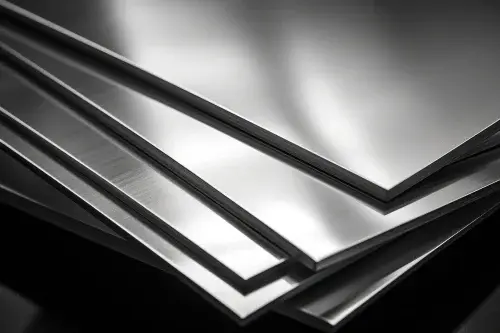
316 Stainless Steel Sheet
316 stainless steel sheet is one of the most common forms used in fabrication and industrial equipment. It is widely used in environments where corrosion resistance is critical.
Typical applications include:
- Food processing equipment
- Pharmaceutical processing systems
- Marine panels and components
- Industrial enclosures
- Chemical storage equipment
Sheets are available in various thicknesses and finishes such as 2B, brushed, or polished finishes.
316 Stainless Steel Plate
Plate form is thicker than sheet and is commonly used in heavy-duty structural and industrial applications.
Typical uses include:
- Chemical processing vessels
- Structural supports
- Pressure vessels
- Marine structural components
- Industrial machinery bases
Plate is selected when higher strength and rigidity are required.
316 Stainless Steel Bar
316 stainless steel bar stock is available in round, square, and hexagonal forms. It is frequently used for CNC machining and precision component manufacturing.
Common applications include:
- Marine fasteners
- Pump components
- Valves and fittings
- Shafts and brackets
- Structural connectors
Bar stock is ideal for machining parts that require corrosion resistance and mechanical durability.
316 Stainless Steel Pipe and Tubing
Pipe and tubing forms are widely used for fluid transport and structural frameworks.
Typical uses include:
- Marine piping systems
- Chemical processing pipelines
- Heat exchangers
- Food and beverage processing equipment
- Architectural railings and frameworks
Tubing is often used for structural or aesthetic purposes, while pipe is designed for pressure and fluid transport.
316 Stainless Steel Coil
Coil form is commonly used in high-volume manufacturing processes where sheets are cut to custom dimensions.
Coils allow manufacturers to produce large quantities of components efficiently through roll forming, stamping, or automated fabrication.
Sourcing Perspective
Because 316 stainless steel is widely used across industries, it is generally available through metal distributors and industrial supply chains.
At Manufyn, we help manufacturers source certified 316 stainless steel in sheet, plate, bar, and tubing forms while integrating machining, welding, and fabrication into a single production workflow.
Need certified Stainless Steel 316 for marine or industrial manufacturing?
Get sourcing and fabrication support from Manufyn.
Can Stainless Steel 316 Be Welded?
Yes, Stainless Steel 316 can be welded using common welding methods such as TIG and MIG welding. It is considered a weld-friendly stainless steel grade and is widely used in fabricated assemblies.
However, for heavy welding applications, the low-carbon variant 316L is often preferred to improve corrosion resistance in the weld zone.
Why 316 Welds Well
316 stainless steel has good ductility and toughness, allowing it to tolerate thermal stress during welding without significant cracking.
It is widely used in welded assemblies such as:
- Marine structures
- Chemical processing tanks
- Industrial piping systems
- Pharmaceutical equipment
- Food processing machinery
Because it is an austenitic stainless steel, it typically does not require preheating before welding.
316 vs 316L Stainless Steel
316L is a low-carbon version of 316 stainless steel. The reduced carbon content minimizes carbide precipitation during welding.
Carbide precipitation can lead to corrosion in the heat-affected zone. Using 316L helps maintain corrosion resistance after welding.
For thick sections or components exposed to aggressive environments, 316L is usually recommended.
Welding Methods for 316 Stainless Steel
Several welding techniques are commonly used for 316 stainless steel:
- TIG (Gas Tungsten Arc Welding)
- MIG (Gas Metal Arc Welding)
- Laser welding
- Resistance welding
Proper shielding gas and clean welding conditions are important to maintain corrosion resistance.
Corrosion Performance After Welding
When welded correctly, stainless steel 316 maintains excellent corrosion resistance. Post-weld cleaning and passivation are often performed to restore the protective oxide layer.
These processes remove surface contamination and help maintain long-term durability in marine and chemical environments.
Manufacturing Perspective
For corrosion-sensitive welded assemblies, selecting 316L instead of standard 316 can improve long-term reliability with minimal cost difference.
At Manufyn, welding procedures are designed to maintain both structural integrity and corrosion resistance across fabricated stainless assemblies.
Planning a welded stainless steel 316 assembly?
Upload your design and get welding and fabrication guidance.
Is Stainless Steel 316 Easy to Machine?
Stainless Steel 316 is considered moderately difficult to machine compared to carbon steel or alloy steel. Like most austenitic stainless steels, it tends to work harden during machining, which increases tool wear and requires careful control of cutting parameters.
Despite these challenges, 316 stainless steel is widely machined for components that require both corrosion resistance and structural durability.
Why 316 Stainless Steel Is Difficult to Machine
The main challenge when machining 316 stainless steel is its tendency to work harden quickly. When cutting tools remain in contact with the material too long or move too slowly, the material becomes harder and more resistant to further cutting.
This can lead to:
- Increased cutting forces
- Higher tool wear
- Heat buildup during machining
- Reduced tool life
Because of this behavior, machining strategies must be carefully optimized.
Best Machining Practices for 316 Stainless Steel
Successful machining of 316 stainless steel typically requires:
- Sharp carbide tooling
- Consistent feed rates
- Proper cutting speeds
- Effective coolant application
- Avoiding tool dwell during cutting
These practices help prevent work hardening and maintain dimensional accuracy.
316 vs Carbon Steel Machinability
Carbon steels generally machine more easily than stainless steel 316 because they generate less heat and do not work harden as aggressively.
However, stainless steel is selected when corrosion resistance is required. In these situations, the added machining complexity is justified by improved durability and environmental performance.
Manufacturing Perspective
Machining stainless steel 316 may increase tooling cost and machining time compared to carbon steel, but it provides superior corrosion resistance in demanding environments.
At Manufyn, machining strategies for austenitic stainless steels are optimized to minimize tool wear while maintaining tight tolerance control.
Need precision-machined components in stainless steel 316?
Upload your CAD file to receive manufacturability feedback and cost analysis.
What Is the Price of Stainless Steel 316?
The price of Stainless Steel 316 typically ranges between $3.50 and $7.00 per pound in the United States, depending on product form, thickness, market conditions, and order volume. Because it contains molybdenum, 316 is generally more expensive than 304 stainless steel.
Pricing fluctuates with global metal commodity markets, especially nickel and molybdenum.
Factors That Affect 316 Stainless Steel Pricing
Several factors influence the price of stainless steel 316.
First, raw material composition affects pricing because molybdenum and nickel are expensive alloying elements.
Second, product form matters. Sheet, plate, bar, pipe, and tubing may vary in price due to processing requirements.
Third, surface finish and thickness can influence cost, particularly for polished or specialty finishes.
Finally, certification requirements such as ASTM compliance or Mill Test Reports (MTRs) may increase pricing slightly due to quality verification and documentation.
Why 316 Stainless Steel Is More Expensive Than 304
The main reason 316 costs more than 304 is the addition of molybdenum, which improves resistance to chloride corrosion.
This added alloying element increases raw material cost but provides improved durability in marine and chemical environments.
Bulk Purchasing vs Retail Pricing
Small retail purchases of stainless steel often carry higher per-pound costs. Bulk purchasing through industrial suppliers or manufacturing networks can significantly reduce pricing.
For OEMs and production-scale manufacturing, integrating sourcing with fabrication may further reduce total production costs.
Cost vs Performance Consideration
While 316 stainless steel has a higher upfront material cost than 304, it often provides better long-term value in corrosive environments.
Using 304 in high-chloride environments may lead to premature corrosion and replacement costs. Selecting 316 initially can reduce maintenance and lifecycle expenses.
At Manufyn, we help manufacturers evaluate material pricing together with fabrication requirements and lifecycle performance to ensure optimal cost efficiency.
Looking for competitive pricing on certified stainless steel 316?
Request sourcing and manufacturing support from Manufyn.
Advantages and Disadvantages of Stainless Steel 316
Stainless Steel 316 is widely used because of its superior corrosion resistance and long service life in harsh environments. However, like any engineering material, it has both strengths and limitations that should be considered during material selection.
Understanding these tradeoffs helps engineers and manufacturers determine whether 316 is the right choice for a specific application.
Advantages of Stainless Steel 316
One of the biggest advantages of 316 stainless steel is its excellent resistance to chloride corrosion. The addition of molybdenum improves resistance to pitting and crevice corrosion, which makes it ideal for marine environments and chemical processing systems.
It also offers strong durability in environments exposed to moisture, salt, and cleaning chemicals. This makes it suitable for industries where corrosion resistance is critical.
316 stainless steel also provides good weldability and formability, allowing it to be used in fabricated assemblies, tanks, structural components, and piping systems.
Another key benefit is its hygienic surface. Because it is non-porous and easy to clean, 316 stainless steel is widely used in food processing, pharmaceutical manufacturing, and medical equipment.
Finally, it offers long service life with minimal maintenance, particularly in aggressive environments where other metals would corrode quickly.
Disadvantages of Stainless Steel 316
Despite its advantages, 316 stainless steel does have some limitations.
The most notable drawback is higher material cost compared to 304 stainless steel. The presence of molybdenum and higher nickel content increases raw material pricing.
It is also more difficult to machine than carbon or alloy steels because it work hardens during machining operations. This can increase tooling costs and machining time.
Another limitation is that 316 stainless steel cannot be hardened through conventional heat treatment. Strength improvements must be achieved through cold working instead.
Finally, while it performs well in most corrosive environments, extremely aggressive chemical environments may require specialty alloys beyond 316 stainless steel.
When 316 Stainless Steel Is the Right Choice
316 stainless steel is typically the best choice when:
- Components are exposed to saltwater or coastal environments
- Equipment operates in chemical or pharmaceutical facilities
- Hygienic surfaces are required for food processing
- Long-term corrosion resistance is critical
Selecting the correct stainless steel grade helps prevent corrosion-related failures and reduces maintenance costs over time.
Evaluating whether stainless steel 316 is the right material for your application?
Upload your component design and receive expert guidance from Manufyn.
Ready to Manufacture with Stainless Steel 316?
Stainless Steel 316 is one of the most reliable materials for applications requiring corrosion resistance, durability, and long-term performance in harsh environments.
It is widely used in marine systems, chemical processing plants, food production equipment, and pharmaceutical facilities.
Selecting the correct stainless steel grade, form, and fabrication process is critical for ensuring optimal performance and cost efficiency.
At Manufyn, we help manufacturers source certified stainless steel 316 and integrate machining, fabrication, and finishing into a streamlined production workflow.
Frequently Asked Questions About Stainless Steel 316
Yes, stainless steel 316 is commonly referred to as marine-grade stainless steel because it offers excellent resistance to saltwater corrosion. The addition of molybdenum helps protect the material from pitting caused by chloride exposure.
This makes it widely used in marine hardware, offshore equipment, and coastal structures.
Under normal operating conditions, 316 stainless steel does not rust. Its chromium content forms a protective oxide layer that prevents corrosion.
However, surface rust may occur if the material becomes contaminated with carbon steel particles or is exposed to extremely aggressive chemicals.
316 stainless steel is better than 304 in environments that contain chlorides, such as marine or chemical processing environments. This is because 316 contains molybdenum, which improves corrosion resistance.
For general indoor or non-marine applications, 304 stainless steel may provide sufficient performance at a lower cost.
304 and 316 stainless steels have very similar mechanical strength. The main difference between them is corrosion resistance rather than structural performance.
Both grades offer good ductility and toughness.
316 stainless steel is more expensive because it contains molybdenum and higher nickel content. These alloying elements improve corrosion resistance but increase raw material cost.
Yes, 316 stainless steel is considered food grade and is widely used in food processing equipment and pharmaceutical manufacturing systems.
Its resistance to corrosion and cleaning chemicals makes it suitable for hygienic environments.
In its annealed condition, 316 stainless steel is generally non-magnetic. However, slight magnetism may appear after cold working processes such as bending or forming.
In corrosive environments, stainless steel 316 can last for decades with minimal maintenance. Its lifespan depends on environmental exposure, surface finish, and operating conditions.
Have a stainless steel 316 component ready for production?
Upload your CAD file and receive manufacturability feedback and cost analysis within 24 hours.