
Prototype Material Selection Guide:
ABS, PP, Nylon, PC & PEEK
Selecting the right prototype material helps reduce development costs, validate product performance, and accelerate the transition to production. Compare the characteristics of ABS, PP, Nylon, Polycarbonate, and PEEK to identify the best material for your application.
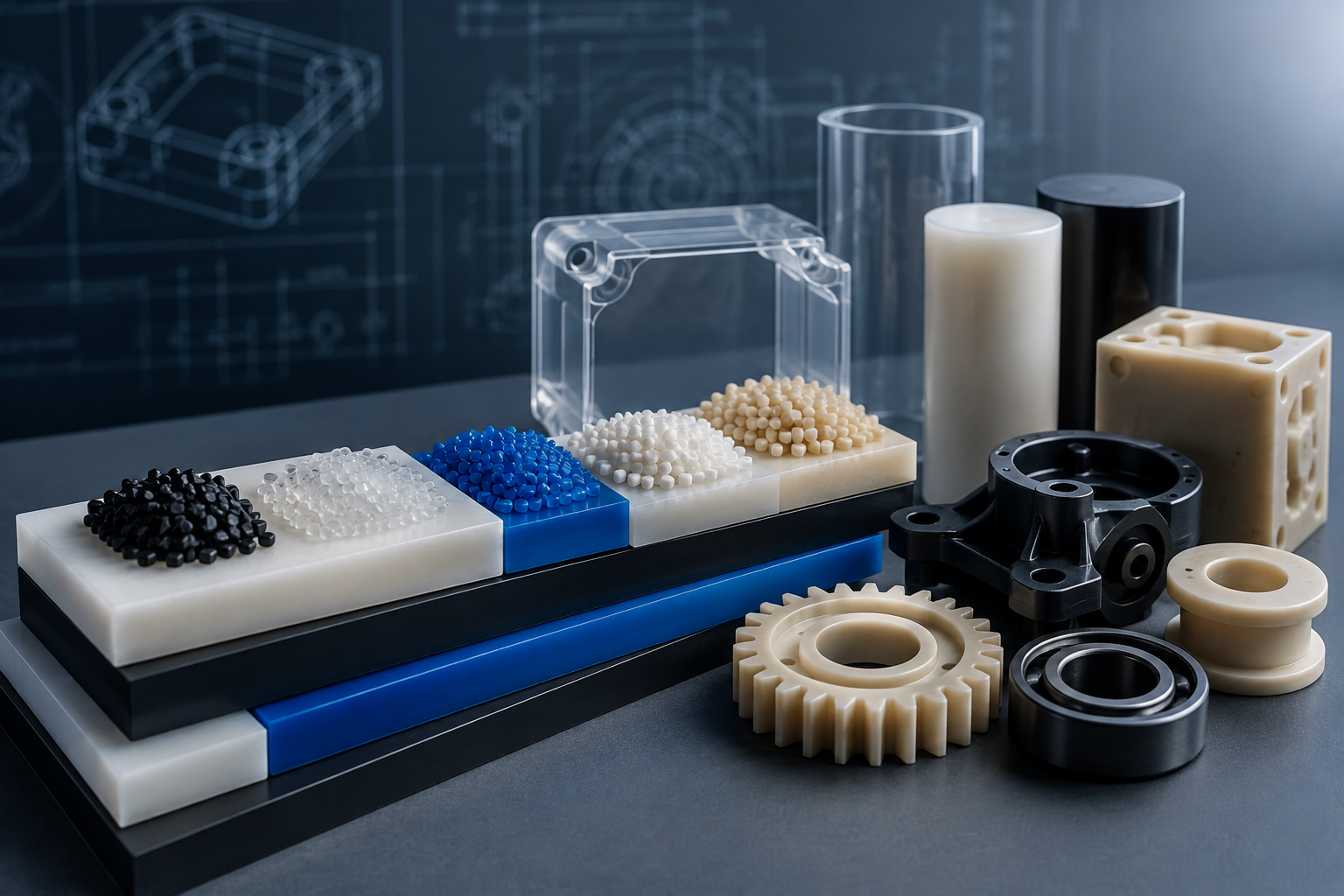
Why Choosing the Right Prototype Material Matters
The material you choose for your prototype directly affects product performance, testing accuracy, manufacturing cost, and the transition to mass production. Selecting the right engineering plastic early in the design phase helps reduce development risks while ensuring your product performs as expected.
Validate Product Performance
Test strength, flexibility, wear resistance, and functionality before investing in production tooling.
Reduce Development Cost
Choosing an appropriate material avoids unnecessary design revisions, tooling modifications, and expensive prototype iterations.
Match Operating Conditions
Evaluate temperature resistance, chemical compatibility, UV exposure, and mechanical requirements based on your application’s environment.
Accelerate Production
Using production-like materials during prototyping makes the transition to injection molding faster and more reliable.
Need Help Selecting the Best Prototype Material?
Whether your product requires a cost-effective material like ABS or PP, an engineering-grade option such as Nylon or Polycarbonate, or a high-performance plastic like PEEK, Manufyn helps you identify the right material based on your application, manufacturing process, performance requirements, and budget.
Choose the Right Plastic for Your Prototype
Every engineering plastic offers unique mechanical, thermal and chemical properties. Selecting the right material depends on your product’s performance requirements, operating environment and production goals.
ABS
- Excellent for concept models
- Easy to machine and mold
- Good impact resistance
- Ideal for consumer products
- Cost-effective prototype option
PP
- Outstanding chemical resistance
- Lightweight material
- Excellent fatigue life
- Suitable for living hinges
- Ideal for automotive parts
Nylon
- High strength and toughness
- Excellent wear resistance
- Suitable for gears and bearings
- Available in glass-filled grades
- Great for functional testing
Polycarbonate (PC)
- Exceptional impact strength
- Transparent material
- Electrical insulation
- Excellent dimensional stability
- Ideal for housings and covers
PEEK
- Very high temperature resistance
- Excellent chemical resistance
- Outstanding mechanical strength
- Medical & aerospace applications
- Production-grade engineering plastic
Compare Prototype Materials at a Glance
Use this quick comparison to identify the most suitable engineering plastic for your prototype based on strength, cost, operating temperature, wear resistance, chemical exposure and manufacturing requirements.
| Property | ABS | PP | Nylon | PC | PEEK |
|---|---|---|---|---|---|
| Relative Cost | Low | Low | Medium | Medium | High |
| Mechanical Strength | Good | Moderate | Excellent | Excellent | Outstanding |
| Impact Resistance | Good | Good | Very Good | Excellent | Excellent |
| Chemical Resistance | Moderate | Excellent | Good | Good | Excellent |
| Wear Resistance | Good | Moderate | Excellent | Good | Excellent |
| High Temperature | Low | Low | Medium | Medium | Outstanding |
| CNC Machining | Excellent | Good | Excellent | Excellent | Excellent |
| Injection Molding | Excellent | Excellent | Excellent | Excellent | Excellent |
| Typical Applications | Consumer Products | Automotive Parts | Gears & Bearings | Electronic Housings | Medical & Aerospace |
Which Material Should You Choose?
Choose ABS for affordable concept prototypes, PP when chemical resistance and flexibility are important, Nylon for strong mechanical components, Polycarbonate (PC) for impact-resistant transparent parts, and PEEK for demanding applications requiring exceptional thermal and chemical performance. If you’re unsure, the engineering team at Manufyn can help you select the most suitable prototype material based on your product requirements.
How to Choose the Right Prototype Material
Selecting the ideal prototype material involves more than comparing material properties. Engineers should evaluate the product’s function, operating environment, manufacturing process, budget and future production plans before making a decision.
Define the Product Function
Determine whether the prototype is intended for visual evaluation, functional testing, fit verification or real-world performance validation.
Evaluate Operating Conditions
Consider temperature, mechanical loads, moisture, UV exposure, chemicals and environmental conditions that the final product will experience.
Select the Manufacturing Process
Choose a material that is suitable for CNC machining, 3D printing or prototype injection molding depending on your project timeline and production goals.
Prepare for Mass Production
Whenever possible, select a prototype material that closely matches the final production material to reduce redesign and tooling changes later.
Quick Material Selection Guide
- Choose ABS for economical concept models and general-purpose prototypes.
- Choose PP for lightweight products requiring flexibility and chemical resistance.
- Choose Nylon for gears, bearings and high-strength engineering components.
- Choose Polycarbonate (PC) for transparent, impact-resistant housings and covers.
- Choose PEEK for demanding aerospace, medical and high-temperature industrial applications.
Partner with Manufyn for the Right Prototype Material
Choosing the right material is only one part of successful product development. At Manufyn, we help manufacturers, product designers and OEMs select engineering plastics that balance performance, manufacturability and cost while ensuring a smooth transition from prototype to production.
Material Selection Expertise
Our engineering team evaluates your product requirements and recommends the most suitable material based on strength, operating environment, chemical exposure, production volume and budget.
Prototype to Production Support
From prototype tooling and CNC machining to production tooling and injection molding, we support every stage of your manufacturing journey through our trusted supplier network.
Optimized for Manufacturing
We help minimize design changes by selecting prototype materials that closely match production-grade plastics, reducing risk, development time and tooling costs.
Wide Range of Engineering Plastics
Whether your project requires ABS, Polypropylene, Nylon, Polycarbonate, PEEK or other engineering polymers, we source and manufacture prototypes that meet demanding quality standards.
Global Manufacturing Network
Manufyn works with qualified manufacturing partners across India to deliver precision components for customers in automotive, industrial equipment, electronics, robotics and medical industries.
Fast Technical Support
Need help deciding between ABS, Nylon or PEEK? Our team reviews your drawings and application requirements to recommend the best prototype material before production begins.
Ready to Select the Best Material for Your Prototype?
Share your drawings, specifications or application details with our engineering team. We’ll help you choose the right prototype material and manufacturing process to reduce costs, improve performance and accelerate product development.
Request a Free ConsultationPrototype Materials for Every Industry
Different industries demand different material properties. From lightweight consumer products to high-temperature aerospace components, selecting the right prototype material ensures reliable testing, faster product development and a smoother transition to production.
Automotive
Develop functional prototypes for interior trims, brackets, housings, clips, connectors and under-the-hood components using ABS, PP, Nylon and engineering-grade plastics.
Medical Devices
Prototype surgical instruments, diagnostic equipment, enclosures and precision components using high-performance materials such as Polycarbonate and PEEK.
Industrial Equipment
Evaluate gears, bushings, machine guards, wear components and functional assemblies with durable engineering plastics designed for demanding environments.
Electronics
Produce lightweight, impact-resistant housings, electrical enclosures, connectors and transparent covers with Polycarbonate, ABS and flame-retardant materials.
Robotics & Automation
Create lightweight robotic arms, sensor mounts, fixtures and custom mechanical parts using high-strength plastics that balance weight, rigidity and durability.
Consumer Products
Prototype appliance components, lifestyle products, sporting goods and custom plastic parts that closely resemble final production components.
From Prototype to Production with Confidence
At Manufyn, we help customers select the most suitable engineering plastic based on application, operating conditions and manufacturing requirements. Whether your project needs a cost-effective ABS prototype or a high-performance PEEK component, our engineering team supports every stage—from material selection and prototype manufacturing to tooling and full-scale production.
Prototype Material Selection FAQs
Find answers to common questions about selecting engineering plastics for prototype development, functional testing and production validation.
Which plastic is best for prototype manufacturing?
How do I choose between ABS and Nylon?
When should I use Polycarbonate instead of ABS?
Is PEEK suitable for prototype parts?
Can prototype materials be used for production?
Does Manufyn help select the right material?
Let’s Find the Best Material for Your Prototype
Whether you’re developing a proof of concept, validating a functional design, or preparing for mass production, selecting the right material can significantly improve product performance while reducing development costs and lead times. Our engineering team will help you choose the most suitable material based on your application, operating conditions, manufacturing process, and budget.
Engineering Support
Material recommendations based on your application and performance requirements.
Rapid Prototyping
Prototype machining, prototype tooling and low-volume manufacturing support.
Production Ready
Smooth transition from prototype validation to full-scale production tooling.
Global Supply
Reliable manufacturing support from qualified suppliers across India.