
Prototype Injection Molding Cost
Discover how much prototype injection molding really costs, what influences tooling prices, and practical ways to reduce development expenses without compromising quality. Whether you need 50 prototypes or 10,000 production-ready components, Manufyn helps you optimize cost, lead time, and manufacturability.
$500+
Prototype Tooling Starts From
7–15
Typical Tooling Lead Time (Days)
50+
Prototype Parts Per Batch
40%
Lower Cost with Aluminum Tooling
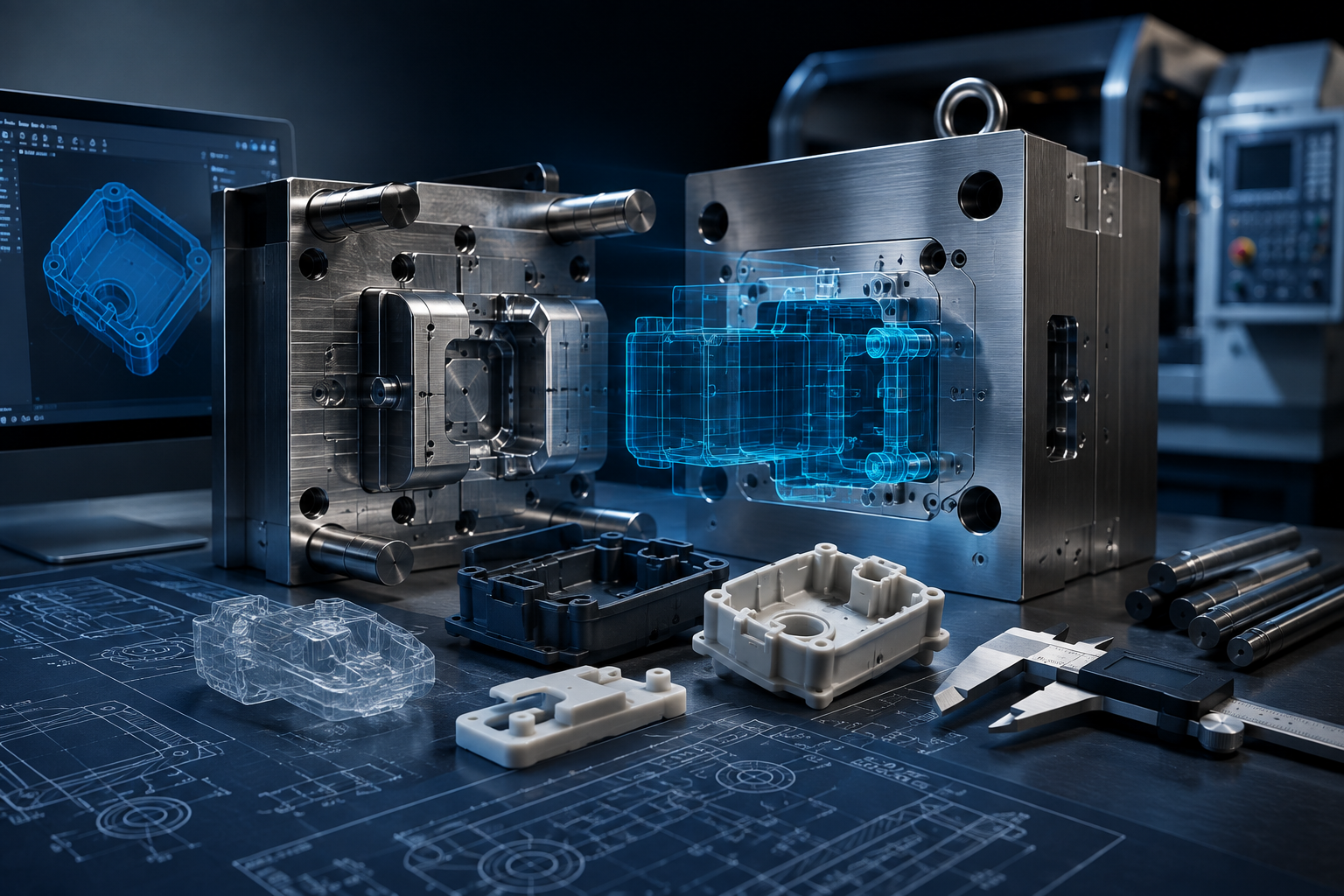
What Determines Prototype Injection Molding Cost?
The cost of prototype injection molding depends on much more than the mold itself. Part geometry, material selection, production quantity, tooling complexity, and surface finish all influence the final project price. Understanding these factors early helps reduce unnecessary expenses while accelerating product development.
Part Design Complexity
Complex geometries, undercuts, deep ribs, and thin walls require additional machining operations and tooling features, increasing mold cost and manufacturing time.
Injection Molding Design Guide →Material Selection
Engineering plastics such as PEEK, Nylon, Polycarbonate, and ABS have different processing requirements that affect tooling design, mold temperature, and cycle time.
Explore Plastic Materials →Prototype Quantity
Whether you require 50 samples or several thousand components, production volume determines whether aluminum prototype tooling or hardened steel tooling offers the best value.
Injection Molding Services →Mold Construction
Additional sliders, lifters, hot runners, inserts, textured finishes, and polishing all increase tooling complexity and prototype mold pricing.
Discuss Your Project →Typical Prototype Cost Breakdown
Although every project is unique, most prototype tooling budgets are distributed across mold design, CNC machining, EDM, mold assembly, sampling, inspection, and validation. Investing in Design for Manufacturability (DFM) early often reduces overall tooling costs and shortens lead times.
| Cost Element | Typical Share |
|---|---|
| Mold Design & DFM | 10–15% |
| CNC Machining | 35–45% |
| EDM & Wire Cutting | 10–20% |
| Mold Assembly | 10–15% |
| Sampling & Inspection | 10–15% |
| Finishing & Validation | 5–10% |
Typical Prototype Injection Molding Cost
Every project has unique requirements, but the table below provides a practical estimate based on common prototype injection molding projects. Final pricing depends on component geometry, mold complexity, plastic material, tolerances, and production volume. Our engineering team also reviews each design for manufacturability (DFM) to identify cost-saving opportunities before tooling begins.
| Prototype Requirement | Typical Cost Range | Lead Time | Recommended Tool |
|---|---|---|---|
| Simple Plastic Component | US$500 – US$1,500 | 7–10 Days | Aluminum Prototype Mold |
| Consumer Product Housing | US$1,500 – US$3,500 | 10–15 Days | Aluminum Tool |
| Automotive Plastic Parts | US$3,000 – US$8,000 | 2–4 Weeks | High Precision Aluminum Tool |
| Medical Device Components | US$4,000 – US$10,000+ | 3–5 Weeks | Validated Prototype Tool |
| Complex Multi-Cavity Tool | US$8,000+ | 4–6 Weeks | Production Grade Tool |
Need an Accurate Cost Estimate?
Upload your 3D CAD model or engineering drawing, and our tooling specialists will review your design to recommend the most economical manufacturing solution.
- ✔ Free DFM review
- ✔ Prototype tooling recommendations
- ✔ Material selection assistance
- ✔ Manufacturing feasibility review
- ✔ Transparent tooling quotation
- ✔ Global shipping support
How Can You Reduce Prototype Injection Molding Cost?
Many tooling expenses can be minimized by simplifying part geometry, maintaining uniform wall thickness, adding proper draft angles, avoiding unnecessary sliders, selecting standard mold bases, and choosing the right engineering plastic. Before manufacturing begins, Manufyn’s engineers perform a Design for Manufacturability (DFM) review to optimize tooling, improve cycle times, and reduce overall project costs. Learn more through our resources on Injection Molding Design, DFM Checklist, and Injection Molding Services.
Aluminum vs Steel Prototype Molds
One of the biggest factors affecting prototype injection molding cost is the choice of mold material. Aluminum molds offer lower tooling costs and faster lead times, while hardened steel molds are designed for long production runs. Selecting the right option depends on your production volume, budget, and future manufacturing plans.
| Comparison | Aluminum Prototype Mold | Steel Production Mold |
|---|---|---|
| Initial Tool Cost | Lower | Higher |
| Typical Lead Time | 1–3 Weeks | 4–8 Weeks |
| Tool Life | 5,000–50,000 Shots | 500,000+ Shots |
| Best Production Quantity | 50–10,000 Parts | 10,000+ Parts |
| Engineering Changes | Easy & Cost Effective | More Expensive |
| Cooling Performance | Excellent | Very Good |
| Ideal Application | Prototype & Low Volume Production | Mass Production |
When Should You Choose an Aluminum Prototype Mold?
Aluminum tooling is ideal when product development is still evolving or when only a few hundred to several thousand plastic components are required. It significantly reduces prototype injection molding cost while maintaining production-quality parts. Many OEMs use aluminum tooling to validate product performance before investing in hardened steel production molds.
Explore Injection Molding →Why Choose Manufyn for Prototype Tooling?
Manufyn partners with certified tooling manufacturers across India to deliver high-quality aluminum prototype molds, production tooling, and low-volume injection molding. Our engineering team provides DFM analysis, mold flow recommendations, transparent quotations, and complete project management from CAD review through production and global delivery.
Request a Prototype Quote →Prototype Injection Molding vs CNC Machining vs 3D Printing
Selecting the right prototyping process depends on your project goals, production volume, material requirements, dimensional accuracy, and budget. While each manufacturing process has unique advantages, prototype injection molding often becomes the most economical option once multiple identical parts are required.
| Comparison | Prototype Injection Molding | CNC Machining | 3D Printing |
|---|---|---|---|
| Initial Investment | Medium | Low | Very Low |
| Cost Per Part | Lowest | Higher | Highest |
| Best Quantity | 50–10,000 | 1–200 | 1–50 |
| Surface Finish | Excellent | Excellent | Good |
| Production Material | Yes | Yes | Limited |
| Repeatability | Excellent | Excellent | Moderate |
| Production Ready | Yes | Yes | No |
Prototype Injection Molding
Best suited for low-volume production, functional testing, customer samples, and bridge manufacturing. Although tooling requires an initial investment, the cost per part decreases significantly as production volume increases.
- Production-grade materials
- Excellent dimensional accuracy
- High repeatability
- Ideal for bridge production
- Fast production cycles
CNC Machining
CNC machining is recommended when only a few prototype parts are needed or when components require tight machining tolerances. It is commonly used for engineering plastics, aluminum, stainless steel, and other metals.
- No tooling investment
- Excellent for functional prototypes
- Complex machined parts
- Suitable for metals and plastics
- Ideal for very low quantities
3D Printing
3D printing is widely used during the concept validation stage where speed is more important than production-grade material properties. It allows rapid design iterations before investing in tooling.
- Fastest prototype production
- Minimal setup cost
- Ideal for design validation
- Complex geometries
- Lower production strength
Not Sure Which Process Is Right for Your Project?
Our engineering team evaluates your CAD model, production quantity, material requirements, and budget to recommend the most cost-effective manufacturing process. Whether you need prototype injection molding, CNC machining, or a combination of both, we help you reduce development costs while accelerating product launch. For additional guidance, explore our Injection Molding Services, Precision CNC Machining, Injection Molding Design Guide, and Request a Free Manufacturing Consultation.
Talk to Our EngineersHow to Reduce Prototype Injection Molding Cost
Reducing prototype injection molding cost is not simply about choosing the lowest quotation. The greatest savings come from optimizing part design, simplifying tooling, selecting the right material, and applying Design for Manufacturability (DFM) principles before production begins. Small design improvements during development can significantly reduce tooling expenses and shorten lead times.
Design Parts for Manufacturability
Simple geometries reduce machining hours and tooling complexity. Eliminating unnecessary undercuts, sharp corners, and deep ribs lowers prototype tooling costs while improving mold reliability.
Injection Molding Design Guide →Choose Aluminum Prototype Tooling
For low-volume production, aluminum molds provide faster lead times and substantially lower tooling costs compared to hardened steel molds while still producing high-quality plastic components.
Prototype Injection Molding →Use Standard Mold Bases
Whenever possible, standard mold components reduce machining time, simplify maintenance, and lower overall prototype mold manufacturing costs.
Discuss Your Design →Select the Right Plastic Material
Not every prototype requires premium engineering plastics. Selecting the appropriate resin for functional testing can significantly reduce both tooling and production costs.
Engineering Plastic Materials →Maintain Uniform Wall Thickness
Consistent wall thickness improves material flow, reduces sink marks, shortens cooling time, and minimizes expensive tooling modifications during mold development.
Wall Thickness Design →Perform a DFM Review Before Tooling
A comprehensive Design for Manufacturability review identifies potential manufacturing issues before steel or aluminum is cut, avoiding costly design revisions later in the project.
DFM Checklist →Lower Your Prototype Cost Without Compromising Quality
At Manufyn, every prototype project begins with a detailed engineering review. Our specialists evaluate your CAD files, recommend tooling improvements, optimize material selection, and identify opportunities to reduce manufacturing costs before production starts. This collaborative approach helps OEMs accelerate product development while maintaining production-quality standards.
Request a Free Cost ReviewWhy Prototype Costs Vary Between Projects
Prototype injection molding costs depend on several technical factors including part geometry, number of cavities, plastic material, mold complexity, surface finish, dimensional tolerances, and production quantity. Components with sliders, lifters, threaded features, or polished cosmetic surfaces generally require additional tooling work, increasing the overall project cost.
Before starting tooling, Manufyn performs a comprehensive engineering review to identify opportunities for cost reduction without sacrificing quality. Our team also recommends the most suitable manufacturing process based on your production volume and budget. Learn more about our Injection Molding Services, Precision CNC Machining, Injection Molding Design Guide, and Request a Prototype Manufacturing Quote.
Prototype Injection Molding Cost FAQs
Below are answers to some of the most common questions buyers ask before investing in prototype tooling and low-volume plastic part production.
How much does a prototype injection mold cost?
Is aluminum tooling suitable for production?
What factors influence prototype injection molding cost?
When is prototype injection molding better than CNC machining?
Can prototype molds be modified after sampling?
How long does prototype tooling take?
What materials can be used for prototype injection molding?
How can I reduce prototype injection molding cost?
Does Manufyn provide DFM support before tooling?
Can Manufyn ship prototype parts internationally?
Looking for an Accurate Prototype Injection Molding Cost?
Whether you’re developing a new product, validating a design, or preparing for full-scale production, Manufyn helps you reduce tooling costs while maintaining production-quality standards. Our engineering team reviews every project to recommend the most efficient manufacturing solution for your application.
Why Global OEMs Choose Manufyn
From design review to prototype tooling and low-volume production, Manufyn works with certified manufacturing partners across India to deliver precision plastic components with transparent pricing, reliable quality, and global logistics support.