
How Manufyn Developed Injection Molding Soft Tooling for Just $150 in 7 Days for a US Manufacturer
A real manufacturing project demonstrating how Manufyn helped a US-based manufacturing company access cost-effective soft tooling development in India for a custom PA66 GF30 HT injection molded component.
GET AN INJECTION MOLDING QUOTE → EXPLORE THE PROJECTA Practical Injection Molding Solution for Low Volume Manufacturing
A US-based manufacturing company approached Manufyn with a requirement to develop a custom plastic bobbin using injection molding.
The customer needed a commercially viable tooling solution that could support lower-volume manufacturing without requiring a substantial initial investment in conventional production tooling.
For many manufacturers, the upfront cost of injection mold development can become a significant barrier when quantities are limited or a product is still in its early manufacturing stage.
Manufyn evaluated the requirement and coordinated soft tooling development through its Indian manufacturing network.
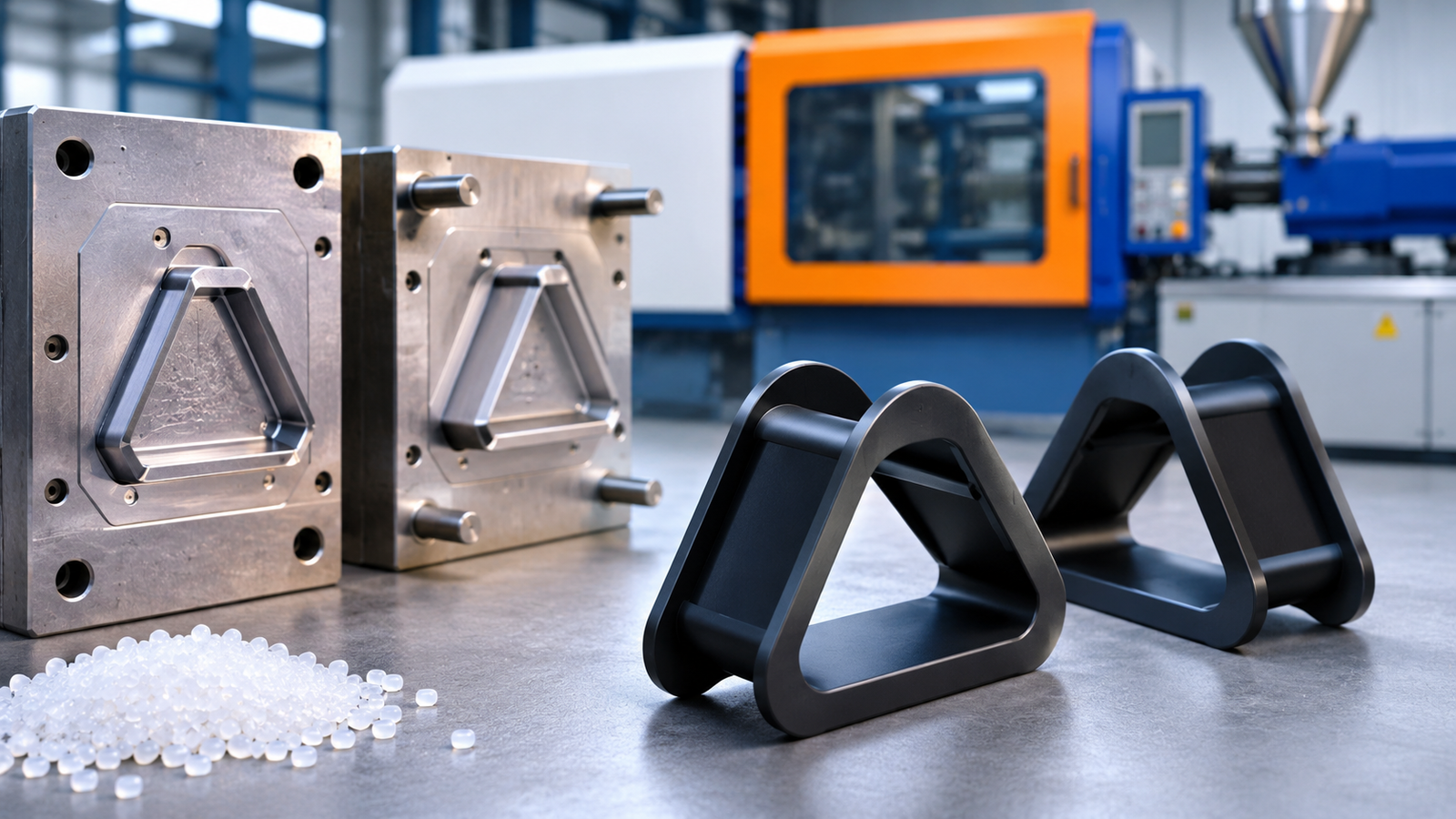
Understanding the Component and Material Specifications
The component was designed as a custom bobbin with a triangular geometry and internal structural features. The engineering drawing specified a heat-stabilized glass-filled Nylon 66 material.
Material selection was an important consideration because the component was intended for an application requiring engineering plastic characteristics and elevated thermal performance.
| Component | Custom Plastic Bobbin |
|---|---|
| Manufacturing Process | Plastic Injection Molding |
| Specified Material | PA66 GF30 HT |
| Base Polymer | Nylon 66 / Polyamide 66 |
| Glass Fibre Reinforcement | 30% |
| Material Grade | Heat Stabilized |
| Drawing Requirement | RTI Electrical greater than 180°C |
| Tooling Approach | Soft Tooling |
Note: The RTI requirement is reproduced from the customer drawing. Actual material compliance must be established through the selected material manufacturer’s documentation.
Why Conventional Injection Mold Development Was Not the Preferred Starting Point
The customer needed a manufacturing approach that balanced initial investment, tooling lead time and low-volume production requirements.
- High Initial Tooling Investment Conventional production tooling can require a considerable upfront investment, which may not be commercially attractive for smaller production batches.
- Short Development Timeline The customer required a rapid tooling development cycle rather than a prolonged conventional tooling procurement process.
- Low MOQ Manufacturing The tooling strategy needed to accommodate a lower-volume manufacturing requirement without forcing an early commitment to mass production.
- Engineering Material Requirements The component drawing specified PA66 GF30 HT, making the selection of a suitable tooling and molding approach important.
Coordinating Soft Tooling Development Through India
Manufyn evaluated the component requirements and coordinated the development of an economical soft tooling solution through its Indian manufacturing network.
The objective was to reduce the initial tooling investment while keeping the project aligned with the customer’s engineering drawing and material requirements.
Our role involved technical coordination, manufacturing partner engagement and commercial management throughout the tooling development process.
EXPLORE INJECTION MOLDING IN INDIA →Project Execution Approach
-
Engineering drawing review
Reviewing geometry, dimensions, material and component requirements. -
Tooling feasibility
Evaluating a soft tooling approach suitable for the intended low-volume application. -
Tool development coordination
Coordinating mold development with the Indian manufacturing partner. -
Material and molding considerations
Aligning the manufacturing approach with the specified PA66 GF30 HT requirement. -
Customer communication
Managing project coordination between the US customer and Indian manufacturing partner.
$150 Tooling Cost and 7-Day Development Timeline
The project delivered a low-cost soft tooling development solution for the US customer. The commercial approach was designed around reducing the initial tooling investment and supporting a low-volume manufacturing requirement.
| Customer Market | United States |
| Component | Custom Bobbin |
| Tooling Type | Soft Tooling |
| Tool Development Cost | $150 |
| Tool Development Lead Time | 7 Days |
| Material Specification | PA66 GF30 HT |
| Manufacturing Strategy | Low MOQ |
This project demonstrates how an appropriately selected soft tooling strategy can make custom plastic injection molding more accessible for manufacturers with smaller initial production requirements.
Your Injection Molding Procurement Partner in India
Manufyn helps international manufacturers access Indian injection molding and engineering capabilities through a coordinated procurement approach.
We support customers from tooling feasibility and supplier development to manufacturing coordination, quality oversight and delivery management.
Our objective is to help US buyers evaluate the right manufacturing partner, tooling strategy and production approach for their requirements.
Injection Molding in India: Common Questions from US Buyers
How much does injection molding tooling cost in India?
Injection molding tooling costs in India depend on component geometry, mold size, number of cavities, material, tool construction and expected production volume. Soft tooling can offer a lower-cost option for suitable prototype and low-volume applications. In this Manufyn case study, the soft tooling development cost was $150.
Can US companies procure injection molded components from India?
Yes. US companies can work with Indian manufacturers for custom plastic injection molding, engineering plastic components, prototype tooling and production requirements. Manufyn supports international buyers through supplier coordination, procurement and manufacturing oversight.
What is soft tooling in injection molding?
Soft tooling generally refers to lower-cost tooling approaches used for prototyping, development and suitable low-volume manufacturing applications. The actual tool construction, material, expected life and production suitability depend on the project requirements.
How long does injection mold development take in India?
Mold development time depends on part complexity, tooling design, material, manufacturing process and inspection requirements. For the project featured in this case study, Manufyn coordinated soft tooling development with a lead time of 7 days.
Can PA66 GF30 be used for injection molded components?
Yes. PA66 GF30 is a glass-fibre-reinforced Nylon 66 material used for engineering components requiring improved stiffness and strength compared with unreinforced Nylon 66. The appropriate grade must be selected based on the application’s mechanical, thermal and electrical requirements.
Does Manufyn support low MOQ injection molding?
Manufyn helps international customers evaluate suitable Indian manufacturing partners and tooling strategies for low-volume injection molding, prototype components and smaller production batches.
How can US manufacturers get an injection molding quotation from Manufyn?
US manufacturers can share their 2D engineering drawing, 3D CAD model, material specification, estimated quantity and delivery requirements through the Manufyn contact page. Our team can review the requirement and coordinate suitable manufacturing options in India.
Looking for Cost-Effective Injection Molding for Your Next Project?
From a single prototype to low-volume and serial production, Manufyn helps US manufacturers access Indian injection molding capabilities with coordinated tooling development, competitive procurement and manufacturing support.
Share your engineering drawing, CAD model and estimated production quantity. Let’s evaluate the right tooling and manufacturing approach for your project.
REQUEST A FREE QUOTATION → EMAIL OUR TEAM