Every successful product begins with a great idea, but taking that idea from a sketch to a final product on shelves is far more complex than it seems. This journey, often called the product development process, involves multiple stages of design, testing, manufacturing, and delivery.
For businesses, especially in manufacturing, engineering, and consumer industries, understanding this journey is critical. Without a clear roadmap, products can face delays, cost overruns, or quality issues.
That’s why this blog dives deep into the product development process explained step by step — helping you understand how innovative ideas become tangible, market-ready products.
At Manufyn, we specialize in bridging the gap between design and production, ensuring every stage — from concept to delivery — is seamlessly executed. Whether you’re developing a new component, re-engineering an existing product, or scaling manufacturing, Manufyn ensures efficiency, precision, and faster time-to-market.
Understanding the Product Development Process
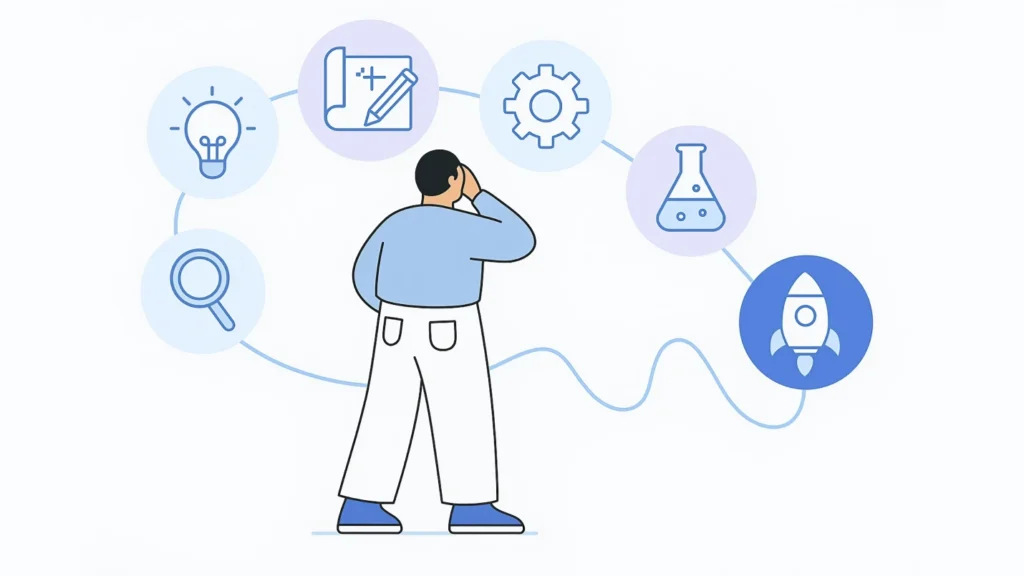
So, what exactly is the product development process?
It’s the complete journey that transforms a raw idea into a market-ready product — through stages like conceptualization, design, prototyping, testing, manufacturing, and delivery.
The process ensures that products are not only functional and cost-effective but also meet quality, safety, and performance standards.
In simple terms, it’s where creativity meets engineering discipline.
For manufacturers and startups alike, having the product development process explained helps in understanding how to manage risks, reduce rework, and maintain efficiency throughout. Each stage builds upon the previous one, ensuring that by the time production starts, the design is validated, and the plan is cost-optimized.
When done right, the process saves significant time and cost — and that’s exactly where Manufyn’s integrated design-to-delivery approach stands out.
Stage 1 – Ideation and Concept Development
Every great product starts with an idea. But turning that idea into a viable concept requires a structured approach. The product development process begins with ideation and concept development, where teams brainstorm, research, and define what problem the product will solve.
This stage involves:
- Market Research: Understanding customer needs and pain points.
- Competitive Analysis: Identifying existing solutions and gaps in the market.
- Concept Sketching and Validation: Translating ideas into early sketches or digital models to test feasibility.
Businesses use this stage to filter ideas and focus on those that align with market potential and technical feasibility. It lays the foundation for all further stages, ensuring every design decision is guided by real data and goals.
At this step, Manufyn collaborates with clients to assess product requirements, identify technical challenges, and validate whether the concept is manufacturable. This early alignment ensures the project begins with a clear roadmap and realistic expectations.
Stage 2 – Design and Engineering
Once the concept is finalized, the next step is design and engineering, where creativity meets precision. This stage transforms approved concepts into functional, manufacturable designs.
Key activities include:
- Industrial Design: Creating the look, feel, and ergonomics of the product.
- Mechanical and Electrical Engineering: Building detailed CAD models and engineering drawings.
- Material Selection: Choosing cost-effective and sustainable materials.
- Design Validation: Using simulations and design-for-manufacturing (DFM) checks to ensure feasibility.
The goal is to create a design that is both aesthetically pleasing and production-ready. A strong design phase reduces future rework, minimizes errors, and saves costs during manufacturing.
Manufyn’s product design and engineering team plays a crucial role here. With expertise in 3D modeling, DFM, and prototyping, Manufyn helps businesses create optimized designs that move seamlessly into production. Clients benefit from faster design iterations, improved functionality, and lower tooling costs.
Stage 3 – Prototyping and Testing
After the design and engineering phase, the focus shifts to prototyping and testing. This is where the virtual design becomes a physical model. A prototype helps validate how the product will perform in real-world conditions and identifies improvements before large-scale manufacturing begins.
This stage involves:
- Rapid Prototyping: Using 3D printing, CNC machining, or other methods to create the first version of the product.
- Functional Testing: Evaluating strength, durability, and usability.
- User Feedback: Testing with actual users to refine ergonomics and functionality.
- Design Optimization: Making necessary changes based on performance results.
Testing ensures the product performs as intended, meets safety and quality standards, and satisfies end-user needs. It is far more cost-effective to fix design issues at this stage than during production.
Manufyn assists clients with rapid prototyping services and product validation testing. With advanced tools and in-house expertise, Manufyn ensures that every prototype closely reflects final production conditions. This helps minimize risks and ensures a smoother transition to manufacturing.
Stage 4 – Tooling and Manufacturing Setup
Once the prototype is validated, it is time to prepare for mass production. The tooling and manufacturing setup stage focuses on creating molds, fixtures, and production systems required for consistent manufacturing.
Key steps in this phase include:
- Tool Design and Fabrication: Creating molds or dies that define product dimensions and quality.
- Process Planning: Determining the best manufacturing techniques, assembly sequences, and material flow.
- Pilot Production: Conducting initial test runs to verify production efficiency.
- Design for Manufacturability (DFM): Ensuring the product can be produced efficiently without compromising on quality.
Proper tooling setup determines how smooth and cost-effective the production process will be. Any small inaccuracy here can affect the entire production line.
At Manufyn, the tooling and setup process is managed with precision. The team focuses on building high-quality molds and production systems that ensure dimensional accuracy and consistent output. This ensures that when full-scale production begins, the process runs efficiently with minimal downtime and waste.
Stage 5 – Production and Quality Control
With the tooling in place, the production and quality control phase begins. This is the stage where the product finally moves into full-scale manufacturing. Every part, process, and parameter is monitored to ensure consistent output and quality.
This stage typically includes:
- Pilot Runs: Conducting small production batches to fine-tune machine settings and process parameters.
- Mass Production: Scaling up production while maintaining the same quality standards.
- In-Process Quality Checks: Regular inspections during production to catch issues early.
- Final Quality Assurance: Verifying dimensions, finishes, and functionality before shipment.
The product development process is only successful when production maintains precision, consistency, and efficiency. A well-defined quality control plan ensures fewer defects, higher customer satisfaction, and reduced returns.
Manufyn integrates quality control at every production step. Using data-driven monitoring and strict process validation, the team ensures every unit meets defined standards. From raw material inspection to final packaging, every detail is tracked for accuracy and performance.
Stage 6 – Delivery and Post-Production Support
The final stage of the product development process is delivery and post-production support. Once the products are manufactured, they undergo final inspection, packaging, and logistics management to reach customers safely and on time.
This stage includes:
- Packaging Design: Ensuring protection and visual appeal during transportation.
- Logistics Planning: Choosing efficient routes and methods for timely delivery.
- Customer Feedback Collection: Understanding user experience for future improvements.
- After-Sales Support: Offering maintenance, replacements, or product improvements.
Many companies overlook post-production support, but it plays a vital role in maintaining brand trust and long-term customer relationships.
Manufyn ensures clients receive end-to-end support even after product delivery. From documentation to logistics coordination, the focus remains on reliability and customer satisfaction. This complete approach gives businesses peace of mind that every product delivered meets the same high standards as designed.
Ready to turn your idea into a market-ready product?
Partner with Manufyn for end-to-end product development — from design to delivery.
Contact our team today to get started.
Benefits of an Integrated Design-to-Delivery Partner
In traditional product development, companies often deal with multiple vendors — one for design, another for tooling, and yet another for manufacturing. This fragmented approach leads to miscommunication, delays, and higher costs.
An integrated design-to-delivery partner like Manufyn changes that by offering end-to-end support throughout the product development process.
Here’s how it benefits businesses:
- Faster Turnaround Time: Seamless coordination between design, prototyping, and manufacturing reduces delays.
- Lower Costs: Eliminating vendor handoffs cuts duplication and rework costs.
- Better Quality Control: One accountable partner ensures consistent quality from concept to delivery.
- Streamlined Communication: A single point of contact improves project visibility and decision-making.
- Scalability: Easy to ramp up production or iterate new versions based on feedback.
Manufyn is built around this integrated approach. With a team of design engineers, manufacturing experts, and quality specialists, Manufyn ensures that every project flows smoothly across all stages. Clients benefit from transparency, predictable timelines, and optimized budgets.
This unified system helps businesses focus on innovation instead of coordination — knowing that the entire process is managed under one roof.
Conclusion
Bringing a new product to life is an exciting yet complex journey. From brainstorming the first concept to delivering the final product, every stage requires precision, expertise, and collaboration.
In this blog, you’ve seen the product development process explained in detail — from ideation and design to production and delivery. Each phase plays a critical role in ensuring the final outcome meets both business goals and customer expectations.
Choosing the right partner is what makes this process efficient and reliable. Manufyn empowers businesses with complete product development support, helping them move from design to delivery faster, with better quality and cost efficiency.
If you’re planning your next product or looking to optimize your existing manufacturing workflow, Manufyn can help you get there confidently.
FAQs: Product Development Process Explained
The product development process is the complete journey of turning an idea into a market-ready product. It includes stages like ideation, design, prototyping, manufacturing, and delivery. Each step ensures that the final product is functional, cost-effective, and high in quality.
A defined product development process helps businesses minimize errors, reduce costs, and bring products to market faster. It ensures that every stage — from concept to delivery — is well-planned and quality-driven.
The main stages include ideation, concept development, design and engineering, prototyping, tooling, manufacturing, quality control, and delivery. Each stage plays a vital role in achieving a successful product launch.
Manufyn provides end-to-end product development solutions. From concept design and rapid prototyping to tooling, mass production, and delivery, Manufyn ensures every stage is efficiently managed under one roof for faster and more reliable results.
Product design focuses on the look, feel, and usability of the product. Product development covers the entire process — including design, prototyping, manufacturing, and delivery — to bring the product to life.
The timeline varies depending on the complexity of the product. A simple design may take a few weeks, while a complex product involving multiple components and testing stages may take several months. Manufyn helps clients optimize timelines without compromising quality.
Industries such as automotive, consumer goods, electronics, industrial equipment, and medical devices all benefit from a clear and structured product development process. It ensures innovation with consistency and reliability.
Yes. Manufyn partners with startups and emerging businesses to help them turn ideas into manufacturable products. The team provides support in design validation, prototyping, and scalable production planning.
Design for Manufacturability, or DFM, is an engineering approach that ensures a product is easy and cost-effective to manufacture. It focuses on simplifying design elements, selecting the right materials, and optimizing the process before production begins.
You can begin by contacting Manufyn through their website or booking a consultation with the product development team. They will analyze your concept, suggest improvements, and create a customized roadmap from design to delivery.
Partner with Manufyn: Your Gateway to Smart, Sustainable Manufacturing in India
At Manufyn, we help international clients establish scalable, cost-efficient manufacturing operations in India.
From product design to mass production and export, we provide complete visibility, transparency, and quality control.
Let’s make your global supply chain smarter, faster, and more sustainable — with India as your base