
Precision Plastic CNC Machining in India: Inside a Dedicated Machining Facility
From PEEK and Nylon to PTFE, Delrin and ABS, discover a dedicated plastic machining operation in Pune, running 24/7 and reporting capabilities down to 5-micron tolerances where required.
REQUEST A MACHINING QUOTE EXPLORE CNC MACHINING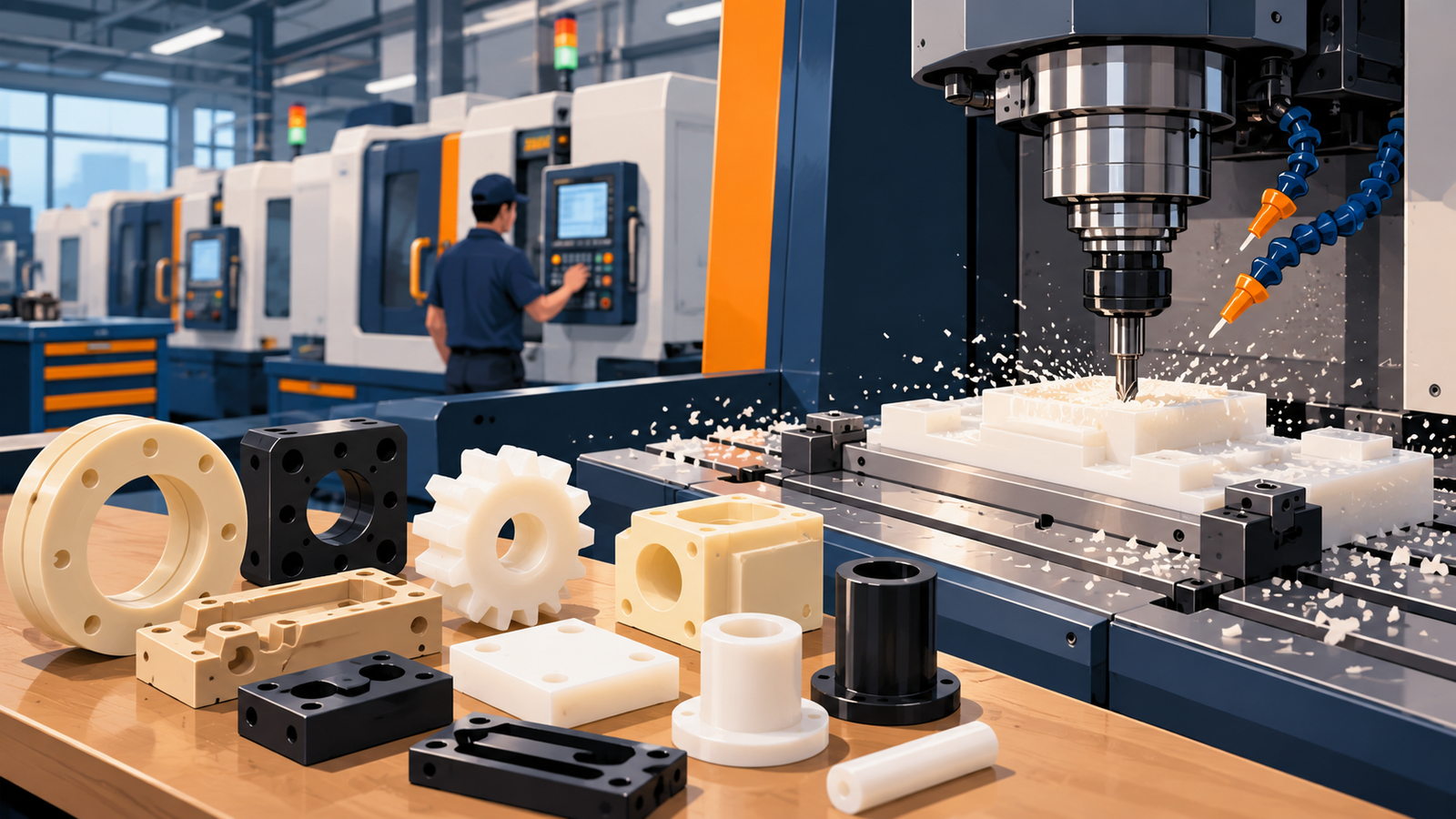
Finding a supplier for precision plastic CNC machining is about more than machine availability. Engineering buyers need a partner who understands polymer behaviour, dimensional tolerances, workholding, inspection and repeatable production.
On 28 October 2026, I visited a manufacturer in Pune, India, specialising in the machining of plastic components. Unlike a general-purpose workshop dividing its attention between metals and plastics, this facility operates around the clock with a dedicated focus on plastic machining.
The materials covered include PEEK, ABS, Nylon, PTFE (Teflon), Delrin and other engineering plastic grades. The facility also reported the ability to achieve tolerances as tight as 5 microns (0.005 mm), where required and feasible.
For international OEMs, product developers and procurement teams evaluating manufacturing options in India, this visit highlighted an important consideration: specialised process knowledge matters just as much as the equipment itself.
- A dedicated focus on plastic component machining.
- Material coverage including PEEK, ABS, Nylon, PTFE and Delrin.
- A reported 24/7 operating schedule.
- Reported capability to work to 5-micron tolerances for suitable features.
Inside a Dedicated Plastic CNC Machining Facility in Pune
Engineering plastics behave differently from metals during machining. Cutting temperatures, clamping pressure, internal stresses and material-specific characteristics can influence the final dimensions of a component.
A workshop focused on plastic machining can develop processes around these challenges, from material selection and tool strategy to workholding and dimensional verification.
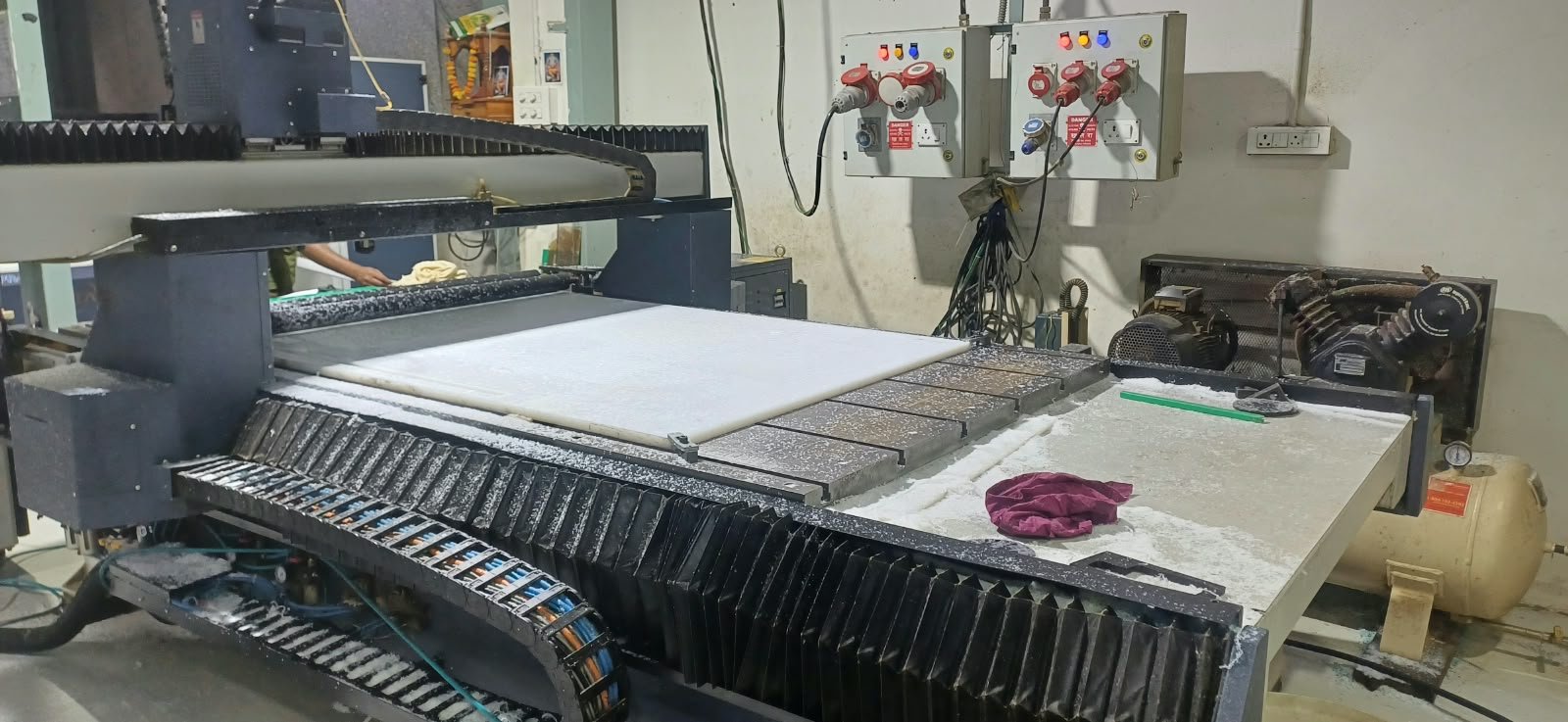
The facility’s reported 24/7 operation may be relevant for customers with recurring demand or urgent schedules. However, operating hours alone do not guarantee a particular lead time. Available machine capacity, tooling, batch size and inspection requirements must all be considered before confirming delivery.
For buyers, the next step is to evaluate the supplier against the actual drawing and required production process. Our guide to factory audits and supplier assessment in India explains how manufacturing partners can be evaluated.
Materials for Precision Plastic CNC Machining
The right material depends on the operating environment, loading, temperature, chemical exposure, dimensional requirements and total cost of the component. The following are common engineering plastics to consider for machined parts.
1. PEEK CNC Machining
PEEK is a high-performance thermoplastic used in applications requiring a combination of mechanical strength, temperature resistance and chemical resistance. It can be machined into specialised mechanical components, insulating parts, bushings and precision engineering features.
Material grade, operating conditions and component geometry should be reviewed before finalising a design.
Read the PEEK CNC machining guide →2. Nylon CNC Machining
Nylon is used for wear-resistant components, guides, rollers, spacers and bushings. Its toughness and friction characteristics make it useful across many industrial applications.
Nylon can absorb moisture, which may affect dimensions. Grade, conditioning and inspection conditions are important when specifying tight tolerances.
Read the Nylon CNC machining guide →3. Delrin (Acetal / POM) CNC Machining
Delrin is a commercial acetal material commonly selected for precision mechanical parts. Depending on the grade and design, applications can include gears, rollers, bushings and sliding components.
Read the Delrin CNC machining guide →4. PTFE (Teflon) CNC Machining
PTFE offers low friction and strong chemical resistance. Its relatively soft nature and tendency to deform under load require attention when machining thin sections and precision features.
Read the PTFE CNC machining guide →5. ABS CNC Machining
ABS is commonly used for housings, covers, functional prototypes and general-purpose engineering components. CNC machining can be useful for low-volume requirements where injection mould tooling is not justified.
Explore related thermoplastic machining guidance →The supplier should confirm the exact material grade, stock availability, material identification and any documentation required by the customer. Similar-looking plastics are not automatically interchangeable.
Can CNC Machining Achieve 5-Micron Tolerances in Plastic?
Five microns equals 0.005 mm. This is a demanding tolerance for a plastic component because the measured dimension may be affected by temperature, moisture, material stresses, clamping and the inspection method.
During the visit, the manufacturer reported that it can work to tolerances as tight as 5 microns where required. This should be understood as a reported capability, not a guarantee that every material, feature or component can be manufactured to that level.
What determines achievable tolerance?
- Material behaviour: Thermal expansion, moisture absorption and stress relief can influence finished dimensions.
- Part geometry: Thin walls, long unsupported sections and small features may deform under machining forces.
- Workholding: Clamping must secure the component without distorting it.
- Machining strategy: Tool selection, cutting conditions, finishing passes and machining sequence affect results.
- Inspection: The measuring method and its uncertainty must be appropriate for the tolerance.
- Repeatability: A single conforming part does not prove that the same tolerance can be maintained across a batch.
Where a drawing calls for a 0.005 mm tolerance, ask the supplier to review the specific feature and provide suitable dimensional inspection evidence. For critical applications, request first article results and discuss process repeatability before releasing production quantities.
For more information, see our practical guide to CNC machining tolerances and our GD&T guide for CNC machining .
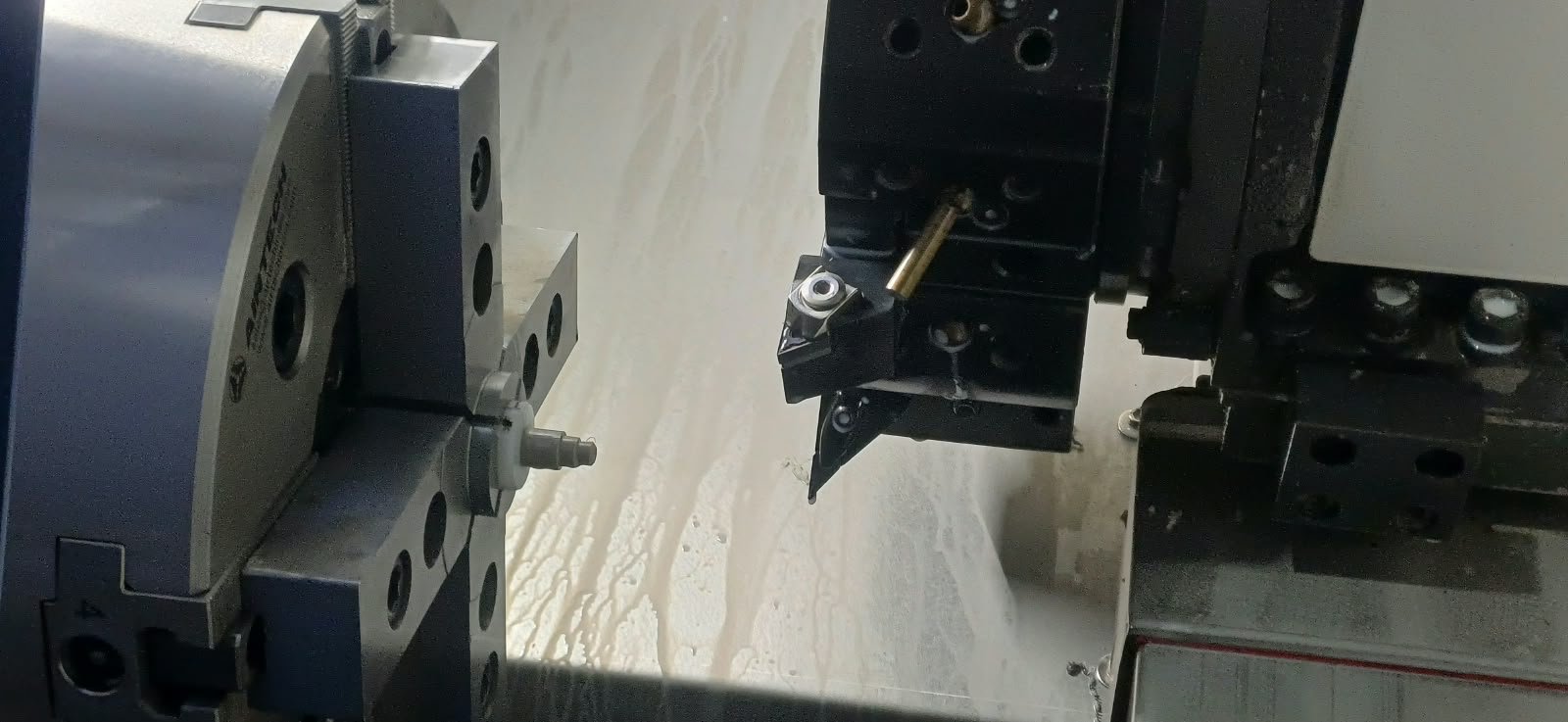
Plastic CNC Machining vs Injection Moulding
CNC machining and injection moulding serve different production needs. The best process depends on the quantity, geometry, material, tooling budget and required delivery schedule.
| Decision factor | CNC plastic machining | Injection moulding |
|---|---|---|
| Initial tooling | Usually no injection mould required | Mould investment required |
| Prototypes | Often suitable | Possible with prototype tooling |
| Production volumes | Prototypes and suitable low or medium volumes | Often attractive for repeat, higher-volume production |
| Design changes | Can be made by updating the machining program | May require mould modifications |
| Material considerations | Must account for stock form and machining behaviour | Must account for mouldability and processing conditions |
| Unit economics | Depends on machining time, material waste and setup | Depends on tooling amortisation, cycle time and volume |
CNC machining is not automatically cheaper for small batches, and injection moulding is not automatically cheaper for every large part. A quotation should compare the complete cost, including tooling, material, finishing, inspection and expected order volume.
Explore our rapid prototyping services if you are validating a design before committing to production. You can also read our guide to rapid prototyping .
What International Buyers Should Evaluate Before Placing an Order
For buyers in the United States, United Kingdom, Germany and other markets, supplier selection should extend beyond the quoted unit price. Technical alignment, communication, inspection and delivery planning are all important.
- Drawing review: Identify critical dimensions, GD&T, surface finish and functional interfaces.
- Material verification: Confirm the exact polymer grade and any traceability or material certification requirements.
- Process feasibility: Review geometry, tolerances, workholding and likely machining sequence.
- Quality planning: Agree on inspection methods, sample approval, documentation and acceptance criteria.
- Capacity and lead time: Confirm the actual production slot, quantity and dispatch date.
- Commercial terms: Clarify packaging, shipping, delivery terms and any applicable export requirements.
Manufyn can support the supplier evaluation and procurement coordination process for international manufacturers working with Indian suppliers.
Useful manufacturing and procurement resources
How Manufyn Helps You Procure Precision Plastic Components
Manufyn India Private Limited supports international customers seeking manufacturing partners in India. Our role is to help translate engineering requirements into a structured procurement process, from supplier identification and RFQ coordination to production follow-up and quality requirements.
Depending on the project, our support can include:
- Identifying potential manufacturing partners for the required material and process.
- Coordinating technical RFQs using customer drawings and CAD models.
- Clarifying tolerances, quantities, inspection requirements and delivery expectations.
- Supporting supplier evaluation and manufacturing follow-up.
- Coordinating communication between the customer and Indian supplier.
Read our manufacturing procurement capabilities in India or review our manufacturing case studies to learn more about our project experience.
Frequently Asked Questions
Which plastics can be CNC machined?
Commonly machined plastics include PEEK, Nylon, ABS, PTFE, Delrin (POM), polycarbonate and other engineering polymers. Availability depends on the exact grade, stock form and supplier.
Can plastic components be machined to 5 microns?
A 5-micron tolerance may be feasible for selected features and materials under suitable conditions. It must be assessed against the specific drawing, material behaviour, machining process and inspection method. It should not be assumed for every plastic part.
Does the Pune facility operate 24/7?
During the 28 October 2026 visit, the manufacturer described its plastic machining operation as running 24/7. Available capacity and delivery commitments should be confirmed for each order.
Is CNC machining suitable for plastic prototypes?
Yes. CNC machining can produce functional plastic prototypes without requiring an injection mould. Suitability depends on geometry, material availability, quantity and the required finish.
What is required to request a quote?
Share a 2D drawing, a STEP file if available, the exact material grade, quantity, critical tolerances, inspection requirements and delivery destination.
Need Precision Plastic CNC Machined Parts?
Send Manufyn your engineering drawing, STEP file, material grade and required quantity. We will help review your requirement and coordinate with suitable manufacturing partners in India.
DISCUSS YOUR REQUIREMENT VIEW CNC MACHINING SERVICESPlease include the delivery destination and required timeline when submitting your enquiry.
Explore More from Manufyn
Continue researching materials, machining processes and supplier qualification.