
H13 Tool Steel Manufacturing & Supply
H13 Tool Steel is among the world’s most trusted hot work tool steels, offering an excellent balance of toughness, wear resistance, thermal fatigue resistance and dimensional stability. It is widely used for injection mold tooling, die casting dies, extrusion tooling and forging applications where consistent performance under repeated heating and cooling cycles is essential.
Through Manufyn’s global manufacturing network, international buyers gain access to India’s certified toolmakers, CNC machining facilities and quality-controlled production ecosystem for precision H13 Tool Steel components.
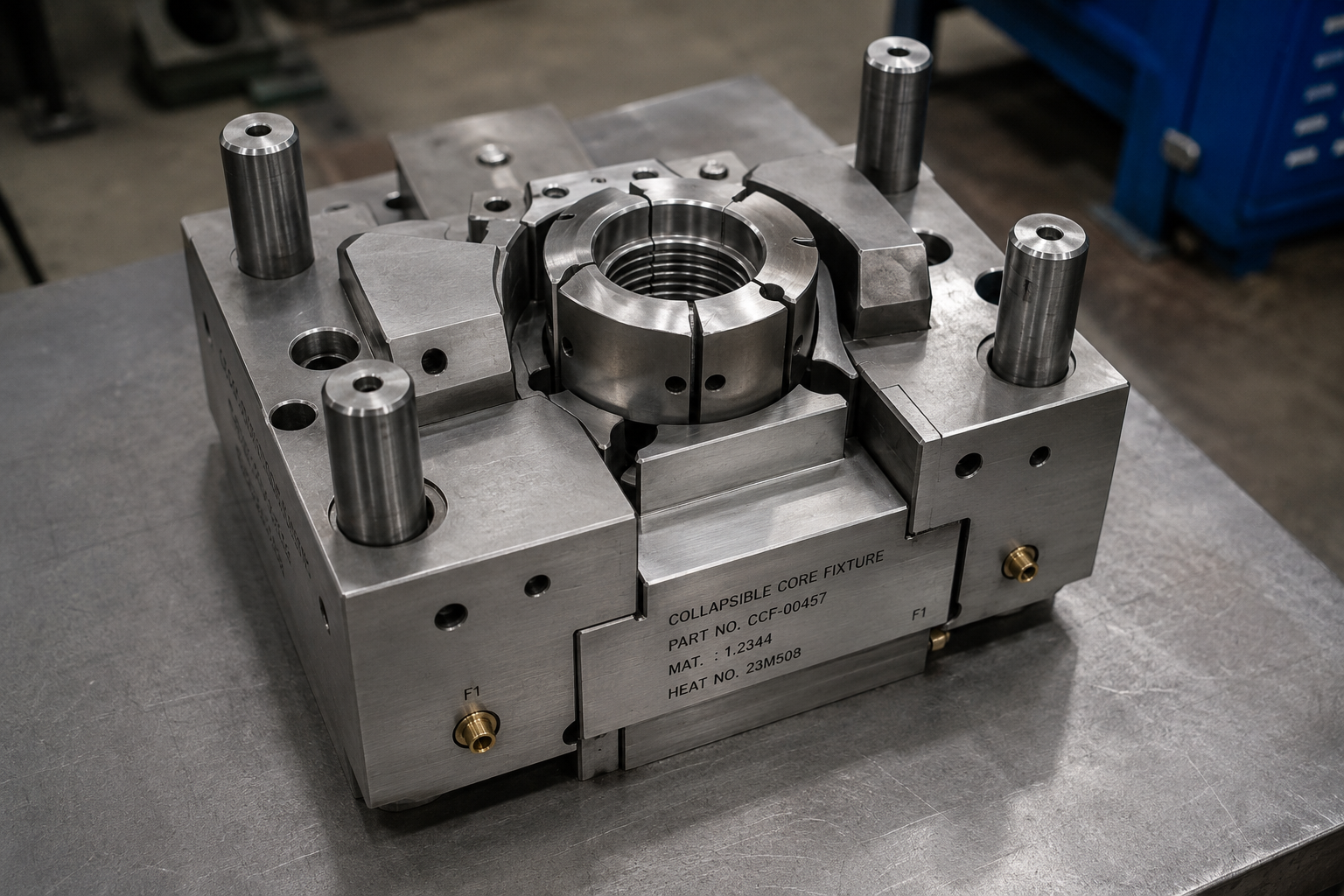
Why Choose H13 Tool Steel?
H13 Tool Steel has become the industry standard for demanding hot work applications because it combines exceptional toughness, wear resistance, heat resistance and dimensional stability. These characteristics make it one of the most widely specified steels for injection molds, die casting dies, extrusion tooling and forging equipment.
Excellent Heat Resistance
H13 maintains its hardness and mechanical strength even after repeated exposure to elevated temperatures, making it ideal for hot work tooling and high-cycle manufacturing.
Outstanding Wear Resistance
Its balanced alloy composition provides long service life while reducing maintenance costs and increasing production efficiency in demanding industrial applications.
Superior Toughness
Compared with many conventional tool steels, H13 offers excellent impact resistance, minimizing cracking and premature tool failure.
Thermal Fatigue Resistance
Continuous heating and cooling cycles create thermal stress in tooling. H13 withstands these cycles exceptionally well, extending tool life.
Dimensional Stability
Heat-treated H13 experiences minimal distortion, enabling high precision tooling and accurate molded components.
Global Manufacturing Standard
Manufacturers across the automotive, aerospace, medical and industrial sectors trust H13 for critical tooling applications requiring long-term reliability.
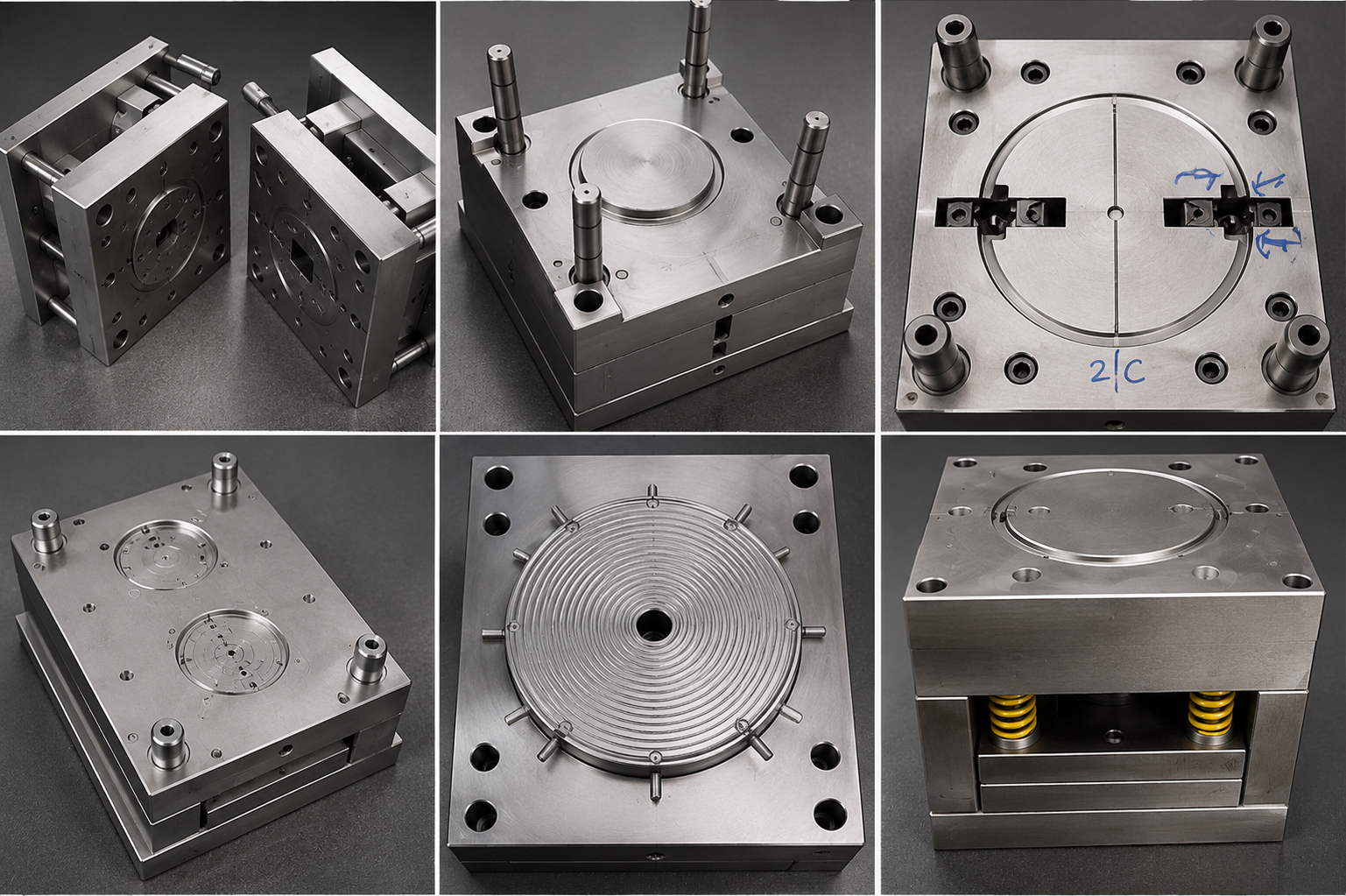
Why Global Manufacturers Trust H13
Whether manufacturing plastic injection molds, aluminum die casting dies or hot forging tools, H13 Tool Steel consistently delivers reliable performance under demanding production environments. Its ability to retain hardness while resisting thermal cracking has made it one of the world’s preferred hot work tool steels.
At Manufyn, we support international buyers by sourcing precision H13 Tool Steel components from India’s certified manufacturing ecosystem while ensuring strict quality control, project management and transparent communication throughout the manufacturing process.
- High wear resistance for extended tooling life
- Excellent machinability before heat treatment
- Ideal for CNC machining and EDM processing
- Suitable for injection molding, die casting and forging dies
- Available for prototypes as well as production tooling
- Supported by Manufyn’s global procurement and quality team
H13 Tool Steel Properties at a Glance
H13 is a chromium-molybdenum-vanadium hot work tool steel developed for demanding manufacturing environments. Its balanced chemistry provides excellent resistance to thermal cracking, abrasion and softening, making it one of the preferred materials for high-volume industrial tooling.
Tool Steel Category
Hot Work Tool Steel
Working Hardness
After Heat Treatment
Heat Resistance
Excellent resistance to thermal fatigue
Machinability
Very good in annealed condition
Wear Resistance
Suitable for long production runs
Toughness
Excellent impact resistance
Where is H13 Tool Steel Used?
Thanks to its excellent combination of hot hardness, dimensional stability and resistance to thermal fatigue, H13 Tool Steel has become one of the most widely used materials for precision tooling. Manufacturers across automotive, aerospace, consumer products, electronics and heavy engineering rely on H13 to maximize tool life while maintaining tight dimensional tolerances.
Looking for precision H13 Tool Steel manufacturing?
Request a QuoteH13 Tool Steel Chemical Composition
The outstanding performance of H13 Tool Steel comes from its carefully balanced alloying elements. Chromium improves hardenability and oxidation resistance, molybdenum enhances hot strength, while vanadium refines the grain structure and significantly improves wear resistance. Together, these elements provide an excellent combination of toughness, thermal stability and long service life.
| Element | Typical Content (%) | Primary Benefit |
|---|---|---|
| Carbon (C) | 0.32 – 0.45 | Provides hardness and wear resistance. |
| Chromium (Cr) | 4.75 – 5.50 | Improves hardenability, corrosion resistance and oxidation resistance. |
| Molybdenum (Mo) | 1.10 – 1.75 | Maintains strength at elevated temperatures. |
| Vanadium (V) | 0.80 – 1.20 | Enhances wear resistance and refines grain structure. |
| Silicon (Si) | 0.80 – 1.20 | Improves temper resistance and hot strength. |
| Manganese (Mn) | 0.20 – 0.50 | Improves toughness and manufacturing consistency. |
| Iron (Fe) | Balance | Base metal providing structural integrity. |
Excellent Hot Hardness
Unlike conventional tool steels, H13 retains a significant portion of its hardness even after repeated exposure to elevated temperatures. This characteristic is particularly valuable for die casting, extrusion tooling and high-volume injection molding where tooling experiences continuous thermal cycling.
Outstanding Thermal Fatigue Resistance
Thermal fatigue often causes premature cracking in industrial tooling. H13’s alloy composition enables it to resist repeated heating and cooling cycles, extending tool life while reducing maintenance costs and production downtime.
High Toughness
H13 offers an excellent balance between hardness and toughness, making it suitable for demanding applications where impact resistance is essential. This reduces the likelihood of catastrophic tool failure during production.
Excellent Heat Treatment Response
H13 responds exceptionally well to hardening and tempering processes, allowing manufacturers to achieve consistent mechanical properties and dimensional stability across complex tooling geometries.
Why Does Composition Matter?
The performance of a tool steel is determined not only by its hardness but also by how effectively it withstands heat, pressure, abrasion and repeated production cycles. The balanced chromium, molybdenum and vanadium content in H13 enables manufacturers to produce durable molds and dies capable of delivering consistent dimensional accuracy over extended production runs. This is one of the key reasons H13 remains a preferred material for automotive, aerospace, medical device and industrial tooling worldwide.
H13 vs Other Tool Steels
Selecting the right tool steel depends on operating temperature, expected production volume, wear requirements and tooling cost. The comparison below helps engineers and purchasing teams identify the most suitable material for their application.
| Property | H13 | P20 | H11 | D2 |
|---|---|---|---|---|
| Tool Steel Type | Hot Work | Plastic Mold | Hot Work | Cold Work |
| Working Hardness | 48–52 HRC | 30–36 HRC | 44–50 HRC | 58–62 HRC |
| Heat Resistance | ★★★★★ | ★★★☆☆ | ★★★★★ | ★★☆☆☆ |
| Wear Resistance | ★★★★☆ | ★★★☆☆ | ★★★★☆ | ★★★★★ |
| Toughness | ★★★★★ | ★★★★☆ | ★★★★★ | ★★★☆☆ |
| Best Applications | Die Casting, Injection Molds, Forging | Plastic Injection Molds | Forging Dies | Blanking & Punching Dies |
| Typical Production Volume | High | Medium | High | High |
| Overall Recommendation | Best Overall Hot Work Steel | General Mold Steel | Alternative to H13 | Cold Work Specialist |
Choose H13 If…
- Your tooling operates at elevated temperatures.
- You manufacture die casting dies.
- You require long tool life.
- Thermal fatigue is a concern.
- You need excellent toughness and wear resistance.
- You are producing high-volume injection molds.
Consider Another Steel If…
- P20 is suitable for lower-volume plastic molds.
- D2 performs better for cold work tooling.
- H11 may be selected where slightly higher toughness is required.
- Cost is more important than maximum tool life.
- The tooling will never experience elevated temperatures.
- A softer pre-hardened mold steel is sufficient.
Heat Treatment of H13 Tool Steel
Proper heat treatment is essential to unlock the full performance potential of H13 Tool Steel. The process improves hardness, wear resistance, toughness and dimensional stability, enabling tooling to withstand demanding production environments while maintaining consistent performance over long production runs.
Preheating
The material is gradually preheated to minimize thermal shock and reduce internal stresses before austenitizing. Multiple preheating stages are often recommended for larger tooling.
Austenitizing
The steel is heated to the required hardening temperature, allowing alloying elements to dissolve uniformly before quenching. Accurate temperature control is critical for achieving optimum hardness.
Quenching
Controlled air or gas quenching is commonly used to obtain high hardness while minimizing distortion and residual stresses in precision tooling.
Tempering
Double or triple tempering is typically carried out to achieve the desired combination of hardness, toughness and resistance to thermal fatigue for long service life.
Excellent Stability
Maintains dimensional accuracy after heat treatment when processed correctly.
High Toughness
Optimized tempering improves impact resistance while maintaining working hardness.
Long Tool Life
Proper heat treatment significantly increases resistance to wear, cracking and thermal fatigue.
Applications of H13 Tool Steel
H13 Tool Steel is widely used wherever tooling is subjected to high temperatures, cyclic thermal loading and demanding production conditions. Its excellent toughness, hot hardness and resistance to thermal fatigue make it a preferred material across multiple manufacturing industries.
Injection Mold Tooling
H13 is extensively used for injection mold cores, cavities, inserts and hot runner components. Its ability to withstand repeated heating and cooling cycles reduces maintenance requirements while extending mold life, making it ideal for high-volume production.
Die Casting Dies
For aluminium, zinc and magnesium die casting, H13 provides excellent resistance to thermal cracking, erosion and soldering. Its hot strength enables reliable performance even under continuous production cycles.
Hot Forging Dies
Hot forging dies experience repeated impact loads and elevated temperatures. H13 combines excellent toughness with wear resistance, helping manufacturers achieve longer tool life and lower production costs.
Extrusion Tooling
Extrusion dies manufactured from H13 maintain dimensional accuracy while resisting wear caused by continuous material flow. This makes the material particularly suitable for aluminium and copper extrusion applications.
Industries That Commonly Use H13 Tool Steel
Design Guidelines for H13 Tool Steel
Designing tooling with H13 Tool Steel requires careful consideration of heat treatment, machining allowances, surface finishing and operating temperatures. Following proven engineering practices helps maximize tool life, reduce maintenance and improve production consistency.
1. Design for Heat Treatment
Allow for minor dimensional changes during heat treatment by incorporating suitable machining allowances before final grinding. Uniform section thickness helps minimize distortion and residual stresses.
- Maintain balanced wall sections.
- Avoid abrupt thickness changes.
- Plan finish grinding after hardening.
- Use stress relieving where required.
2. Machining Considerations
H13 is easier to machine in its annealed condition. Complete most rough machining before hardening, leaving only finishing operations after heat treatment.
- Machine before hardening whenever possible.
- Maintain generous internal radii.
- Reduce unnecessary sharp corners.
- Select cutting parameters appropriate for alloy tool steels.
3. EDM & Surface Finish
Electrical Discharge Machining is commonly used for complex cavities in H13. After EDM, polishing or light re-machining helps remove the recast layer and improve fatigue performance.
- Polish after EDM.
- Avoid excessive recast layers.
- Use nitriding or coatings when appropriate.
- Inspect critical surfaces before production.
4. Maintenance Planning
Routine inspection, cleaning and preventive maintenance significantly extend the service life of H13 tooling in high-volume manufacturing environments.
- Monitor wear regularly.
- Repair minor damage early.
- Maintain cooling channels.
- Store tooling in controlled conditions.
✅ Recommended Practices
- Use vacuum heat treatment for critical tooling.
- Maintain uniform wall thickness.
- Perform stress relieving before finishing.
- Specify hardness based on the application.
- Ensure proper cooling channel design.
- Validate tooling before production release.
❌ Common Design Mistakes
- Ignoring thermal expansion during design.
- Creating sharp internal corners.
- Skipping stress relief operations.
- Improper tempering temperatures.
- Poor cooling system layout.
- Selecting hardness without considering operating conditions.
Engineering Quick Tips
Why Source H13 Tool Steel Components from India?
India has emerged as one of the world's preferred destinations for precision engineering and tooling manufacture. With advanced CNC machining capabilities, experienced toolmakers, competitive manufacturing costs and strong export infrastructure, Indian manufacturers supply high-quality H13 Tool Steel components to customers across North America, Europe, the Middle East and Asia.
Cost Competitive Manufacturing
Indian manufacturers offer significant cost advantages without compromising on engineering quality. Modern machining centres, experienced operators and efficient production planning help reduce the overall cost of ownership.
Advanced Manufacturing Technology
Many facilities are equipped with multi-axis CNC machining centres, EDM, vacuum heat treatment, precision grinding, CMM inspection and CAD/CAM software capable of producing complex H13 tooling.
Strong Engineering Expertise
Indian tooling companies support DFM reviews, tooling optimization, reverse engineering and production improvement projects across multiple industries.
Reliable Export Support
Well-established logistics networks, export documentation expertise and international quality standards enable reliable delivery to customers worldwide.
Why Partner with Manufyn?
Finding a capable supplier is only one part of a successful sourcing strategy. Manufyn acts as your manufacturing and procurement partner in India, managing supplier selection, technical communication, quality assurance and project execution from enquiry through delivery.
Supplier Qualification
Identify manufacturers that match your technical, quality and production requirements.
Quality Assurance
Inspection planning, dimensional verification and production monitoring before shipment.
Project Management
A dedicated point of contact coordinates suppliers, timelines and customer communication.
Factory Audits
On-site supplier assessments help reduce sourcing risks and improve confidence.
Global Logistics
Support for export documentation, packaging and international shipping coordination.
Long-Term Partnership
From prototypes to serial production, we support sustainable manufacturing relationships.
Looking for a reliable H13 Tool Steel manufacturing partner in India?
Talk to Our Engineering TeamWhy Choose Manufyn?
Manufacturing H13 Tool Steel components requires much more than CNC machining. It requires technical understanding, supplier qualification, quality assurance and reliable project execution. Manufyn helps global manufacturers source precision-engineered components from India's trusted manufacturing ecosystem while reducing procurement risks and improving supply chain transparency.
Engineering First Approach
Every project begins with a technical review. Our team evaluates drawings, material specifications, tolerances, manufacturing feasibility and quality requirements before production starts, helping reduce costly engineering changes later in the project.
End-to-End Project Management
From supplier selection and production planning to inspection and shipment, Manufyn coordinates every stage of the manufacturing process. This allows customers to work with a single point of contact while maintaining complete visibility throughout the project lifecycle.
Reliable Supplier Network
We work with carefully evaluated manufacturing partners capable of producing precision H13 Tool Steel components using advanced CNC machining, EDM, grinding, heat treatment and inspection equipment.
Consistent Quality Control
Material traceability, in-process inspections, dimensional verification and final quality checks help ensure every component meets customer expectations before shipment.
Our Project Workflow
Factory Audit Services
Evaluate potential suppliers with structured factory audits before placing production orders.
Learn More →Supplier Development
Improve supplier capability, manufacturing quality and long-term production performance.
Learn More →International Purchasing Office
Extend your procurement team with dedicated sourcing, supplier management and project coordination from India.
Learn More →H13 Tool Steel Buyer's Guide
Choosing the right H13 Tool Steel supplier involves more than comparing prices. Material quality, heat treatment, machining capability, inspection processes and supplier experience all influence tooling performance, production efficiency and long-term costs. The checklist below can help procurement teams make more informed sourcing decisions.
Questions to Ask Your Supplier
- Can you provide complete material traceability?
- Which H13 standard or specification do you supply?
- What heat treatment process is used?
- How is hardness verified after tempering?
- What machining tolerances can you achieve?
- Do you support prototype and production quantities?
- Can you provide dimensional inspection reports?
- Do you have export experience for my destination country?
Evaluation Checklist
- Review technical capability before placing orders.
- Verify CNC machining and EDM capacity.
- Confirm heat treatment and grinding facilities.
- Assess quality management procedures.
- Request sample inspection reports where appropriate.
- Evaluate communication and project management responsiveness.
- Check delivery performance and production planning.
- Confirm after-sales technical support.
Common Procurement Mistakes
Choosing solely on price can lead to shorter tool life and higher long-term manufacturing costs.
Incorrect heat treatment may significantly reduce wear resistance and dimensional stability.
Evaluating manufacturing capability before production helps reduce quality and delivery risks.
Always verify inspection methods, material certification and traceability requirements.
Recommended Documents for H13 Tool Steel Orders
Depending on your project requirements, requesting the following documentation can improve traceability, quality assurance and communication throughout the manufacturing process.
From RFQ to Global Delivery
Successful H13 Tool Steel projects depend on more than machining capability. Material verification, engineering review, supplier coordination, heat treatment, inspection and logistics all contribute to consistent quality. Manufyn manages each stage through a structured project workflow designed for international customers.
Technical RFQ Review
Every enquiry begins with a detailed engineering review. We analyse drawings, tolerances, material specifications, heat treatment requirements, surface finish expectations and production quantities before identifying the most suitable manufacturing partner.
Supplier Selection
Based on the project requirements, Manufyn shortlists manufacturers with the appropriate CNC machining capacity, EDM capability, grinding facilities and heat treatment expertise to ensure the selected supplier is technically aligned with the project.
Production & Process Monitoring
Throughout production, our team coordinates manufacturing schedules, engineering communication and quality checkpoints to help minimise delays while maintaining product consistency.
Inspection & International Dispatch
Finished components undergo dimensional verification and visual inspection before export packaging. Documentation is reviewed to support smooth international shipments and efficient customer acceptance.
Engineering Support
Our engineering team works closely with customers throughout the project lifecycle.
- Drawing review
- DFM recommendations
- Tolerance evaluation
- Material guidance
- Production feasibility
Quality Assurance
Quality verification is integrated throughout manufacturing instead of being limited to final inspection.
- Material traceability
- Process inspections
- Hardness verification
- Dimensional reports
- Final approval
Global Procurement Support
International buyers benefit from a single point of contact throughout sourcing and production.
- Supplier coordination
- Progress updates
- Export documentation
- Shipment coordination
- Post-delivery support
Machining H13 Tool Steel
H13 Tool Steel can be machined efficiently in its annealed condition using appropriate tooling, cutting parameters and machining strategies. Once hardened, the material becomes significantly more difficult to machine, making process planning critical for achieving dimensional accuracy, surface finish and production efficiency.
Recommended Machining Operations
Most H13 components are rough machined before heat treatment and finish machined or ground after hardening. This approach reduces machining time while improving dimensional stability.
- CNC Milling
- CNC Turning
- Deep Hole Drilling
- Wire EDM
- Sinker EDM
- Surface Grinding
- Cylindrical Grinding
- Precision Polishing
Best Manufacturing Practices
Following proven machining practices helps maximise tool life while maintaining dimensional consistency and surface quality throughout production.
- Perform rough machining before hardening.
- Leave adequate grinding allowance.
- Use rigid workholding systems.
- Select coated carbide tooling where appropriate.
- Maintain proper coolant application.
- Inspect critical dimensions after heat treatment.
- Remove EDM recast layers before production.
- Validate critical tolerances prior to shipment.
Common Manufacturing Challenges & Solutions
| Challenge | Recommended Solution |
|---|---|
| Distortion after Heat Treatment | Use balanced machining allowances and controlled heat treatment cycles. |
| Reduced Tool Life | Select suitable cutting tools and optimise machining parameters. |
| Surface Cracking after EDM | Remove the recast layer through polishing or finish machining. |
| Dimensional Variations | Perform intermediate inspections throughout manufacturing. |
| Thermal Fatigue in Service | Apply correct hardness, heat treatment and preventive maintenance. |
Industries Using H13 Tool Steel
H13 Tool Steel is trusted across multiple industries because it combines high-temperature strength, excellent toughness and long service life. Whether manufacturing precision plastic molds or high-pressure die casting dies, H13 consistently delivers reliable performance in demanding production environments.
Automotive Manufacturing
Automotive suppliers use H13 Tool Steel for tooling that must withstand continuous production cycles while maintaining dimensional accuracy and surface quality.
- Injection mold tooling
- Die casting dies
- Hot forging dies
- Transmission component tooling
- Engine component molds
Aerospace Components
Aerospace manufacturers require tooling capable of maintaining tight tolerances and long production life. H13 provides excellent thermal stability for these demanding applications.
- Precision tooling
- Aluminium die casting
- Fixture manufacturing
- Prototype tooling
- High-performance industrial dies
Medical Device Manufacturing
Medical device manufacturers rely on durable tooling for producing repeatable, high-precision plastic components with consistent quality.
- Medical injection molds
- Diagnostic equipment tooling
- Laboratory component molds
- Disposable medical products
- Precision mold inserts
Consumer & Industrial Products
From household products to heavy industrial equipment, H13 Tool Steel supports reliable manufacturing across a broad range of production applications.
- Consumer electronics
- Electrical enclosures
- Industrial machinery
- Packaging molds
- Engineering plastic tooling
Frequently Asked Questions
Below are answers to some of the most common questions engineers, procurement teams and manufacturers ask about H13 Tool Steel.
What is H13 Tool Steel?
What hardness can H13 achieve?
Is H13 suitable for injection molds?
Can H13 be nitrided?
Is H13 better than P20?
Can H13 be welded?
Which industries commonly use H13 Tool Steel?
Can Manufyn manufacture custom H13 Tool Steel components?
Ready to Source H13 Tool Steel Components?
Whether you require prototype tooling, production molds, die casting dies or precision CNC machined H13 Tool Steel components, Manufyn helps simplify sourcing from India through engineering support, supplier qualification, quality assurance and end-to-end project management.