Sheet metal fabrication tolerance specification is the single most consequential decision on any engineering drawing. Over-specify and you add 20–50% to sheet metal fabrication price for no functional gain. Under-specify and mating parts fail to assemble. This guide explains ISO 2768 — the international standard that governs sheet metal fabrication tolerances — documents what each process actually achieves, and gives engineers a practical framework for every drawing.
Manufyn’s precision sheet metal fabrication service achieves laser cutting to ±0.05mm and CNC bending to ±0.1° — with free DFM review to confirm your sheet metal fabrication tolerance requirements are achievable before any material is cut.
What Are Sheet Metal Fabrication Tolerances?
Sheet metal fabrication tolerances are the permissible dimensional variations from the nominal drawing dimensions that a fabricated part may exhibit. General sheet metal fabrication tolerance is governed by ISO 2768, with tighter individual dimensions called out separately. Standard commercial practice is ISO 2768-m (medium): ±0.15mm for dimensions up to 30mm and ±0.5° angular — the grade used on 95% of all commercial and industrial sheet metal parts.
ISO 2768 Sheet Metal Fabrication Tolerance Tables — All Four Grades
Linear Tolerances
| Dimension Range | Fine (f) | Medium (m) — Standard | Coarse (c) | Very Coarse (v) |
|---|---|---|---|---|
| 0.5–3mm | ±0.05mm | ±0.10mm | ±0.20mm | — |
| 3–30mm | ±0.05mm | ±0.15mm | ±0.30mm | ±0.50mm |
| 30–120mm | ±0.10mm | ±0.20mm | ±0.50mm | ±1.00mm |
| 120–400mm | ±0.15mm | ±0.30mm | ±0.80mm | ±1.50mm |
| 400–1000mm | ±0.20mm | ±0.50mm | ±1.20mm | ±2.50mm |
| 1000–2000mm | ±0.30mm | ±0.80mm | ±2.00mm | ±4.00mm |
| 2000–4000mm | ±0.50mm | ±1.20mm | ±3.00mm | ±6.00mm |
Angular Tolerances
| Shorter Side Length | Fine (f) | Medium (m) — Standard | Coarse (c) | Very Coarse (v) |
|---|---|---|---|---|
| Up to 10mm | ±1° | ±1° | ±1°30′ | ±3° |
| 10–50mm | ±0°30′ | ±0°30′ | ±1° | ±2° |
| 50–120mm | ±0°20′ | ±0°20′ | ±0°30′ | ±1° |
| 120–400mm | ±0°10′ | ±0°10′ | ±0°15′ | ±0°30′ |
| Over 400mm | ±0°5′ | ±0°5′ | ±0°10′ | ±0°20′ |
How to apply ISO 2768: add ‘GENERAL TOLERANCES: ISO 2768-m’ to your drawing title block. All dimensions not individually called out then conform to ISO 2768-m. Only dimensions requiring tighter control need individual callouts. This is the most effective single action you can take to reduce sheet metal fabrication price without compromising function.
Manufyn fabricates to ISO 2768-m as standard on all orders unless tighter tolerances are specified on the customer’s drawing.
Sheet Metal Fabrication Tolerance Capability by Process
Each process has a natural sheet metal fabrication tolerance ceiling. Specifying tighter than the process can achieve requires fixturing or inspection changes — both increase cost. For how tolerance grade affects price, see our sheet metal fabrication price guide.
| Process | Typical Tolerance | Best Achievable | ISO 2768 Grade | Cost to Achieve Fine vs Medium |
|---|---|---|---|---|
| Fibre laser cutting | ±0.10mm | ±0.05mm | Fine (f) | Standard — no premium |
| CNC press brake | ±0.20mm / ±0.3° | ±0.10mm / ±0.1° | Fine (f) | +10–15% |
| CNC punching | ±0.10mm | ±0.05mm | Fine (f) | Standard |
| Plasma cutting | ±1.00mm | ±0.50mm | Coarse (c) | N/A — use laser for tighter |
| Waterjet cutting | ±0.20mm | ±0.10mm | Medium (m) | Standard |
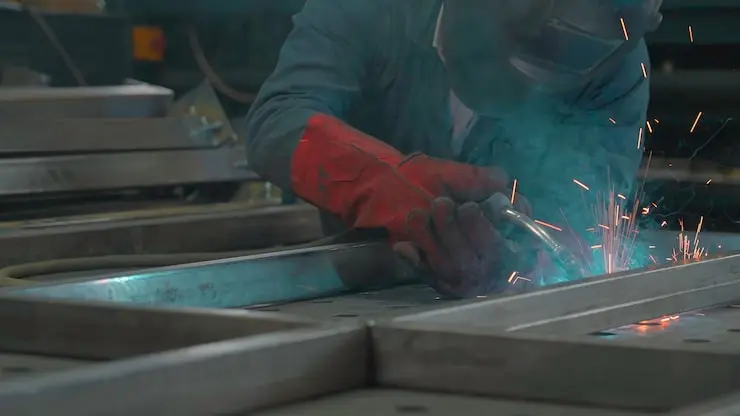
| MIG weld assembly | ±0.50mm | ±0.30mm | Coarse (c) | +20–30% |
| TIG weld assembly | ±0.30mm | ±0.20mm | Medium (m) | +15–20% |
| Powder coat build | ±0.03–0.05mm | ±0.01mm | — | Mask if critical fit |
Powder coat build-up warning: 60–80 microns per face. For close-fit holes or guide slots, specify masking in those areas or calculate post-coat dimension into the nominal drawing size.
How Sheet Metal Fabrication Tolerance Grade Affects Price
| Tolerance Grade | Price vs ISO 2768-m Baseline | When Justified |
|---|---|---|
| ISO 2768-v (very coarse) | −5 to −10% | Rough structural work, no assembly precision |
| ISO 2768-m (medium) | Baseline | 95% of commercial and industrial parts — default |
| ISO 2768-f (fine) | +15–25% | Close-fit assemblies, precision electronics, instrument mounts |
| Tighter than fine | +40–80% | Aerospace, medical, optical — CMM inspection required |
DFM rule: use ‘GENERAL TOLERANCES: ISO 2768-m’ across the entire drawing. Add individual tighter callouts only for the 2–5 dimensions that are functionally critical. For how sheet metal fabrication tolerance interacts with material selection and DFM, see our DFM sheet metal design guide.
Correct Tolerance Callout Method — Paste Into Your Title Block
- General note: ‘GENERAL TOLERANCES: ISO 2768-m UNLESS NOTED’ — this single note covers all dimensions
- Tight dimension: use individual tolerance box, e.g. [50.00 ±0.05] on the drawing
- Angular general: ‘ANGULAR TOL: ±0.5°’ in general notes (ISO 2768-m angular)
- Post-coat dims: ‘ALL DIMENSIONS APPLY PRE-POWDER COAT’ — state explicitly
- CMM dims: ‘CMM INSPECTION REQUIRED ON BOXED DIMENSIONS’
GD&T Basics for Sheet Metal Parts
For applications requiring sheet metal fabrication tolerance beyond coordinate dimensioning, GD&T (ISO 1101 / ASME Y14.5) provides more precise control. The most useful GD&T callouts for sheet metal are:
- Flatness ⏥: controls bow and twist — call out on surfaces requiring better than ±0.5mm/m
- Perpendicularity ⊥: controls bend angle from a datum face — use instead of angular tolerance on precision bends
- True Position ⊕: controls hole pattern location from datum — essential for bolt patterns and PCB mounting
- Profile of a Surface: controls 3D geometry of complex formed parts
CMM inspection is required to verify most GD&T callouts. Manufyn offers CMM inspection with GD&T reporting on qualifying orders. Confirm at quoting stage via our sheet metal fabrication service page.
Frequently Asked Questions — Sheet Metal Fabrication Tolerances
The standard sheet metal fabrication tolerance for commercial and industrial work is ISO 2768-m (medium): ±0.15mm for dimensions up to 30mm, ±0.2mm for 30–120mm, ±0.5mm for 120–400mm, and ±0.5° angular. Add ‘GENERAL TOLERANCES: ISO 2768-m’ to your drawing title block. Manufyn fabricates to ISO 2768-m as standard on all orders unless tighter is specified.
Fibre laser cutting achieves ±0.05mm positional accuracy — ISO 2768 Fine (f). This is the tightest sheet metal fabrication tolerance achievable at the cutting stage. For most parts, ±0.1mm satisfies all functional requirements and avoids the precision premium. Plasma cutting achieves only ±0.5–1.0mm — coarse grade only.
CNC press brake bending achieves ±0.1° angular and ±0.1mm flange length under optimal conditions — ISO 2768-f (fine). Standard sheet metal fabrication tolerance for bending is ISO 2768-m: ±0.5° angular. See our precision vs standard sheet metal guide for when fine-grade bending tolerance is justified and what it costs.
Specifying ISO 2768-f (fine) when ISO 2768-m (medium) would suffice adds ~20–25% to total sheet metal fabrication price through tighter CNC programming, slower cutting speeds, and increased inspection scope. Tighter than fine adds 40–80%. See our sheet metal fabrication price guide for a full cost breakdown including the tolerance impact.
Need Sheet Metal Parts Fabricated?
Manufyn — ISO 9001 Certified Sheet Metal Fabrication from India
Serving US, UK, Australia, UAE, Canada, Germany and 30+ countries
Quote in 24 hrs · No Minimum Order · Free DFM Review · NDA on Request
WhatsApp: +91 84840 32262 | Email: info@manufyn.com
ISO 9001 · 24-Hr Quote · No MOQ · 5-Day Prototypes · Free DFM · 30+ Countries