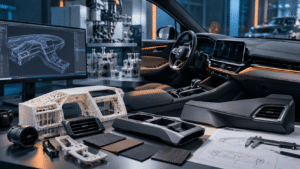
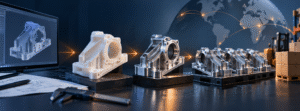
Contract manufacturing is an arrangement where a company hires an outside manufacturer to produce its products or components, rather than building and running its own factory. The contract manufacturer supplies the equipment, labour, and process expertise; the hiring company supplies the design, specifications, and volume requirements. It lets businesses bring products to market without the capital cost of owning production capacity — and lets them scale up or down without carrying fixed overhead.
Contract manufacturing exists because owning a factory is expensive, inflexible, and rarely a company’s core competency. A product company’s advantage is usually its design, brand, and market — not running machines. Outsourcing production to a specialist converts a large fixed cost into a variable one and gives access to expertise and equipment that would take years to build in-house. This guide covers what contract manufacturing services include, the main types, indicative costs, and how to choose and verify the right contract manufacturer for your product.
The guidance here is written from the manufacturer’s side of the table. Manufyn’s contract manufacturing service runs more than 80 processes from a single ISO 9001 certified, strictly in-house facility in Pune, India — so this covers what a serious contract manufacturer actually does, not just the theory.
What Are Contract Manufacturing Services?
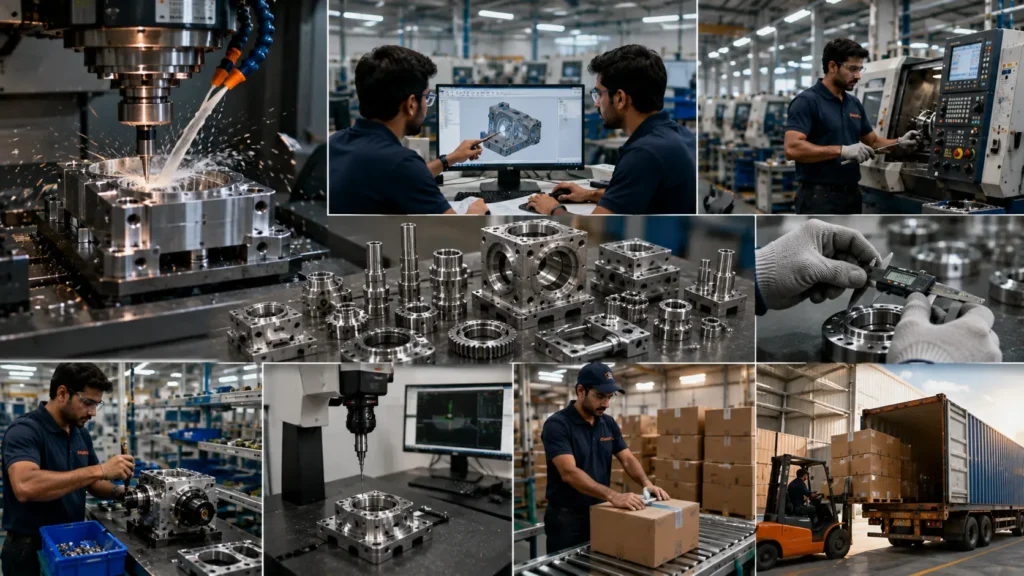
Contract manufacturing services cover the outsourced production of parts, components, sub-assemblies, or complete finished products to a client’s specification. In practice this spans far more than just making the part: a full-service contract manufacturer handles design-for-manufacturability review, material sourcing, production, quality inspection, documentation, and often assembly, packaging, and logistics. The client owns the design and the intellectual property; the manufacturer owns the process, the equipment, and the responsibility for delivering conforming parts on time. The scope can be as narrow as machining a single component or as broad as taking a product from a CAD file all the way to a boxed, shipped finished good — what matters is that the client defines what is made, and the contract manufacturer is accountable for how it’s made and whether it meets spec.
What Do Contract Manufacturing Services Include?
A capable contract manufacturer’s scope typically covers the full chain from drawing to delivered part:
- Design for manufacturability (DFM) — reviewing the design to flag features that add cost or risk failure before production
- Material sourcing — procuring the specified grades with traceability
- Production — machining, moulding, fabrication, casting, assembly, or a combination
- Quality control — in-process and final inspection, FAIR, dimensional reports
- Assembly and finishing — sub-assembly, surface treatment, marking
- Packaging and logistics — export packing, customs documentation, delivery
Explore Manufyn’s specific capabilities on our commodities directory and broader manufacturing services page.
Types of Contract Manufacturing
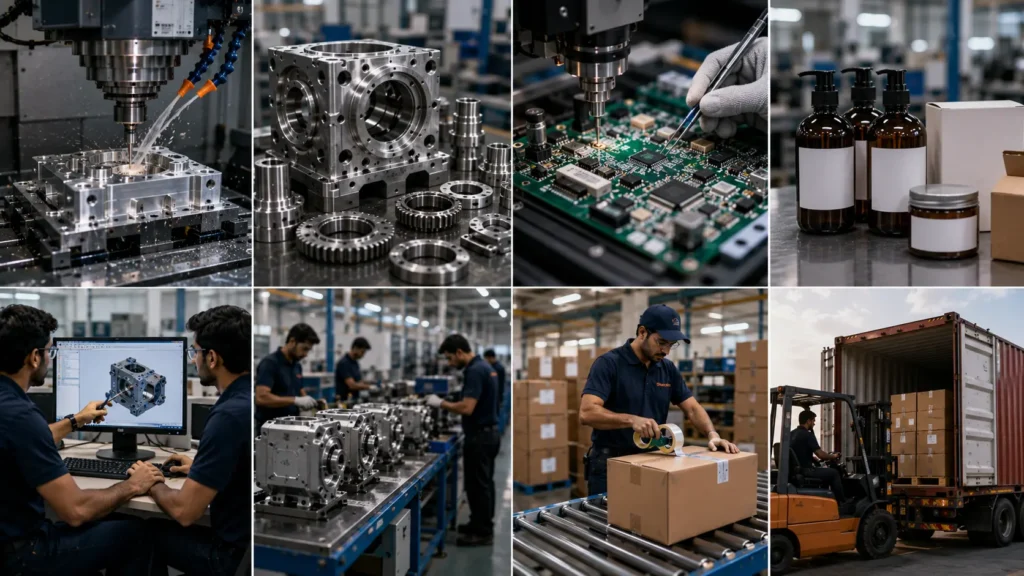
Contract manufacturing comes in several forms, and the terms are often confused. Understanding the distinctions helps you ask for exactly the arrangement you need. The main models are: full-service or turnkey, where the manufacturer handles everything from design support to finished, packaged product; component or part manufacturing, where they make specific parts you assemble yourself; private label, where they produce a standard product you sell under your own brand; and OEM (original equipment manufacturer) work, where they make parts or products that become part of your larger finished item. Some contract manufacturers specialise in one process — electronics assembly, for example — while others, like a broad in-house manufacturer, cover many processes under one roof, which reduces the number of suppliers you have to manage and vet.
The Main Models Compared
| Model | What the manufacturer does | Best for |
|---|---|---|
| Turnkey / full-service | Design support through finished, packaged product | Companies wanting a single accountable partner |
| Component manufacturing | Makes specific parts you assemble yourself | In-house assembly with outsourced parts |
| Private label | Produces a standard product under your brand | Brands selling established product types |
| OEM manufacturing | Makes parts that go into your larger product | Product makers needing custom sub-components |
For long-term component supply specifically, our OEM sheet metal fabrication guide covers how to structure a durable supplier partnership.
Not sure which contract manufacturing model fits your product? Share your drawing and requirements with Manufyn — we’ll recommend the right scope, from single components to turnkey production, and quote within 24 hours.
Benefits of Contract Manufacturing
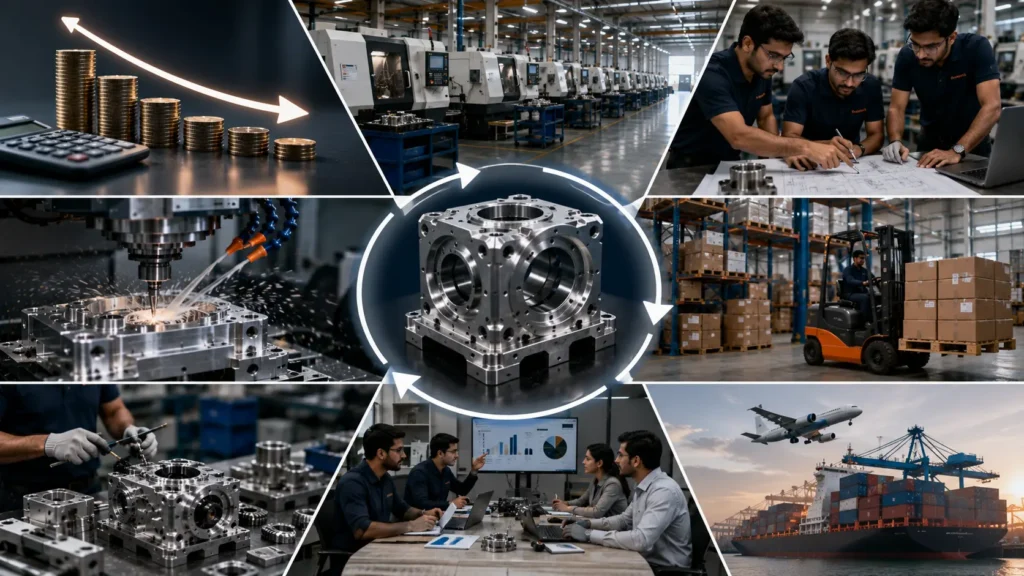
The core benefit of contract manufacturing is converting the large fixed cost of owning a factory into a flexible variable cost you only pay when you produce. Beyond that, it gives immediate access to specialised equipment and process expertise that would take years and heavy capital to build in-house, lets you scale production up or down with demand without carrying idle overhead, and frees your team to focus on design, brand, and market rather than running machines. It also shortens time to market — an established contract manufacturer already has the capability running — and, when the manufacturer covers many processes in-house, lets you consolidate suppliers so a single accountable partner handles machining, moulding, fabrication, and assembly instead of coordinating five separate vendors.
How Much Do Contract Manufacturing Services Cost?
Contract manufacturing is quoted per part or per project, not as a flat fee, and the price is built from the same components as any manufacturing quote: material, process/machine time, tooling where required, labour and assembly, and quality documentation. What changes with a contract manufacturer is that these are often bundled into a per-unit price with pricing that improves as volume commitments grow. The main cost variables are:
- Volume — higher committed volumes lower the per-unit price
- Tooling — one-time cost for moulded, cast, or stamped parts, amortised across the run
- Complexity — more processes and tighter tolerances raise cost
- Sourcing geography — labour and overhead rates vary significantly by country
- Documentation and certification — regulated-industry requirements add cost
Our injection molding cost breakdown works through a full per-part cost example that applies directly to contract-manufactured moulded parts.
How to Choose a Contract Manufacturer

Choosing a contract manufacturer is choosing a long-term partner, so vetting matters more than the headline quote. The first and most revealing question is whether they are a real in-house manufacturer or a broker reselling someone else’s capacity — the former controls quality and can answer a technical question from the shop floor; the latter cannot. From there, verify ISO 9001 (and any sector certificate like ISO 13485 or AS9100) directly with the issuing body, confirm which processes run in-house versus subcontracted, check for documented quality control offered by default, and require an NDA before sharing designs. Breadth matters too: a manufacturer covering many processes under one roof means fewer suppliers to manage and fewer handoffs where quality and schedule slip. Finally, run a small trial order before committing to volume — a first article tells you more than any capability brochure.
Our guide to finding a reliable manufacturing partner in India covers the full verification checklist, including the registrations to check independently.
How Manufyn Delivers Contract Manufacturing
Manufyn is an ISO 9001 certified, strictly in-house on-demand manufacturer based in Baner, Pune, India — not a broker or trading company. As a contract manufacturer, that in-house model is the whole advantage: more than 80 processes run under one roof, so a single accountable partner handles machining, moulding, fabrication, casting, electronics assembly, and finishing without the handoffs and quality gaps of a multi-vendor supply chain. Because production is in-house, the certifications and factory you verify describe the same building your parts are made in, and the same engineering team carries your product from first article through full production.
- 80+ in-house processes — machining, moulding, fabrication, casting, forging, electronics assembly, and more
- No minimum order quantity — from a single trial part to full production volumes
- Free DFM review and a firm quote within 24 hours
- NDA before drawings, FAIR and material certificates as standard
- Serving 500+ clients across 30+ countries, including the US, UK, Australia, UAE, Canada, Germany, Singapore, and Malaysia
See documented results in our case studies, or read more about our approach on Why Manufyn.
Looking for a contract manufacturer you can verify end to end? Share your drawing with Manufyn — free DFM review, NDA before drawings, no minimum order, and a firm quote in 24 hours.
FAQs
Contract manufacturing is an arrangement where a company hires an outside manufacturer to produce its products or components to its specifications, rather than owning and running its own factory. The client provides the design and requirements; the contract manufacturer provides the equipment, labour, and process expertise, and is accountable for delivering conforming parts.
A full-service contract manufacturer typically provides design-for-manufacturability review, material sourcing, production (machining, moulding, fabrication, casting, or assembly), quality inspection and documentation, and often assembly, finishing, packaging, and logistics. Scope can range from making a single component to delivering a complete boxed finished product.
The main types are turnkey/full-service (design support through finished product), component manufacturing (specific parts you assemble yourself), private label (a standard product sold under your brand), and OEM manufacturing (parts that become part of your larger product). Some manufacturers specialise in one process; others cover many under one roof.
Contract manufacturing is the broad arrangement of outsourcing production. OEM (original equipment manufacturer) work is one type within it, where the manufacturer makes parts or products that become part of the client’s larger finished item. All OEM manufacturing is contract manufacturing, but not all contract manufacturing is OEM.
Contract manufacturing is priced per part or per project, built from material, process time, tooling (where required), labour, and documentation costs. Per-unit price typically falls as committed volume rises. The biggest variables are volume, tooling requirements, part complexity, sourcing geography, and any regulated-industry documentation.
It converts the fixed cost of owning a factory into a flexible variable cost, gives access to specialised equipment and expertise without building it in-house, lets you scale with demand without carrying overhead, shortens time to market, and — with a broad in-house manufacturer — lets you consolidate suppliers under one accountable partner.
Verify whether they’re a real in-house manufacturer or a broker; confirm ISO 9001 and any sector certificates directly with the issuing body; check which processes are in-house versus subcontracted; require documented quality control and an NDA before sharing designs; and run a small trial order before committing to volume.
Usually yes for companies that don’t already own suitable production capacity, because it avoids the capital cost of buying equipment and the fixed overhead of running a factory. It’s most cost-effective when your volumes don’t justify a dedicated facility or when the manufacturer’s specialised expertise and scale beat what you could build yourself.
It can, with the right safeguards: sign an NDA before any design is shared, document IP and tooling ownership in the contract, and work with an in-house manufacturer whose files don’t propagate through a subcontractor network. Verifying the manufacturer’s legitimacy before sharing drawings is the most important protection.
Yes — a broad in-house contract manufacturer can handle machining, moulding, fabrication, casting, and assembly under one roof. This consolidates suppliers, reduces handoffs where quality and schedule can slip, and gives you a single accountable partner instead of coordinating several specialised vendors.
Have a specific product or component to outsource? Send it to our engineers — we respond within 4 working hours.
Looking for a contract manufacturing partner?
Get a capability review, a DFM check, and a firm per-part quote before you commit to a supplier.
Talk to Manufyn