
Electronics System Integration: From PCB Assembly to Tested Finished Product
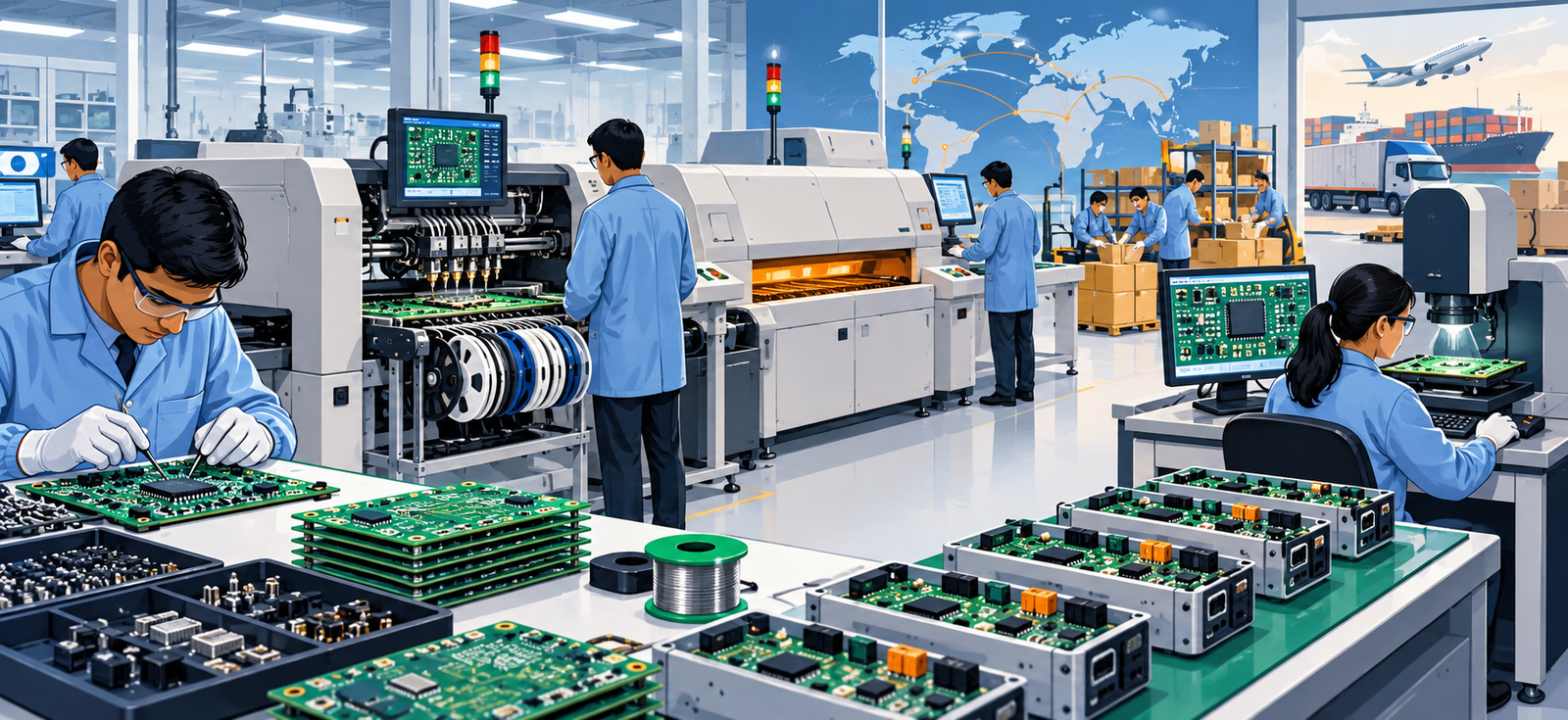
Electronics system integration combines populated circuit boards, cables, connectors, mechanical structures, power systems, firmware, testing and final assembly into a functional electronic product.
For OEMs and engineering teams, the challenge is not simply getting a PCB assembled. The complete system must be mechanically correct, electrically functional, correctly configured, testable and repeatable in production.
What Is Electronics System Integration?
Electronics system integration is the controlled process of combining electronic, electrical, mechanical and software elements into a complete product or functional subsystem.
A typical integrated electronic product may contain one or more PCB assemblies, power supplies, displays, sensors, connectors, wire harnesses, switches, mechanical brackets, an enclosure and programmed firmware.
System integration connects these individual elements into a product that can be assembled, inspected, tested, configured, packaged and delivered consistently.
PCB Assembly
Components are placed and soldered onto a fabricated PCB using SMT, through-hole or mixed technology processes.
Subassembly Integration
PCBAs, power modules, displays, connectors, cables and mechanical components are combined into functional subassemblies.
System Integration
The complete product is mechanically assembled, electrically connected, programmed and tested against the intended product requirements.
Where Electronics System Integration Is Used
System integration becomes particularly important when an electronic product contains several interacting assemblies rather than a single standalone PCB.
Industrial Automation
PLC-related equipment, control panels, motor-control electronics, industrial gateways, HMI systems and machine controllers.
Robotics
Robot control electronics, sensor modules, power electronics, communication systems and integrated control assemblies.
Automotive Electronics
Electronic control modules, sensors, interfaces and other automotive electronic assemblies where configuration and traceability are critical.
Medical Devices
Electronic subassemblies and finished devices requiring controlled assembly, documentation, testing and traceability.
Energy Equipment
Controllers, monitoring electronics, power-management assemblies and electronic interfaces used in energy systems.
Connected Products
IoT gateways, communication equipment, sensors and embedded electronic products combining electronics, software and mechanical hardware.
How Electronics System Integration Works
The exact sequence varies by product, but a controlled system-integration program normally moves from engineering documentation through component procurement, PCB assembly, mechanical integration, programming, testing and final inspection.
Engineering Release
Drawings, BOMs, PCB data, firmware, assembly instructions and test requirements are reviewed and revision-controlled.
Component Procurement
Components, PCBs, mechanical parts, cables, connectors and other production materials are purchased and verified.
PCB Assembly
SMT, through-hole or mixed-technology assembly is completed with the appropriate soldering and inspection processes.
System Assembly
PCBAs are integrated with enclosures, cables, connectors, brackets, power systems and other mechanical components.
Testing & Release
Programming, electrical checks, functional testing and final inspection are performed before packaging and shipment.
Key Technologies in Electronics System Integration
System integration combines multiple manufacturing technologies. The appropriate combination depends on product architecture, volume, reliability requirements and testing strategy.
Surface Mount Technology
SMT allows components to be placed directly onto PCB pads and is commonly used for compact, high-density electronic assemblies.
Through-Hole Assembly
Through-hole components can provide robust mechanical connections and remain common for connectors, power components and selected industrial applications.
Reflow Soldering
Solder paste is deposited onto PCB pads, components are placed and the assembly passes through a controlled thermal profile.
Wave & Selective Soldering
Wave soldering can process suitable through-hole assemblies in volume, while selective soldering provides localized soldering for mixed-technology assemblies.
Wire & Cable Integration
Harnesses, internal cables, connectors and terminals must be correctly routed, terminated, secured and electrically verified.
Programming & Configuration
Firmware loading, serial-number assignment, configuration and version control may become part of the manufacturing process.
Electronics System Integration Manufacturing Process
A production system should define the relationship between PCB assembly, mechanical assembly, electrical integration and testing rather than treating each activity as an isolated operation.
| Stage | Typical Activity | Important Control Points |
|---|---|---|
| Incoming Materials | PCB, components, mechanical parts, cables and purchased assemblies received. | Part number, revision, quantity, packaging, damage, certificates and traceability. |
| PCB Fabrication | Bare PCB manufactured according to controlled fabrication data. | Layer stack-up, dimensions, copper, finish, impedance and electrical testing. |
| SMT Assembly | Solder paste printing, SPI, component placement and reflow. | Paste deposition, component orientation, placement accuracy and thermal profile. |
| Through-Hole Assembly | Through-hole insertion followed by manual, wave or selective soldering. | Component orientation, solder quality, joint coverage and mechanical integrity. |
| PCB Inspection | AOI, visual inspection and X-ray where appropriate. | Component placement, solder joints, polarity and hidden-joint defects. |
| Programming | Firmware loading and product configuration. | Firmware revision, serial number, configuration data and programming verification. |
| Mechanical Integration | PCB installation, brackets, enclosure, connectors and mechanical hardware. | Fit, torque, connector engagement, cable routing and clearance. |
| Electrical Integration | Harnesses, power connections, switches and interfaces connected. | Continuity, polarity, insulation where applicable and connector verification. |
| Functional Testing | Complete product tested against defined operating requirements. | Test limits, test sequence, failure logging and test record retention. |
| Final Inspection | Visual, configuration and documentation checks. | Revision, labels, serial number, accessories, packaging and release status. |
The final manufacturing flow should be documented in work instructions or controlled assembly documentation appropriate to the product and production volume.
Design Considerations for Electronics System Integration
System-level manufacturability needs to be considered before production begins. A PCB can be electrically correct while the complete product remains difficult to assemble, test or service.
Mechanical Interfaces
- PCB mounting locations
- Connector access
- Enclosure clearances
- Fastener accessibility
- Thermal interfaces
Electrical Interfaces
- Connector orientation
- Wire routing
- Power distribution
- Grounding strategy
- Signal integrity requirements
Thermal Management
- Heat-generating components
- Heat sinks
- Thermal interface materials
- Airflow
- Enclosure heat dissipation
Serviceability
- Access to replaceable components
- Connector accessibility
- Fastener strategy
- Diagnostic access
- Field replacement requirements
Testability
- Test points
- Programming interface
- Fixture access
- Diagnostic modes
- Functional test coverage
Configuration Control
- PCB revision
- BOM revision
- Firmware revision
- Component alternatives
- Serial-number traceability
Manufacturing and Assembly Considerations
Design for Manufacturing and Design for Assembly should address the complete production process rather than only PCB fabrication.
PCB-Level DFM
- Component spacing and package selection
- Pad and land-pattern correctness
- Board edge clearances
- Via and drill requirements
- Stencil design
- Thermal pad design
- Reflow considerations
System-Level DFA
- Assembly sequence
- Fastener accessibility
- Connector keying
- Cable routing
- Part orientation
- Operator access
- Test fixture accessibility
Procurement Considerations for Electronics System Integration
Purchasing an integrated electronic product requires more than comparing assembly prices. The buyer needs visibility into the BOM, component supply chain, manufacturing processes, testing requirements and production risks.
| Procurement Area | What to Evaluate |
|---|---|
| MOQ | Minimum economic quantity, setup costs, component pack quantities and supplier constraints. |
| Lead Time | PCB fabrication, component availability, assembly, testing, custom parts and logistics. |
| BOM Management | Manufacturer part numbers, approved alternatives, revisions, DNP components and lifecycle status. |
| Component Sourcing | Original manufacturer sourcing, authorized distribution, traceability and counterfeit-risk controls. |
| Alternates | Whether substitutions require customer approval and engineering validation before use. |
| Obsolescence | Lifecycle status, last-time-buy risk, NRND components and redesign exposure. |
| Quality | Inspection systems, process controls, IPC requirements, test coverage and nonconformance handling. |
| Traceability | Lot, date code, serial number, component and production records where required. |
| Cost Drivers | Component cost, PCB, placement count, soldering operations, manual assembly, testing and NRE. |
| Logistics | Packaging, ESD protection, shipment mode, export documentation, Incoterms and destination requirements. |
Electronics System Integration Supplier Qualification Checklist
A supplier should be evaluated against the complete production system. Having an SMT line alone does not establish capability to manufacture and test a complete integrated electronic product.
SMT, THT and mixed-technology experience.
BOM procurement and approved-source controls.
SPI, AOI, X-ray or other suitable inspection systems.
Ability to execute customer-defined test procedures.
Firmware loading and configuration control.
Enclosure, brackets, fasteners and final assembly capability.
Correct termination, routing and continuity verification.
Lot, serial, component and production records as required.
Relevant certifications and documented quality procedures.
Available equipment, manpower, shifts and production loading.
DFM, process engineering and technical problem-solving capability.
Subcontractor and critical-component risk management.
For higher-risk programs, a supplier audit can verify manufacturing infrastructure, process controls, inspection resources and production practices before production approval. See Manufyn’s Vendor Evaluation guide .
Quality Control and Testing
Inspection should be selected according to the actual failure modes, component technology, product risk and production volume. Not every product requires every inspection method.
Incoming Inspection
Verify received PCBs, components and mechanical parts against the approved part number, revision, quantity and required documentation.
SPI
Solder Paste Inspection evaluates paste deposition before component placement and can identify printing-related defects early.
AOI
Automated Optical Inspection checks component presence, orientation, placement and accessible solder features.
X-Ray Inspection
X-ray inspection can be useful for hidden solder joints such as BGAs and other assemblies where optical inspection cannot provide sufficient visibility.
ICT / Flying Probe
Electrical test methods can identify opens, shorts and other circuit-level problems depending on board design and test coverage.
Functional Testing
The assembled product is operated under controlled conditions to verify its intended electrical and functional behaviour.
Visual Inspection
Final inspection can verify assembly condition, labels, connectors, mechanical fit, workmanship and configuration.
Traceability
Serial numbers, component lots, firmware revisions and production records can be linked where product requirements demand it.
Common Electronics System Integration Problems
Integration failures often occur at the interfaces between otherwise functional components. Mechanical fit, wiring, configuration and test coverage therefore deserve the same attention as PCB solder quality.
| Problem | Possible Cause | Detection Method | Corrective Action |
|---|---|---|---|
| PCB does not fit enclosure | Incorrect mechanical drawing, tolerance stack-up or mounting-hole position. | Mechanical inspection and assembly trial. | Review CAD, drawing revision and interface tolerances. |
| Connector mismatch | Incorrect part number, orientation or mating connector. | Visual inspection and mating check. | Control connector BOM and assembly documentation. |
| Intermittent electrical failure | Poor solder joint, loose termination or damaged cable. | Functional test and electrical inspection. | Improve solder/termination process and verify connection retention. |
| Firmware mismatch | Incorrect software revision loaded during production. | Programming verification and serial-number records. | Introduce controlled programming and revision verification. |
| Wire harness routing problem | Insufficient clearance, incorrect harness length or assembly sequence. | Visual and mechanical inspection. | Update harness drawing, routing instructions or fixture. |
| Excessive rework | Poor DFM, component availability substitutions or unstable assembly process. | Production yield and NCR analysis. | Perform process review and root-cause analysis. |
| Functional test failure | Incorrect assembly, firmware, component or test configuration. | Functional test and diagnostic procedure. | Isolate failure to hardware, software or test system. |
| Component substitution issue | Unapproved alternate component used due to shortage. | BOM and component traceability review. | Require formal alternate approval before production use. |
What Drives Electronics System Integration Cost?
The quoted assembly price represents only part of the total manufacturing economics. Component procurement, engineering preparation, testing and production complexity can have a significant effect on the final cost.
BOM Cost
ICs, semiconductors, connectors, passives, sensors, power devices and custom components often represent the largest cost element.
PCB Cost
Layer count, material, copper weight, dimensions, surface finish, impedance requirements and fabrication complexity affect PCB cost.
Assembly Complexity
Component count, fine-pitch packages, double-sided assembly, THT operations and manual operations influence labour and machine time.
Testing
ICT, flying probe, functional testing, programming and custom fixtures can introduce engineering and recurring test costs.
Mechanical Integration
Enclosures, brackets, fasteners, cable harnesses and mechanical assembly add material and labour requirements.
NRE & Tooling
Stencils, fixtures, programming infrastructure, test fixtures and tooling may create non-recurring engineering costs.
Prototype vs Low Volume vs Mass Production
Electronics manufacturing requirements change as volume increases. A supplier suitable for engineering prototypes may not necessarily be suitable for recurring production.
| Factor | Prototype | Low Volume | Mass Production |
|---|---|---|---|
| Primary Objective | Design validation | Process and market validation | Repeatable production |
| Component Strategy | Availability often prioritised | Controlled sourcing | Lifecycle and supply strategy required |
| Testing | Manual or engineering test | Structured functional testing | Dedicated automated or fixture-based testing where justified |
| Fixtures | Limited | Selective investment | Greater automation and dedicated tooling |
| Documentation | Engineering controlled | Formalised work instructions | Strong process and revision control |
| Supplier Requirement | Engineering flexibility | Process stability | Capacity, quality and supply-chain resilience |
Procuring Electronics System Integration From India
India has an established manufacturing ecosystem spanning PCB assembly, mechanical manufacturing, cable assemblies, electronics integration and industrial product assembly. For an overseas buyer, however, supplier selection and local coordination remain important parts of the procurement process.
Supplier Selection
Match suppliers to the actual product architecture rather than selecting based solely on SMT machine capacity. Evaluate PCB assembly, mechanical integration, testing, component procurement and production capacity.
Quality Audits
Review quality systems, calibration, inspection equipment, traceability, process documentation, nonconformance handling and corrective-action procedures.
Technical Communication
Use controlled drawings, BOM revisions, assembly instructions and test specifications. Avoid relying on informal descriptions for critical production requirements.
Documentation
Define the required inspection reports, certificates, packing lists, invoices, serial-number records and other documentation before production.
Export & Logistics
Packaging, ESD protection, labelling, export documentation, Incoterms, freight mode and destination requirements should be established before shipment.
Supplier Development
Recurring programs may require ongoing supplier improvement, corrective actions, production monitoring and engineering coordination rather than a one-time supplier selection exercise.
Practical Buyer Checklist Before Issuing an RFQ
A structured RFQ helps suppliers quote the same technical requirement and gives procurement teams a more meaningful basis for comparison.
For a more detailed RFQ preparation process, see the Manufyn PCB RFQ Checklist .
Electronics System Integration FAQ
What is electronics system integration?
It is the process of combining electronic, electrical, mechanical and software elements into a complete functional product or subsystem.
Is system integration the same as PCB assembly?
No. PCB assembly produces a populated circuit board. System integration can include PCBAs, wiring, mechanical components, firmware, enclosure assembly and system-level testing.
What is included in a typical integrated electronics product?
Depending on the product, it may include PCBAs, power supplies, cables, connectors, displays, sensors, mechanical housings, brackets, fasteners and firmware.
Should electronics suppliers provide functional testing?
Where functional performance is important, the manufacturing process should include a defined test method with controlled limits and documented results.
How important is BOM revision control?
It is critical. The BOM, PCB data, assembly drawing, firmware and test documentation need to correspond to the same product revision.
Should suppliers be allowed to substitute components?
Substitution should follow the customer’s defined approval process. Electrical equivalence does not automatically establish mechanical, thermal, regulatory or lifecycle equivalence.
What inspection methods are commonly used?
Depending on the assembly, methods can include SPI, AOI, X-ray, visual inspection, ICT, flying probe and functional testing.
Can electronics system integration be outsourced to India?
Yes. The appropriate supplier should be evaluated for PCB assembly, component sourcing, mechanical integration, testing, documentation, capacity and export capability.
What information should be provided for an RFQ?
A typical RFQ should include the BOM, PCB manufacturing data, assembly files, drawings, quantities, revisions, testing requirements, delivery requirements and commercial assumptions.
Does production volume affect supplier selection?
Yes. Prototype production prioritises engineering flexibility, while recurring production requires stronger process control, capacity planning, supply continuity and production repeatability.
Related Electronics Manufacturing Resources
Continue your technical and procurement research through related Manufyn resources.
Electronics Procurement Support From India
For international companies evaluating electronics manufacturing in India, Manufyn can act as a local procurement and project coordination partner.
The role can extend beyond supplier identification to technical RFQ coordination, supplier qualification, commercial comparison, production follow-up, quality coordination, inspection and logistics.
Supplier Identification
Identify Indian suppliers based on the required electronics and manufacturing capability.
Supplier Qualification
Review technical capability, quality systems, capacity and production suitability.
RFQ Management
Coordinate technical clarifications and structured quotation comparison.
Commercial Comparison
Compare supplier quotations against technical, commercial and delivery requirements.
Quality Coordination
Coordinate inspection requirements, documentation and supplier quality follow-up.
Production & Logistics
Support production follow-up, shipment coordination and communication between the Indian supply base and global buyer.
Evaluating Electronics Manufacturing in India?
Share your BOM, PCB files, drawings, assembly requirements, production quantity and target delivery date. Manufyn can help structure the requirement, identify suitable manufacturing capabilities and coordinate the procurement process in India.
Discuss Your Electronics Requirement