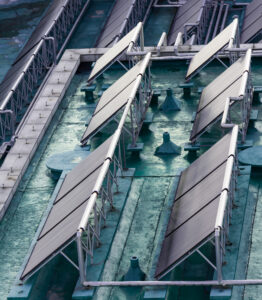
Learn how solar systems can integrate with your factory’s power infrastructure.
Solar for Warehouses and Logistics Centers – Complete Guide
Warehouses and logistics centers are critical infrastructure for modern supply chains. These facilities power lighting systems, automated equipment, conveyor systems, refrigeration units, and warehouse management technologies. As electricity consumption continues to rise in logistics operations, many companies are exploring renewable energy solutions to reduce operational costs.
Installing solar for warehouses allows logistics companies to generate electricity directly at their facilities using rooftop solar panels. By converting unused roof space into a source of renewable energy, warehouses can significantly reduce dependence on grid electricity while improving long-term energy efficiency.
Large distribution centers and storage facilities are particularly well suited for solar installations because they often have expansive roof areas that receive unobstructed sunlight throughout the day. As a result, warehouse rooftop solar systems are becoming increasingly popular among logistics companies seeking to lower electricity expenses and improve sustainability.
Across the logistics sector, many organizations are investing in solar for logistics centers as part of their long-term energy strategy. By installing a warehouse solar power plant, businesses can stabilize electricity costs, reduce carbon emissions, and strengthen environmentally responsible supply chains.
In this guide, we will explore how solar power for warehouses works, its benefits, installation process, costs, and how logistics facilities can successfully implement solar energy systems.
What Is Solar for Warehouses and Logistics Centers?
Solar for Warehouses Definition
Solar for warehouses refers to solar energy systems installed on warehouse rooftops or nearby land to generate electricity for logistics and storage operations. These systems use photovoltaic (PV) panels to convert sunlight into electricity that powers warehouse infrastructure.
A typical warehouse rooftop solar system includes several key components:
- Solar panels that capture sunlight
- Solar inverters that convert electricity into usable power
- Mounting structures that secure panels to the roof
- Electrical wiring and protection systems
- Monitoring systems that track energy generation
By generating electricity on-site, solar power for warehouses helps logistics companies reduce reliance on grid electricity while lowering long-term energy costs.
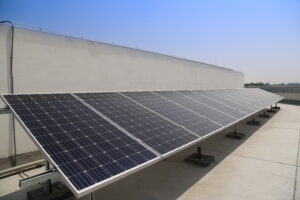
Warehouses are especially well suited for solar installations because they typically have large flat rooftops with minimal shading.
How Warehouse Solar Systems Work
A warehouse solar power plant generates electricity by converting sunlight into usable electrical energy through photovoltaic technology.
The process typically works as follows:
- Solar panels capture sunlight
Photovoltaic cells in the panels absorb sunlight and convert it into direct current (DC) electricity. - Inverters convert electricity
Solar inverters convert DC electricity into alternating current (AC), which can power warehouse equipment and systems. - Electricity powers warehouse operations
The generated electricity is supplied directly to the facility’s internal electrical system. - Excess electricity may be exported to the grid
If the solar power for warehouses generates more electricity than the facility consumes, surplus power may be exported to the grid through net metering programs.
Because many warehouses operate during daytime hours, a large portion of the electricity generated by warehouse rooftop solar systems can be used immediately within the facility.
Why Warehouses Are Ideal for Solar Installations
Warehouses provide excellent conditions for installing solar energy systems due to their large roof surfaces and predictable energy consumption patterns.
Some of the reasons why solar for logistics centers is highly effective include:
- Large unused roof areas suitable for solar panels
- Minimal shading from surrounding structures
- High electricity demand for lighting and equipment
- Simple roof layouts that simplify solar installation
By installing solar panels for warehouses, companies can turn their rooftops into productive energy generation assets without requiring additional land.
This efficient use of infrastructure makes warehouse rooftop solar power plants one of the most practical renewable energy solutions for logistics facilities.
Discover how solar energy can reduce electricity costs for logistics facilities.
How Solar Power Systems Support Warehouse Operations
A warehouse solar power plant is designed to integrate directly with the electrical infrastructure of logistics facilities. Once installed, the system generates electricity on-site and supplies power to warehouse operations throughout the day.
Because many warehouses operate during daylight hours, electricity produced by solar panels for warehouses can be used immediately within the facility. This helps logistics companies reduce dependence on grid electricity while lowering operational energy costs.
Modern solar for warehouses systems are engineered to work seamlessly with warehouse electrical networks, ensuring stable and reliable energy supply.
Solar Panels Generate Electricity
Solar panels are the primary component of any warehouse rooftop solar system. These panels contain photovoltaic cells that absorb sunlight and convert it into electricity.
When sunlight strikes the panels, the photovoltaic cells generate direct current (DC) electricity. The amount of electricity produced depends on factors such as:
- Solar panel efficiency
- Sunlight availability
- System size
- Panel orientation and tilt
Because warehouses typically have large roof surfaces, installing solar panels for warehouses allows facilities to generate significant electricity.
Inverters Convert Solar Energy into Usable Power
The electricity produced by solar panels is initially generated as direct current (DC). However, warehouse equipment operates on alternating current (AC) electricity.
Solar inverters convert DC electricity into AC electricity that can power warehouse systems.
Modern inverters used in warehouse solar power plants also provide additional functions such as:
- System monitoring
- Voltage control
- Electrical protection features
These capabilities help ensure that solar power for warehouses operates safely and efficiently.
Solar Electricity Powers Warehouse Operations
Once converted into AC electricity, solar energy flows directly into the warehouse electrical distribution system.
Electricity generated by solar for logistics centers can power several warehouse operations, including:
- Warehouse lighting systems
- Conveyor systems and automated equipment
- Warehouse management technologies
- Charging stations for electric forklifts
- HVAC and refrigeration systems
Using solar panels for warehouses, logistics companies can significantly reduce daytime electricity consumption from the grid.
Grid Integration and Net Metering
Most warehouse rooftop solar systems are connected to the electricity grid to ensure continuous power supply.
If the solar power for warehouses produces more electricity than the facility consumes, the excess power may be exported to the grid through net metering policies.
Under net metering:
- Surplus solar electricity is exported to the grid
- The facility receives energy credits
- These credits offset electricity consumption during non-solar hours
This integration allows warehouse solar power plants to operate efficiently alongside existing power infrastructure.
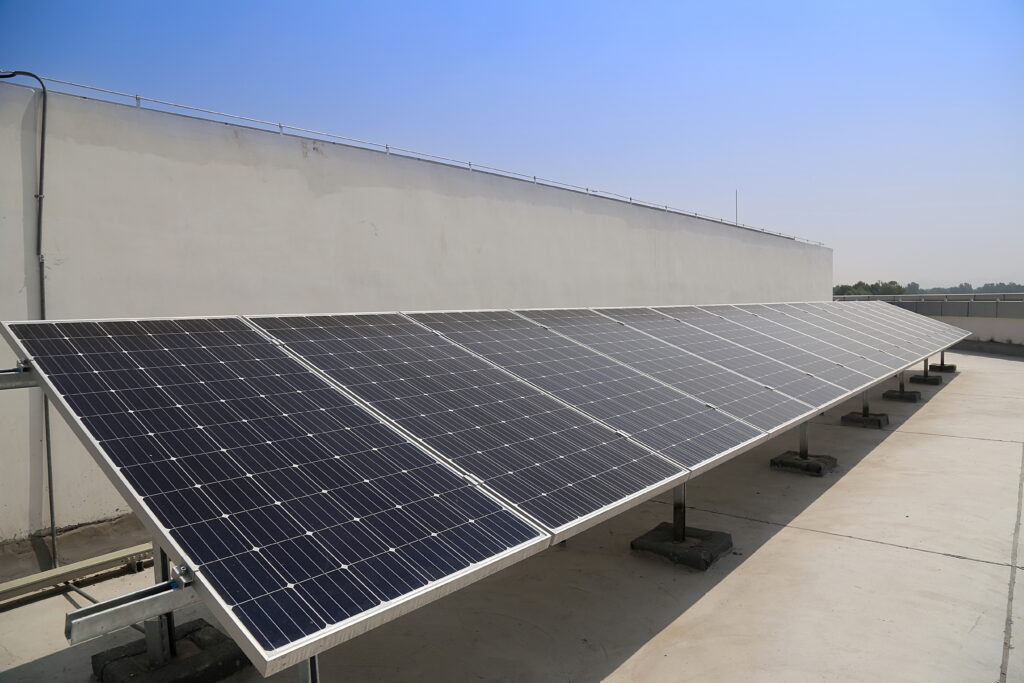
Learn how solar systems can integrate with your logistics facility.
Warehouse Roof Size vs Solar Capacity Chart
One of the biggest advantages of installing solar for warehouses is the large rooftop area available for solar panel installations. Warehouse rooftops often provide enough space to install high-capacity solar systems capable of generating substantial electricity.
Understanding the relationship between roof size and solar capacity helps logistics companies estimate how large a warehouse rooftop solar system they can install.
Below is an approximate guide showing how roof area translates into solar capacity.
| Warehouse Roof Area | Approximate Solar Capacity |
|---|---|
| 10,000 sq ft | 100 kW |
| 25,000 sq ft | 250 kW |
| 50,000 sq ft | 500 kW |
| 100,000 sq ft | 1 MW |
Large distribution centers can install multi-megawatt warehouse solar power plants if sufficient rooftop space is available.
Because warehouses typically have flat roofs with minimal obstructions, they are among the most suitable buildings for solar panels for warehouses.
Learn how solar systems can integrate with your logistics facility.
Electricity Savings Example for Logistics Centers
Many logistics companies adopt solar for warehouses primarily to reduce electricity costs. Solar energy allows warehouses to generate their own electricity instead of purchasing all power from the grid.
Below is an example illustrating the potential electricity savings for a logistics facility.
Example Scenario
Warehouse size: 100,000 sq ft
Solar capacity installed: 1 MW
Annual solar electricity generation: ~1.5 million units
If the average industrial electricity tariff is ₹8 per unit, the annual electricity savings could be approximately:
₹1.2 crore per year
Over the lifespan of the system (25 years), a warehouse solar power plant can generate significant financial savings for logistics companies. Because of these long-term savings, solar power for warehouses is increasingly being adopted by logistics operators, e-commerce fulfillment centers, and distribution hubs.
Benefits of Solar for Warehouses and Logistics Centers
Installing solar for warehouses offers several financial, operational, and environmental advantages for logistics companies. Warehouses typically consume large amounts of electricity for lighting, automation systems, refrigeration units, and equipment operations. As energy costs continue to rise, solar energy provides an effective solution to control operational expenses.
A warehouse rooftop solar system allows logistics facilities to generate electricity directly on-site using solar panels installed on warehouse roofs. This reduces reliance on grid electricity while improving long-term energy efficiency.
Below are some of the key benefits of installing solar power for warehouses.
Significant Reduction in Electricity Costs
Electricity expenses represent a major operational cost for many warehouses and logistics facilities. By installing solar panels for warehouses, companies can generate a significant portion of their electricity directly at the facility.
This reduces dependence on grid power and lowers monthly electricity bills. In many cases, logistics companies can reduce electricity expenses by 40–70%, depending on the system size and energy consumption patterns.
Because solar systems generate electricity using sunlight, the cost of producing electricity from a warehouse solar power plant remains stable over time.
Efficient Use of Large Warehouse Roof Space
Warehouses often have large flat rooftops that remain unused throughout the year. Installing solar panels allows businesses to transform this idle space into a productive energy generation platform.
A warehouse rooftop solar system uses existing building infrastructure, which eliminates the need for additional land for solar installations. This efficient use of infrastructure makes solar for logistics centers one of the most practical renewable energy solutions for warehouse facilities.
Long-Term Energy Cost Stability
Electricity tariffs often increase over time due to rising fuel costs, infrastructure investments, and regulatory changes. These fluctuations can make it difficult for logistics companies to predict long-term energy expenses.
Installing solar power for warehouses helps businesses lock in a portion of their electricity costs for decades. Since most warehouse solar power plants operate for 25 to 30 years, companies benefit from stable electricity costs throughout the lifespan of the system.
Sustainability and Green Supply Chains
Sustainability is becoming increasingly important for logistics companies and supply chain operators. Many organizations are now focusing on reducing their environmental impact and transitioning toward renewable energy.
By installing solar panels for warehouses, logistics companies can significantly reduce carbon emissions associated with electricity generation.
Solar energy produces electricity without burning fossil fuels, which helps businesses:
- Reduce greenhouse gas emissions
- Support environmentally responsible supply chains
- Strengthen ESG (Environmental, Social, and Governance) initiatives
Adopting solar for warehouses also enhances a company’s reputation as a sustainable logistics provider.
Explore how solar energy can power your logistics facility efficiently.
Warehouse Rooftop Solar Power Plants
Rooftop solar installations are one of the most effective ways for warehouses and logistics centers to generate renewable energy. A warehouse rooftop solar power plant uses solar panels installed on the roof of a warehouse building to produce electricity that powers daily operations.
Because warehouses typically have large, flat rooftops with minimal structural obstructions, they are among the most suitable buildings for solar installations. Installing solar for warehouses allows logistics facilities to generate electricity on-site without requiring additional land.
Warehouse rooftop solar systems can vary in size depending on the available roof space and the electricity demand of the facility. Many logistics companies are now installing rooftop solar to reduce operating costs and support sustainable supply chain initiatives.
Why warehouse rooftops are ideal for solar
Warehouse buildings provide excellent conditions for solar installations due to their structural characteristics and large roof areas.
Some factors that make warehouse rooftops ideal for solar include:
- Large uninterrupted roof surfaces
- Minimal shading from surrounding structures
- Strong structural frameworks designed for industrial loads
- High daytime electricity consumption
These factors allow solar panels for warehouses to generate substantial electricity throughout the day. In many cases, warehouses can install large solar systems capable of producing hundreds of kilowatts or even multiple megawatts of electricity.
Typical solar capacity for warehouses
The size of a warehouse solar power plant depends mainly on the roof area available for panel installation and the electricity consumption of the facility.
Typical rooftop solar capacities for warehouses include:
| Warehouse Size | Typical Solar Capacity |
|---|---|
| Small warehouse | 50 kW – 100 kW |
| Medium warehouse | 100 kW – 500 kW |
| Large warehouse | 500 kW – 1 MW |
| Large distribution center | 1 MW – 5 MW |
Large logistics hubs and distribution centers often install multi-megawatt warehouse solar power plants to maximize energy generation and reduce electricity costs.
Logistics facilities that benefit most from solar
Several types of logistics facilities benefit significantly from installing solar for warehouses because of their energy consumption patterns and large building footprints.
Facilities that commonly adopt warehouse solar systems include:
- E-commerce fulfillment centers
- Distribution and logistics hubs
- Cold storage warehouses
- Manufacturing warehouses
- Third-party logistics facilities
These facilities often operate during daytime hours and require substantial electricity for lighting, automation systems, and equipment. As a result, solar power for warehouses can offset a large portion of grid electricity consumption.
Install solar on your warehouse rooftop Turn unused warehouse roof space into a reliable source of renewable energy.
Solar Capacity Guide for Warehouses
The size of a solar system installed on a warehouse depends on several factors, including the total roof area available, electricity consumption of the facility, and the long-term energy strategy of the logistics operator. Solar installations for warehouses are typically measured in kilowatts (kW) or megawatts (MW), depending on the scale of the system.
Selecting the right system capacity is important because it determines how much electricity the warehouse solar power plant can generate and how much grid electricity can be replaced.
Large warehouses and logistics centers often have enough rooftop space to support high-capacity solar installations. Below are common system sizes used for solar for warehouses.
100 kW solar system for small warehouses
A 100 kW solar installation is typically suitable for small warehouses or logistics facilities with moderate electricity consumption.
This capacity can support electricity needs such as:
- Warehouse lighting systems
- Small automation equipment
- Administrative office areas within the facility
- Charging stations for warehouse vehicles
A warehouse rooftop solar system with a capacity of 100 kW generally requires approximately 8,000 to 10,000 square feet of roof space, depending on panel efficiency and system layout.
For smaller facilities, installing solar panels for warehouses at this capacity can significantly reduce electricity costs.
500 kW warehouse solar power plant
A 500 kW solar installation is commonly used for medium-sized logistics facilities that consume larger amounts of electricity.
Warehouses that benefit from this capacity include:
- Distribution centers
- Regional logistics hubs
- Cold storage facilities
- E-commerce fulfillment warehouses
A 500 kW solar power system can generate substantial electricity throughout the day and offset a large portion of the facility’s energy demand.
This type of warehouse rooftop solar system typically requires around 40,000 to 50,000 square feet of installation space.
1 MW solar system for logistics centers
Large logistics centers and distribution hubs often install solar systems with capacities of around 1 MW.
These facilities usually have high electricity requirements due to lighting systems, automated sorting equipment, conveyor systems, and refrigeration units.
A 1 MW warehouse solar power plant can generate a significant amount of electricity annually and help reduce long-term electricity expenses.
Such systems generally require approximately 90,000 to 100,000 square feet of rooftop installation area.
Multi-MW solar systems for large distribution hubs
Large distribution hubs and logistics campuses may install multi-megawatt solar power systems to meet significant energy demand.
These large solar installations can be built across multiple warehouse buildings or large distribution centers.
Multi-megawatt solar power plants for warehouses can generate large amounts of electricity and play an important role in reducing operational energy costs.
Determine the right solar capacity for your warehouse
Our experts help logistics companies design the optimal solar system for their facility.
Cost of Solar Power for Warehouses
The cost of installing solar for warehouses depends on several factors such as system size, equipment quality, rooftop conditions, and project location. Although the initial investment varies from one project to another, many logistics companies find that solar installations provide significant long-term savings.
Over the past decade, the cost of solar installations has decreased due to improvements in solar technology and increased adoption across industrial sectors. As a result, installing solar panels for warehouses has become one of the most cost-effective ways for logistics facilities to manage electricity expenses.
Understanding the cost structure helps warehouse operators evaluate the financial feasibility of installing a warehouse solar power plant.
Average cost per kW for warehouse solar
Solar installations for warehouses are typically priced based on the cost per kilowatt of installed capacity.
In many industrial installations, the cost of solar power for warehouses generally ranges between:
₹40,000 to ₹60,000 per kW
The exact project cost depends on factors such as system design, roof structure, and electrical infrastructure.
Larger solar projects often benefit from economies of scale, which means the cost per kW may decrease as the installation capacity increases.
Cost of rooftop solar for logistics centers
Below are approximate cost estimates for installing solar systems on warehouse rooftops.
| System Capacity | Estimated Installation Cost |
|---|---|
| 100 kW | ₹40 lakh – ₹60 lakh |
| 500 kW | ₹2 crore – ₹3 crore |
| 1 MW | ₹4 crore – ₹5.5 crore |
These figures provide a general estimate for warehouse rooftop solar systems. However, the final project cost is determined after detailed engineering and site evaluation.
Factors affecting warehouse solar installation cost
Several technical and operational factors influence the total cost of installing solar panels for warehouses.
Solar panel quality
High-efficiency solar modules may cost more initially but produce greater electricity over time.
Inverter technology
Advanced inverters improve energy conversion efficiency and system monitoring capabilities.
Roof structure and condition
Warehouse rooftops must be evaluated to ensure they can safely support solar panels and mounting systems.
Installation location
Labor costs, transportation, and local regulatory requirements can influence the final installation cost.
Although installation costs may vary, the long-term electricity savings generated by a warehouse solar power plant often make solar energy a financially attractive investment for logistics companies.
Get a detailed solar cost estimate for your warehouse
Our experts help logistics companies evaluate solar installation costs and expected savings.
Installation Process for Warehouse Solar Systems
Installing solar for warehouses involves a structured engineering and construction process to ensure safe integration with the facility’s electrical infrastructure. Because warehouses are large commercial structures with significant electricity demand, solar systems must be carefully planned and engineered.
A typical warehouse solar power plant is developed through several stages including feasibility assessment, system design, installation, and commissioning. Each stage ensures that the solar system operates efficiently and delivers long-term energy savings.
Energy Audit and Feasibility Study
The first step in installing solar panels for warehouses is conducting a detailed energy audit and feasibility study.
During this stage, engineers evaluate:
- Current electricity consumption of the warehouse
- Available rooftop space for solar installation
- Structural strength of the roof
- Sunlight exposure and shadow patterns
- Existing electrical infrastructure
This analysis helps determine the optimal capacity and layout of the warehouse rooftop solar system.
Warehouses with large roof areas and high daytime electricity usage are usually excellent candidates for solar installations.
Solar System Design and Engineering
After the feasibility assessment is completed, engineers design the solar system based on the facility’s energy requirements and structural conditions.
The design stage includes:
- Solar panel layout planning
- Selection of inverter capacity
- Electrical system integration planning
- Mounting structure design
- Energy generation simulations
Modern design software helps optimize the layout of solar panels for warehouses to maximize electricity generation throughout the year.
Rooftop Solar Panel Installation
Once the system design is finalized, installation teams begin constructing the warehouse solar power plant on the roof.
This stage typically includes:
- Installation of mounting structures on the roof
- Placement and securing of solar panels
- Installation of inverters and electrical components
- Wiring and connection to the facility’s electrical system
Depending on the system size, installation of solar for logistics centers may take several weeks to complete.
Electrical Integration with Warehouse Infrastructure
After the solar panels and inverters are installed, the system is integrated with the warehouse electrical distribution network.
This allows electricity generated by the warehouse rooftop solar system to power lighting systems, automated equipment, refrigeration systems, and other warehouse operations.
If the system is grid-connected, net metering may also be configured to export surplus electricity.
Testing and Commissioning
Before the solar system becomes operational, the warehouse solar power plant undergoes testing and commissioning.
This stage includes:
- Electrical safety inspections
- Performance testing of solar panels and inverters
- Configuration of monitoring systems
- Grid synchronization
Once commissioning is completed, the solar power system begins generating electricity for the warehouse and delivering energy savings.
Install solar for your warehouse
Partner with solar experts to design and install a high-performance solar system for your logistics facility.
Government Policies for Solar in Logistics and Warehousing
Government policies play an important role in encouraging businesses to adopt renewable energy solutions. Several initiatives have been introduced to promote solar installations across industrial sectors, including warehouses and logistics centers.
These policies help improve the financial viability of solar for warehouses by providing regulatory support, tax benefits, and incentives for renewable energy adoption. As electricity costs continue to rise, many logistics companies are installing solar panels for warehouses while also benefiting from government-supported solar programs.
Below are some of the key policy mechanisms supporting warehouse solar installations.
Net Metering Policies
Net metering is one of the most important policies supporting rooftop solar installations for commercial and industrial facilities.
Under net metering, warehouses can export surplus electricity generated by their warehouse rooftop solar system to the grid. When the solar system produces more electricity than the facility consumes, the excess energy is supplied to the electricity grid.
In return, the warehouse receives energy credits that offset electricity consumption during other periods.
Net metering provides several benefits for solar power for warehouses:
- Improved financial returns from solar installations
- Maximum utilization of solar electricity generation
- Reduced electricity bills through energy credits
Net metering regulations can vary across states, so warehouse operators should review the applicable policies before installing a warehouse solar power plant.
Accelerated Depreciation Benefits
Accelerated depreciation is a significant financial incentive available to businesses that invest in solar energy systems.
Under this policy, companies installing solar panels for warehouses can claim a large portion of the project cost as depreciation in the early years of the investment.
This tax benefit reduces taxable income and improves the financial returns of solar for logistics centers.Because of accelerated depreciation, many businesses consider warehouse rooftop solar systems to be attractive long-term investments.
State-Level Renewable Energy Incentives
In addition to national renewable energy programs, several states offer incentives to encourage businesses to adopt solar energy.
These incentives may include:
- Capital subsidies for solar installations
- Electricity duty exemptions
- Renewable energy certificates
- Support for open access renewable energy projects
The availability of these incentives depends on local state policies and electricity distribution companies. Together, these policies are helping accelerate the adoption of solar power for warehouses across India.
Explore incentives for warehouse solar projects
Learn how solar policies can improve the return on investment for your solar installation.
Maintenance of Warehouse Solar Power Systems
Proper maintenance is essential to ensure that solar for warehouses continues generating electricity efficiently over the long term. Although solar systems generally require minimal maintenance compared to conventional energy infrastructure, regular inspections and cleaning help maintain optimal performance.
A well-maintained warehouse rooftop solar system can operate reliably for more than 25 years. Routine monitoring and preventive maintenance allow logistics companies to maximize electricity generation and maintain consistent energy savings.
Below are the key aspects of maintaining solar panels for warehouses.
Solar Panel Cleaning and Inspection
Solar panels installed on warehouse rooftops are exposed to environmental conditions such as dust, dirt, and pollution. Over time, these particles can accumulate on the panel surface and slightly reduce energy generation.
Regular cleaning helps ensure that the warehouse solar power plant continues operating at maximum efficiency.
Maintenance teams typically perform:
- Periodic cleaning of solar panels
- Visual inspection for physical damage
- Checking mounting structures and panel alignment
- Inspection of electrical connections
The cleaning frequency for solar power for warehouses depends on local environmental conditions and dust levels.
Monitoring System Performance
Modern solar systems installed in logistics facilities include digital monitoring platforms that track electricity generation and system performance in real time.
These monitoring systems allow warehouse managers to:
- Monitor daily energy production
- Detect performance issues quickly
- Analyze system efficiency trends
- Optimize energy consumption
If any component of the warehouse rooftop solar system underperforms, technicians can quickly identify the problem and implement corrective actions.
Continuous monitoring helps ensure that solar panels for warehouses operate efficiently throughout the system’s lifespan.
Lifespan of Warehouse Solar Systems
Most warehouse solar power plants are designed to operate efficiently for 25 to 30 years.
Solar panels typically come with performance warranties guaranteeing around 80 to 85 percent efficiency after 25 years. Other components, such as solar inverters, may require replacement after 10 to 15 years depending on system usage.
Because of this long operational lifespan, solar for logistics centers is considered a long-term infrastructure investment that continues delivering electricity savings for decades.
With proper maintenance and monitoring, solar power for warehouses can maintain high performance throughout its operational life.
Maintain peak performance of your warehouse solar system
Ensure long-term efficiency with professional monitoring and maintenance services.
Challenges in Solar Installation for Warehouses
Although solar for warehouses offers significant financial and environmental benefits, logistics companies may face certain technical and operational challenges during project planning and installation. Understanding these challenges helps warehouse operators prepare their facilities and ensure smoother solar project execution.
With proper engineering assessments and experienced solar project management, most of these challenges can be addressed effectively. Many successful warehouse solar power plants overcome these obstacles through detailed feasibility studies and careful system design.
Below are some of the common challenges associated with installing solar panels for warehouses.
Roof Structural Capacity
One of the first considerations when installing solar for warehouses is the structural strength of the warehouse roof.
Solar panels, mounting structures, and electrical components add additional weight to the rooftop. Engineers must evaluate whether the building structure can safely support the warehouse rooftop solar system.
If structural limitations are identified, companies may need to:
- Reinforce sections of the roof
- Distribute solar panels across multiple roof areas
- Adjust the overall solar system capacity
A structural assessment helps ensure the long-term safety and stability of the warehouse solar power plant.
Shadow Obstruction
Solar panels generate maximum electricity when they receive direct sunlight. However, shadows from nearby buildings, rooftop equipment, or surrounding infrastructure can reduce solar energy production.
During the planning stage, engineers conduct shadow analysis to understand how sunlight moves across the warehouse roof during different times of the day and year.
If shading issues are identified, the layout of the solar panels for warehouses can be adjusted to optimize sunlight exposure.
Regulatory Approvals and Grid Integration
Installing solar power for warehouses may require approvals from electricity distribution authorities and regulatory bodies.
Companies may need to obtain permissions related to:
- Grid interconnection
- Net metering registration
- Electrical safety inspections
- Compliance with local regulations
These approvals ensure that the warehouse rooftop solar system operates safely and complies with applicable energy regulations. Experienced solar project developers usually manage these regulatory processes during installation.
Initial Capital Investment
Although solar installations provide long-term savings, the upfront investment required to install solar panels for warehouses can be significant.
Warehouse operators must evaluate installation costs, financing options, and expected return on investment before proceeding with the project.
Many logistics companies explore financing models such as:
- Direct capital investment
- Solar leasing arrangements
- Power purchase agreements
- Green energy financing programs
Despite the initial cost, the long-term electricity savings generated by warehouse solar power plants often make solar energy an attractive investment for logistics operators.
Plan a successful solar installation for your warehouse
Work with experts to overcome technical challenges and implement reliable solar solutions.
Why Logistics Companies Are Rapidly Adopting Solar
The logistics and warehousing industry is undergoing a major transformation as companies focus on improving operational efficiency and reducing environmental impact. Energy costs represent a significant portion of operating expenses for logistics facilities, especially large warehouses that operate extensive lighting systems, automation equipment, and refrigeration units.
As electricity prices continue to increase, many companies are turning to solar for warehouses as a long-term solution to control energy costs and improve sustainability. Installing solar panels on warehouse rooftops allows logistics operators to generate electricity directly at their facilities while reducing reliance on grid power.
Several key factors are driving the rapid adoption of solar power for warehouses across the logistics sector.
Rising Energy Costs in Logistics
Warehouses consume large amounts of electricity to operate lighting systems, conveyor belts, automated sorting systems, and temperature-controlled storage units.
With industrial electricity tariffs increasing in many regions, logistics companies are exploring renewable energy solutions to reduce long-term energy expenses.
By installing solar panels for warehouses, logistics operators can generate a significant portion of their electricity on-site and reduce monthly electricity bills.
Over time, warehouse solar power plants can provide substantial cost savings for logistics companies.
Growth of Sustainable Supply Chains
Sustainability has become an important priority for companies across global supply chains. Many organizations are now focusing on reducing carbon emissions associated with their logistics and distribution operations.
Installing solar for logistics centers helps companies transition toward renewable energy and reduce the environmental impact of their operations.
Solar energy produces electricity without burning fossil fuels, which helps logistics companies lower greenhouse gas emissions and support environmentally responsible supply chains.
Long-Term Operational Savings
Solar energy systems can operate for 25 to 30 years, making them a long-term infrastructure investment for warehouses.
After the initial payback period, electricity generated by warehouse solar systems significantly reduces energy costs for the remaining lifespan of the system.
Because of these long-term financial benefits, many logistics companies consider solar power for warehouses a strategic investment in operational efficiency.
Power your logistics facility with solar energy
Reduce warehouse electricity costs and improve sustainability with solar installations.
Why Businesses Choose Manufyn for Warehouse Solar Projects
Installing solar systems for warehouses requires specialized engineering, careful planning, and reliable project execution. Logistics facilities operate critical infrastructure such as automation systems, refrigeration units, and large lighting networks, so solar installations must be designed to integrate smoothly with existing electrical systems.
Many logistics companies partner with experienced solar solution providers to ensure that warehouse solar power plants are designed for maximum efficiency, reliability, and long-term performance.
Manufyn works with logistics operators and warehouse owners to design and implement solar systems that support long-term operational savings. By combining technical expertise with advanced solar technologies, Manufyn helps businesses successfully deploy rooftop solar installations for warehouses and logistics centers.
End-to-End Solar Project Support
Developing a solar installation for warehouses involves multiple stages, from feasibility assessment to system commissioning. Proper planning and project management ensure that the solar system performs efficiently for decades.
Manufyn provides comprehensive support across the entire solar project lifecycle, including:
- Energy consumption analysis and feasibility studies
- Solar system design and engineering
- Procurement of solar components
- Installation and commissioning
- Performance monitoring and system optimization
This integrated approach helps ensure that each warehouse solar project is designed to maximize electricity generation and long-term cost savings.
Customized Solar Solutions for Logistics Facilities
Every warehouse or logistics center has unique energy requirements based on operational schedules, automation systems, and facility infrastructure.
Manufyn works closely with logistics companies to design solar solutions tailored to their specific operational needs.
Key factors considered during system design include:
- Electricity consumption patterns of the warehouse
- Available rooftop installation space
- Operational hours and equipment usage
- Long-term energy planning strategies
This customized approach ensures that the solar installation delivers optimal performance and financial returns.
Focus on Long-Term System Performance
A warehouse rooftop solar system is a long-term energy asset designed to operate for more than two decades. Proper engineering and equipment selection are essential to maintain system efficiency throughout its lifespan.
Manufyn focuses on system reliability, quality components, and performance monitoring to ensure that warehouse solar installations continue generating electricity efficiently for many years.
By emphasizing long-term performance, logistics companies can maximize the value of their solar investment.
Install solar for your warehouse with Manufyn
Partner with experts to design and implement a reliable solar system for your logistics facility.
Frequently Asked Questions
How much does solar for warehouses cost?
The cost of installing solar panels for warehouses typically ranges between ₹40,000 and ₹60,000 per kW depending on system size, equipment quality, and installation complexity.
How much electricity can a warehouse rooftop generate?
The electricity generated by a warehouse rooftop solar system depends on system capacity and sunlight availability. For example, a 1 MW solar installation can generate approximately 1.4 to 1.6 million units of electricity annually.
Is solar profitable for logistics centers?
Yes. Many warehouse solar installations achieve a payback period of around 3 to 5 years. After this period, electricity generated by the solar system significantly reduces long-term energy costs.
What is the lifespan of warehouse solar systems?
Most warehouse solar power plants are designed to operate for 25 to 30 years. Solar panels typically maintain around 80 to 85 percent efficiency after 25 years.
How long does solar installation for warehouses take?
Installation timelines depend on the size of the project. Smaller warehouse solar systems may take a few weeks, while large logistics facilities may require one to three months for full installation.
Start your warehouse solar project
Speak with solar experts to evaluate the best solar solution for your logistics facility.