
Residential solar is one of the most practical ways for homeowners in India to reduce electricity bills, gain energy independence, and switch to clean, sustainable power. With rising power tariffs and improving rooftop solar technology, residential solar installation is no longer just an eco-friendly choice—it’s a smart long-term investment for independent houses, villas, and low-rise apartments.
This guide explains what residential solar is, how residential solar panels work for homes, the types of home solar systems available in India, and how homeowners can evaluate costs, savings, subsidies, and the right solar EPC partner. If you’re considering solar panels for your home, this resource gives you a clear, decision-ready starting point.
What is Residential Solar? (Solar Panels for Homes)
Residential solar refers to rooftop or ground-mounted solar power systems installed on homes to generate electricity for household use. These systems convert sunlight into usable power through residential solar panels, helping homeowners reduce dependence on grid electricity and protect against rising energy costs.
How Residential Solar Works for Homes
Residential solar allows homeowners to generate their own electricity using rooftop solar panels, reducing power bills, improving energy security, and supporting clean energy adoption.
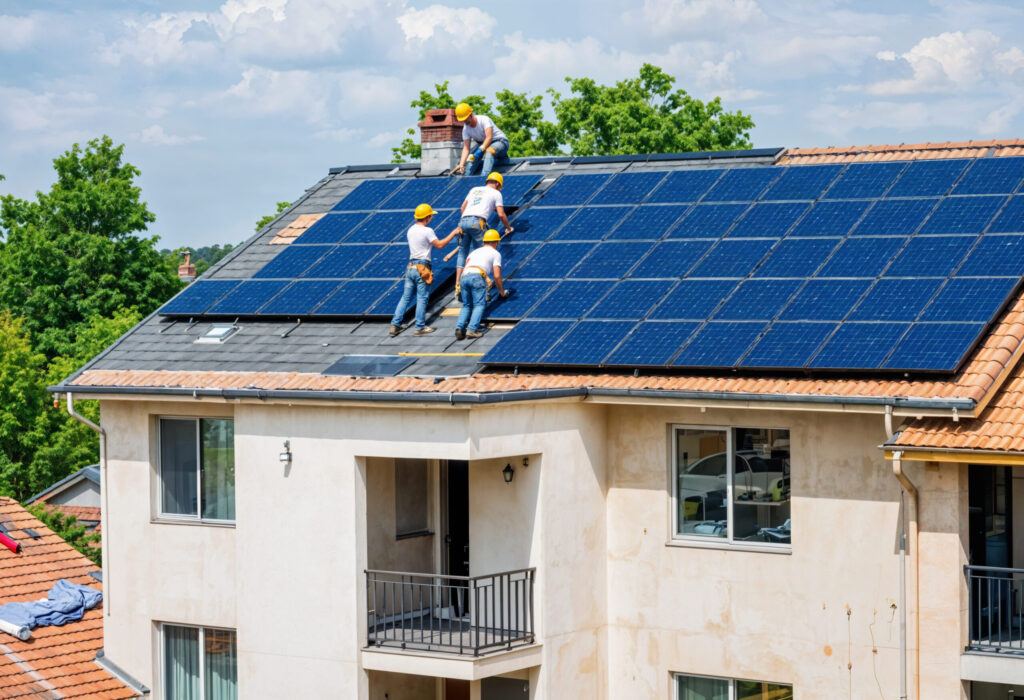
Residential solar panels installed on rooftops capture sunlight and convert it into electricity through photovoltaic (PV) cells. The generated power is used to run household appliances during the day, while excess energy (in on-grid systems) is exported to the grid through net metering.
Where Residential Solar Panels Are Typically Installed
| Home Type | Typical Installation | Key Considerations |
|---|---|---|
| Independent Houses & Villas | Rooftop solar panels | Roof area, orientation, shading |
| Low-Rise Apartments | Common area rooftops | Society approvals, net metering |
| Farmhouses & Rural Homes | Rooftop or ground-mounted | Grid reliability, hybrid options |
Not sure if your home is suitable for solar panels?
Get a quick rooftop feasibility check and system sizing recommendation.
Why Homeowners in India Are Switching to Residential Solar (Savings, Security & Sustainability)
Homeowners switch to residential solar to cut electricity bills, improve power reliability, and adopt sustainable energy solutions with government support.
Homeowners across India are adopting residential solar panels not just to save money, but to gain control over their energy needs and reduce their carbon footprint.
| Driver | Why It Matters for Homes |
|---|---|
| Rising Electricity Bills | Solar reduces long-term dependence on grid tariffs |
| Daytime Power Consumption | Home loads align well with daytime solar generation |
| Power Cuts & Voltage Fluctuations | Hybrid solar systems improve energy reliability |
| Government Subsidies | MNRE subsidies lower upfront solar installation cost |
| Sustainability Goals | Solar supports eco-friendly living and lower emissions |
Curious how much you can save on your electricity bill with solar?
Estimate your home’s solar savings and payback in minutes.
Types of Residential Solar Systems in India (On-Grid, Off-Grid & Hybrid)
On-grid residential solar systems offer the best ROI for most urban homes, while hybrid systems are ideal for households facing frequent power cuts.
Choosing the right residential solar system depends on your home’s electricity usage, grid reliability, and backup needs. In India, most residential solar installations fall into three categories.
Comparison of Residential Solar System Types
| System Type | Best For | How It Works | Key Benefit | Key Limitation |
|---|---|---|---|---|
| On-Grid Residential Solar | Urban homes with reliable grid | Uses solar during the day; exports excess via net metering | Lowest cost, fastest ROI | No backup during outages |
| Off-Grid Residential Solar | Remote homes, poor grid areas | Solar + batteries operate independently | Full energy independence | Higher cost due to batteries |
| Hybrid Residential Solar | Homes with frequent power cuts | Solar + batteries + grid | Backup power + bill savings | Higher upfront CAPEX |
How to Choose the Right Residential Solar System for Your Home
| Home Scenario | Recommended System |
|---|---|
| Stable grid, daytime usage | On-grid residential solar |
| Frequent outages | Hybrid residential solar |
| No grid access | Off-grid residential solar |
Not sure which solar system type fits your home?
Get expert guidance on on-grid vs hybrid vs off-grid for your location.
Residential Solar Cost in India: 1kW, 3kW, 5kW Prices, Savings & Payback
One of the most common homeowner questions is: “How much does residential solar installation cost in India?”
Below are indicative benchmarks for 1kW, 3kW, and 5kW home solar systems. Costs vary by state subsidies, roof type, inverter brand, and installation complexity.
Residential Solar System Cost & Output (Indicative – India)
| System Size | Typical Home Use | Approx Cost Range (₹) | Annual Units Generated | Ideal For |
|---|---|---|---|---|
| 1kW | Small homes, low usage | ₹65,000 – ₹85,000 | ~1,400–1,600 kWh | Apartments, 1–2 BHK |
| 3kW | Average households | ₹1.8 – ₹2.4 lakh | ~4,200–4,800 kWh | 2–3 BHK homes |
| 5kW | Larger homes/villas | ₹3 – ₹4 lakh | ~7,000–8,000 kWh | Villas, high-usage homes |
ROI & Payback for Residential Solar in India
Most residential solar systems in India recover their cost within 4–6 years, after which homeowners enjoy decades of low-cost electricity.
| Metric | Typical Range |
|---|---|
| Payback Period | 4 – 6 years |
| System Life | 25+ years |
| Bill Savings | 50%–80% reduction |
| Property Value Impact | Higher resale appeal |
Rooftop Suitability, Shading & Home Solar Design Considerations
Residential rooftop solar performs best on shade-free roofs with adequate area, proper orientation, and sufficient structural strength.
Before installing residential solar panels, it’s important to assess whether your rooftop is suitable for solar and how design choices impact long-term performance. Proper planning ensures higher energy generation and avoids avoidable efficiency losses.
Key Design Factors for Residential Rooftop Solar
| Design Factor | What to Check | Why It Matters |
|---|---|---|
| Roof Area Availability | Usable space after water tanks, mumty, railings | Determines maximum system size |
| Roof Orientation & Tilt | South-facing roofs with optimal tilt perform best | Improves energy yield |
| Shading from Trees/Buildings | Nearby obstructions, parapet walls | Even partial shading reduces output |
| Structural Strength | Roof load capacity | Ensures safety and longevity |
| Waterproofing Condition | Existing waterproofing layers | Prevents future leakage issues |
| Wind Load & Safety | Wind zone anchoring | Protects panels during storms |
Approx Rooftop Area Required for Home Solar (India)
| Solar System Size | Approx Rooftop Area Needed |
|---|---|
| 1kW | ~100 sq. ft. |
| 3kW | ~300 sq. ft. |
| 5kW | ~500 sq. ft. |
Wondering if your roof gets enough sunlight for solar?
Request a shading and rooftop suitability assessment for your home.
Step-by-Step: How Residential Solar Installation Works (EPC Process for Homes)
Residential solar installation typically takes 1–3 days after approvals, with the full process from survey to net metering completed in a few weeks.
A professional residential solar installation follows a structured EPC process to ensure safety, performance, and smooth grid integration.
Residential Solar EPC Process Flow
| Step | What Happens | What Homeowners Can Expect |
|---|---|---|
| Energy Audit | Evaluate current electricity usage | Recommended system size and savings estimate |
| Site Survey | Rooftop inspection & shading analysis | Feasibility confirmation and optimal panel placement |
| Design & Engineering | Layout, inverter sizing, safety planning | Final design approval and BOM list |
| Procurement | Panels, inverters, structures sourced | Quality-assured (ALMM/BIS) components |
| Installation | Mounting, wiring, inverter setup | 1–3 days of onsite work; minimal disruption |
| Testing & Net Metering | Performance tests, DISCOM approval | Grid connection; meter swap within 30–60 days |
| Monitoring & O&M | App-based monitoring, periodic checks | Real-time production data; 15-day cleaning cycles |
Ready to start your home solar installation?
Get a step-by-step project plan and timeline for your house.
Why Manufyn for Residential Solar Installation? (Trusted EPC for Homeowners)
Manufyn’s residential solar EPC approach ensures safe rooftop design, quality components, and smooth net metering approvals for homeowners.
Choosing the right residential solar EPC partner is critical for safety, approvals, and long-term performance. Manufyn combines engineering-led residential solar installation with strong procurement and execution to deliver reliable, compliant rooftop solar systems for homes across India.
What Makes Manufyn a Reliable Choice for Home Solar
| Capability | Typical Local Installer | Manufyn’s Residential Solar EPC |
|---|---|---|
| Rooftop Engineering | ⚠️ Generic layouts | ✅ Roof-specific design & safety planning |
| Component Quality | ⚠️ Brand variability | ✅ Tier-1 panels & quality-tested inverters |
| Approvals & Net Metering | ⚠️ Limited support | ✅ DISCOM coordination & documentation |
| Installation Quality | ⚠️ Contractor-dependent | ✅ Certified technicians & QA checks |
| Monitoring & O&M | ⚠️ Basic handover | ✅ App-based monitoring & maintenance support |
Government Subsidies, Net Metering & Approvals for Residential Solar in India
Homeowners in India can reduce residential solar installation costs through MNRE subsidies and net metering, subject to DISCOM approvals and state policies.
Understanding subsidies and net metering can significantly reduce the upfront cost of residential solar installation in India.
Key Financial & Regulatory Benefits for Homeowners
| Benefit | What Homeowners Should Know (2026 Update) |
|---|---|
| MNRE Subsidies (PM Surya Ghar) | ₹30,000/kW for the first 2kW and ₹18,000 for the 3rd kW. Capped at ₹78,000 for systems ≥3kW. |
| State-Level Incentives | States like UP and Delhi offer extra top-ups (up to ₹30,000); total subsidy can reach ₹1.08 Lakh. |
| Net Metering | 1:1 credit ratio for excess power; credits roll over monthly with an annual settlement (usually in March/April). |
| DISCOM Approvals | Mandatory online technical feasibility report (TFR) required before installation to secure the subsidy. |
| Vendor Empanelment | Subsidies only apply if using Made-in-India (DCR) modules installed by MNRE-approved vendors. |
FAQs: Residential Solar Installation in India
Residential solar installation typically costs ₹65,000–₹85,000 per kW, depending on system size, component quality, and state subsidies.
Yes. Most homeowners recover their investment within 4–6 years and then benefit from 20+ years of low-cost electricity.
On average, 1kW of rooftop solar requires ~100 sq. ft. of shade-free roof area.
Yes, subject to society approvals. Solar is commonly installed for common areas or through shared rooftop arrangements.
On-grid systems stop during outages. Hybrid systems with batteries can provide backup power for essential loads.
Physical installation typically takes 1–3 days for most homes, with approvals and net metering taking a few weeks.
Minimal maintenance—periodic cleaning and basic inspections ensure optimal performance.
Planning a solar project and want to avoid EPC mistakes?
Get a project feasibility check and execution roadmap before you finalize your EPC partner.
Talk to Manufyn