Get an Industrial Solar ROI Model
Why & When to Go Solar: Industrial, Commercial & Residential Guide
Going solar is best evaluated as an energy procurement and cost-management decision, not merely as a sustainability initiative. For industrial and commercial users, solar converts a portion of volatile grid electricity costs into a predictable, long-term energy cost base. For residential users, it functions as a long-term hedge against rising household tariffs.
This guide is written to help decision-makers answer three practical questions:
- Is solar financially rational for my use case?
- At what point does solar adoption become strategically sensible?
- How should the decision framework differ for industrial, commercial, and residential users?
The objective is to move beyond surface-level “benefits of solar” narratives and provide a decision framework you can use to evaluate whether solar adoption aligns with your cost structure, asset strategy, and operational horizon.
Get a quick readiness assessment for your site
Why Go Solar? A Strategic & Financial Decision Framework
Solar adoption should be assessed in the same way as any long-term infrastructure or procurement decision. The core rationale rests on cost predictability, capital efficiency, and risk management rather than on environmental positioning alone.
1. Solar as Long-Term Energy Cost Hedging
Grid electricity tariffs are structurally volatile and tend to increase over time due to fuel cost exposure, regulatory changes, and infrastructure pass-throughs. For users with material energy spend, this introduces long-term uncertainty in operating costs.
Solar changes the energy cost profile by:
- Converting part of ongoing energy spend into a fixed, upfront infrastructure investment
- Creating a known cost of energy over a 20–25 year operating horizon
- Reducing exposure to future tariff escalation and peak-hour volatility
For industrial and commercial users, solar functions as a hedging instrument against future energy price risk, improving margin predictability and long-term financial planning.
2. Solar as an Infrastructure Investment with Predictable Returns
When deployed under a CAPEX model, solar competes with other long-term capital allocations. Its financial characteristics are closer to a stable infrastructure asset than to a speculative investment:
- Front-loaded capital deployment
- Long operational life (typically 25+ years)
- Predictable annual generation profiles
- Low variable operating costs once commissioned
For owner-occupied facilities with long operating horizons, solar often delivers risk-adjusted returns that compare favorably to low-risk financial instruments, while also producing operational energy benefits.
3. Risk Management: Energy Cost Volatility & Supply Chain Pressure
Energy cost volatility and reliability increasingly affect operational continuity and supply chain competitiveness. For export-oriented manufacturers and large enterprises, customer procurement policies are beginning to factor in energy footprint and cost stability.
Solar contributes to risk mitigation by:
- Reducing dependence on grid availability during peak demand periods
- Lowering exposure to tariff shocks over multi-year planning cycles
- Supporting decarbonization commitments that are becoming embedded in supplier qualification criteria
For many organizations, solar adoption is evolving from a discretionary sustainability initiative into a commercial risk-management tool.
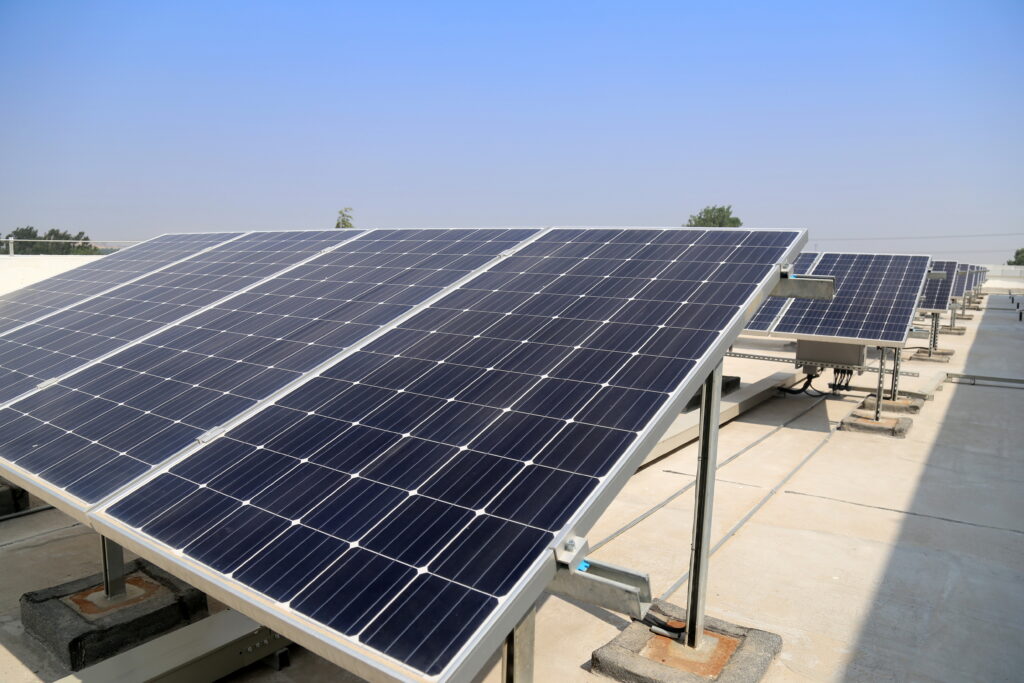
When Should You Go Solar? Readiness Signals & Decision Triggers
The right time to adopt solar is determined by structural readiness, not by market hype. Solar becomes a rational decision when multiple operational, financial, and asset-related signals align.
1. Energy Costs Are Material to Your Cost Structure
If electricity constitutes a meaningful share of your operating or household expenses, solar acts as a cost-control lever rather than a discretionary upgrade.
Decision trigger:
When energy costs begin to materially impact operating margins or household budgets, solar should be evaluated alongside other long-term cost optimization initiatives.
2. You Have Long-Term Control Over the Site
Solar economics depend heavily on the length of site control (ownership or lease horizon). The longer the expected occupancy, the more predictable the ROI.
Decision trigger:
If you expect to operate from the site for 7–10+ years, solar investments can be amortized over a stable usage horizon, improving payback certainty.
Check rooftop/land suitability and tenure fit
3. Facility Expansion, New Builds, or Major Retrofits Are Planned
Solar adoption is most efficient when integrated into capex cycles such as expansions or new construction, where electrical and structural planning can accommodate solar from day one.
Decision trigger:
If capital projects are already planned, embedding solar into the design phase reduces retrofit friction and improves system performance.
4. CAPEX vs OPEX Alignment with Financial Strategy
Solar adoption often coincides with broader discussions around capital allocation and balance sheet strategy. Ownership (CAPEX) and PPA/OPEX models have different risk-return profiles.
Decision trigger:
When evaluating long-term infrastructure spending vs service-based procurement, solar becomes part of the financial structuring conversation.
See which model fits your cash flow and ROI goals
5. External Pressures Begin to Influence Energy Strategy
Customer ESG requirements, regulatory expectations, and tariff volatility can elevate energy strategy from operational detail to commercial differentiator.
Decision trigger:
When energy footprint or cost stability affects customer decisions or compliance posture, solar adoption shifts from optional to strategic.
Understand how solar aligns with your business objectives
Industrial Solar – Strategic Decision Framework for Manufacturing & Process Industries
For industrial users, solar should be evaluated as part of energy procurement strategy and production cost management, not as an isolated sustainability project. The economics and strategic value differ materially from commercial and residential use cases.
1. Energy as a Production Input, Not Just an Overhead
In manufacturing, electricity is a direct input into production economics. Solar stabilizes the cost of a portion of this input, improving margin predictability.
Decision implication:
Solar is most compelling where energy costs materially influence unit economics or competitiveness.
2. Captive Energy Strategy vs Grid Dependence
Industrial solar functions as a captive energy asset that complements grid supply. While it rarely replaces grid power entirely, it stabilizes base-load consumption that often sits in higher tariff slabs.
Decision implication:
Factories with high daytime load profiles extract disproportionate value from on-site solar.
3. ROI vs Cost of Capital
Industrial CAPEX decisions are typically benchmarked against internal hurdle rates. Solar should be evaluated against risk-adjusted returns rather than absolute payback alone.
Decision implication:
Where solar IRR competes favorably with low-risk capital alternatives, it becomes a rational long-term asset investment.
Compare solar returns to your cost of capital
4. Supply Chain & ESG Pressure
For export-oriented manufacturers and Tier-1 suppliers, decarbonization commitments are increasingly embedded in customer procurement criteria.
Decision implication:
Solar adoption supports commercial positioning in supply chains where sustainability metrics influence vendor selection.
Commercial Solar – Asset Optimization & Operating Cost Strategy
For commercial facilities, solar adoption is best framed as an asset optimization and operating cost stabilization strategy. Offices, warehouses, logistics hubs, hospitals, educational institutions, and business parks typically have large rooftops and predictable daytime loads—creating favorable conditions for on-site solar generation.
1. Rooftops as Underutilized Assets
Commercial rooftops are often idle real estate. Deploying solar converts this space into a productive energy-generating asset without interfering with tenant operations.
Decision implication:
Solar improves the economic productivity of owned or long-term leased real estate, effectively monetizing non-revenue-generating infrastructure.
Assess how much capacity your rooftop can host
2. Operating Cost Stabilization
Electricity is a recurring operating expense for commercial buildings. Solar locks in a portion of energy cost over the long term, improving budget predictability for facility managers and finance teams.
Decision implication:
Facilities with consistent daytime loads extract higher value due to better self-consumption of generated solar power.
See projected OPEX reduction for your facility
3. Stakeholder & Tenant Signaling
For multi-tenant buildings and institutional facilities, visible solar adoption signals sustainability leadership to tenants, customers, and regulators.
Decision implication:
Solar can support tenant acquisition/retention and align facilities with corporate sustainability mandates.
4. CAPEX vs OPEX Fit for Commercial Facilities
Commercial stakeholders often face competing capital priorities. OPEX/PPA models allow solar adoption without tying up capital, while CAPEX models deliver higher long-term returns for owner-operators.
Decision implication:
The optimal model depends on asset ownership structure, occupancy horizon, and balance sheet strategy.
Identify the right model for your financial strategy

Residential Solar – Household Energy Hedging & Long-Term Cost Stability
Residential solar decisions center on long-term household cost hedging, not industrial ROI optimization. The value proposition strengthens for households with high electricity consumption and long-term occupancy plans.
1. Household Electricity as Long-Term Cost Exposure
Residential electricity tariffs trend upward over time. Solar converts part of this variable cost into a fixed, upfront investment, reducing lifetime tariff exposure.
Decision implication:
Households in higher tariff slabs realize stronger lifetime savings.
2. Self-Consumption vs Net Metering Economics
Residential economics are strongest when a high proportion of generated energy is self-consumed. Net metering improves utilization where available, but over-sizing systems purely for export can dilute returns.
Decision implication:
System sizing should be driven by realistic consumption patterns, not peak theoretical generation.
3. Occupancy Horizon & Property Value
Residential solar payback improves when homeowners plan to occupy the property over multiple years. In housing societies, shared solar infrastructure can reduce common area energy costs.
Decision implication:
Short-term occupants may not fully realize the economic upside unless resale premiums are captured.
Assess payback vs your expected occupancy
CAPEX vs OPEX: Which Solar Adoption Model Fits Your Strategy?
The choice between CAPEX (asset ownership) and OPEX/PPA (power purchase) models is a financial structuring decision, not just a pricing choice. Each model shifts risk, returns, and balance sheet impact differently.
CAPEX Model (Own the Asset)
- What it means: You invest upfront and own the solar plant.
- Financial logic: Higher long-term returns, lower lifetime cost of energy.
- Risk profile: Higher upfront commitment; lower long-term tariff risk.
- Best suited for: Owner-occupied industrial and commercial facilities with long operating horizons.
OPEX / PPA Model (Buy the Power)
- What it means: A third party owns the plant; you buy power at a fixed tariff.
- Financial logic: Minimal upfront investment; immediate cost savings vs grid tariffs.
- Risk profile: Lower capital risk; lower lifetime upside.
- Best suited for: Organizations with capital constraints or asset-light strategies.
CAPEX maximizes long-term value; OPEX maximizes capital efficiency. The right choice depends on balance sheet priorities, hurdle rates, and site tenure.
Receive a model fit recommendation for your strategy
Is Solar Worth It? ROI Benchmarks & Go/No-Go Criteria
Rather than generic payback claims, solar decisions should be evaluated against clear financial benchmarks and structural fit.
What Drives ROI (Decision Variables)
- Self-consumption ratio vs export dependency
- Local tariff structure (energy + demand charges)
- System design quality (DC/AC ratio, layout efficiency)
- O&M discipline and uptime
- Financing cost vs internal hurdle rate
When Solar ROI Is Structurally Weak
- Short site tenure (<5–6 years)
- Low daytime load (high export dependency)
- Shaded or structurally constrained rooftops
- Tariffs that are already low relative to solar LCOE
See if solar clears your ROI benchmarks
Common Misjudgments in Solar Adoption (Root Causes & How to Avoid Them)
Most underperforming solar projects fail not because of technology, but because of decision-stage misjudgments and execution-stage shortcuts. Understanding these root causes helps avoid structural underperformance.
1. Treating Solar as a Sustainability Project, Not an Energy Strategy
When solar is driven only by ESG teams without integration into energy procurement and finance, projects are often under-optimized for ROI and operational fit.
2. Over-Sizing Systems Without Load Matching
Designing systems based on rooftop area instead of load profiles leads to low self-consumption and weaker economics.
3. Ignoring Site Tenure & Relocation Risk
Short tenure weakens the business case for CAPEX. Many projects fail to account for relocation risk or facility consolidation plans.
4. Vendor Selection Based on Price, Not Execution Quality
Low-cost EPCs often compromise on engineering, component bankability, and QA/QC—leading to lower lifetime generation and higher LCOE.
5. Underestimating Performance Governance Post-Commissioning
Without monitoring, preventive O&M, and performance audits, plants degrade silently over time, eroding projected savings.
6. Not Stress-Testing Policy & Tariff Risk
Projects overly dependent on export credits or incentives are exposed to regulatory changes. High self-consumption designs are structurally more resilient.
7. Treating Payback as the Only Metric
Payback ignores risk, asset life, and capital opportunity cost. ROI, IRR, and LCOE provide a more accurate decision basis.
See IRR, NPV, and lifetime cash flows
FAQs – Why & When to Go Solar
Is going solar financially worth it for businesses in India?
Yes—if your effective grid tariff is higher than the levelized cost of electricity (LCOE) from solar for your site. For most industrial and commercial users with high daytime consumption, solar delivers structurally lower unit energy costs and predictable long-term savings. The business case is strongest when self-consumption is high and site tenure is long enough to realize lifetime benefits.
When is the right time for an industrial facility to go solar?
The right time is when energy costs materially affect production economics, the facility has long-term site control, and expansion or capex cycles are underway. Integrating solar during plant expansion or greenfield development reduces retrofit friction and improves overall project economics.
Is solar viable for commercial buildings with multiple tenants?
Yes, provided the building owner has long-term control over the asset and a mechanism to allocate solar benefits (common area consumption, tenant agreements, or on-site power pricing). Rooftop solar works best for warehouses, hospitals, campuses, and IT parks with predictable daytime loads and long occupancy horizons.
Does residential solar still make sense if net metering policies change?
Residential solar remains viable if a high proportion of generated power is self-consumed. Projects that rely heavily on exporting surplus energy are more exposed to policy risk. Right-sizing the system to household usage patterns reduces dependence on net metering benefits.
How do I evaluate whether CAPEX or OPEX/PPA is better for my use case?
Choose CAPEX if you have long-term site control, available capital, and want to maximize lifetime returns. Choose OPEX/PPA if capital is constrained, balance sheet flexibility is a priority, or you prefer a service-based energy procurement model with lower upfront risk. The decision should be benchmarked against your cost of capital and risk appetite.
What is the minimum site tenure needed to justify a solar investment?
For CAPEX models, a site tenure of 7–10+ years typically improves ROI certainty and reduces the risk of stranded assets. Shorter tenures can weaken the business case unless buyback, relocation, or PPA models are structured into the project.
How do rising electricity tariffs impact the decision to go solar?
Rising tariffs increase the relative value of solar because they widen the gap between grid electricity cost and solar LCOE. Solar effectively locks in a portion of energy cost, reducing long-term exposure to tariff escalation and improving budget predictability.
Can solar meaningfully offset power for 24/7 operations?
Solar is best at offsetting daytime base-load consumption. For 24/7 operations, solar reduces grid dependency during daylight hours but typically needs to be complemented by grid power and/or storage for night-time and peak-demand periods. The value lies in stabilizing the most expensive tariff blocks.
What are the biggest risks that make solar a bad investment?
Key risks include low self-consumption, short or uncertain site tenure, shaded or structurally constrained rooftops, poor engineering/execution quality, and heavy dependence on export incentives. A feasibility study that stress-tests these risks is essential before committing.
How should decision-makers compare solar against other capital projects?
Solar should be benchmarked using risk-adjusted IRR, NPV, and LCOE against alternative uses of capital. While solar may not always outperform core business investments, it often provides stable, infrastructure-like returns with additional operational and risk-hedging benefits.