
The India–New Zealand Free Trade Agreement (FTA) marks a turning point for global trade, manufacturing sourcing, and export-led growth. With 100% zero-duty access for Indian exports and tariff reductions on 95% of New Zealand goods, this agreement opens the door for Indian manufacturers and MSMEs to compete more aggressively in the New Zealand market—while giving New Zealand companies a cost-effective, diversified sourcing alternative.
Announced jointly by Narendra Modi and Christopher Luxon, the deal was concluded in a record nine months after negotiations resumed in March 2025. The FTA is expected to be signed within the next three months and implemented in 2026, making now the ideal time for businesses to prepare.
For manufacturers, exporters, and sourcing-led companies, this is not just another trade agreement. The India–New Zealand FTA fundamentally reshapes landed costs, supplier access, and long-term sourcing strategy, especially for sectors such as engineering, precision manufacturing, auto components, plastics, and industrial goods.
What Is the India–New Zealand Free Trade Agreement?
The India–New Zealand Free Trade Agreement is a comprehensive bilateral trade pact designed to deepen economic cooperation, reduce trade barriers, and expand market access between India and New Zealand.
After nearly a decade-long pause, negotiations were formally restarted during Prime Minister Luxon’s visit to India in March 2025. The talks concluded swiftly, reflecting strong political alignment and a shared objective to boost trade, manufacturing collaboration, and supply chain resilience.
Core Features of the India–New Zealand FTA
- Zero customs duty on 100% of Indian exports to New Zealand
- Tariff elimination or reduction on 95% of New Zealand goods entering India
- Improved access for manufactured goods, services, and investments
- Simplified trade procedures and clearer regulatory pathways
- Stronger framework for long-term bilateral manufacturing partnerships
From a trade perspective, the FTA gives Indian exporters unprecedented access to a developed, high-quality import market without the usual tariff disadvantages. For New Zealand businesses, it unlocks a large, scalable, and increasingly sophisticated manufacturing base in India—at significantly lower landed costs.
As New Zealand looks to diversify supply chains beyond traditional sourcing regions, and India positions itself as a global manufacturing hub, this agreement sets the foundation for FTA-led sourcing, MSME expansion, and long-term industrial collaboration.
Key Highlights of the India–New Zealand FTA (At a Glance)
The India–New Zealand FTA is a structural trade reset, not a marginal tariff tweak. Below is a clear, business-first snapshot of what the agreement delivers and why it matters for manufacturers, MSMEs, and sourcing teams.
|
Area |
What the FTA Delivers |
Why It Matters for Business |
|
Indian Exports to New Zealand |
100% zero-duty access |
Immediate landed-cost advantage for Indian manufacturers |
|
New Zealand Exports to India |
Tariff cuts on 95% of goods |
Stronger two-way trade and policy stability |
|
FTA Timeline |
Signed in 2025, implementation expected in 2026 |
Companies can prepare sourcing pipelines now |
|
Negotiation Time |
Concluded in 9 months |
Signals high political commitment |
|
Trade Focus |
Manufacturing, goods, services, investment |
Beyond agriculture—strong industrial impact |
|
MSME Impact |
Lower entry barriers, easier exports |
Enables first-time exporters |
|
Supply Chains |
Encourages diversification away from single-country sourcing |
Reduces geopolitical and cost risks |
|
Buyer Advantage |
Access to scalable, compliant Indian suppliers |
Long-term cost + capacity benefits |
Why These Highlights Matter in Practice
- Zero duty is not incremental—it’s transformational.
Even a 5–10% tariff removal can shift sourcing decisions. At 100% zero duty, Indian exports gain a decisive edge in price-sensitive and high-volume categories. - FTA certainty enables long-term contracts.
Buyers and manufacturers can plan multi-year sourcing strategies without fearing sudden tariff reversals. - MSMEs benefit the most, fastest.
Smaller manufacturers—previously priced out due to duties—can now compete directly in the New Zealand market.
Manufacturing-led trade takes centre stage.
Unlike commodity-heavy FTAs, this agreement strongly favours engineered goods, components, and industrial manufacturing—where India has depth and scale
Planning to source from India under the India–New Zealand FTA?
Start evaluating export-ready Indian manufacturers now—before zero-duty demand increases.
Explore verified Indian suppliers with Manufyn.
Why the India–New Zealand FTA Is a Big Win for New Zealand Importers & Buyers
For New Zealand businesses, the India–New Zealand FTA is not just a diplomatic milestone—it is a commercial advantage. With zero-duty access to Indian exports, New Zealand importers can now source from India at significantly lower landed costs, while gaining access to one of the world’s most scalable manufacturing ecosystems.
1. Lower Landed Costs Without Compromising Quality
Under the FTA, Indian goods entering New Zealand will face no customs duty, immediately improving price competitiveness across multiple categories. For New Zealand buyers, this means:
- Reduced procurement costs
- Better margins without renegotiating supplier prices
- Greater flexibility in pricing finished products
This is especially valuable in manufacturing-led imports, where even small cost reductions compound at scale.
2. A Strong Alternative to Single-Country Sourcing
Many New Zealand companies are actively reassessing supply chain risk. Rising costs, geopolitical uncertainty, and capacity constraints in traditional sourcing regions have accelerated the need for diversification.
India offers:
- A large, export-ready manufacturing base
- Strength across engineering, industrial components, and custom manufacturing
- Mature compliance with international quality and documentation standards
The FTA removes the last major barrier, tariffs making India a strategic long-term sourcing partner, not just a backup option.
3. Access to Scalable Manufacturing for Growing Businesses
New Zealand’s market is dominated by small to mid-sized companies that require flexibility both in volumes and customization. Indian manufacturers are well-positioned to serve this demand with:
- Low-to-medium volume production runs
- Custom specifications and design-for-manufacturing support
- Ability to scale quickly as demand grows
With tariff-free access, New Zealand importers can now test, validate, and scale Indian suppliers with far lower risk.
4. Improved Supply Chain Stability Backed by Policy
Unlike short-term sourcing decisions driven solely by cost, the India–New Zealand FTA provides policy-backed certainty. This enables:
- Long-term supplier contracts
- Predictable pricing models
- Investment in tooling, customization, and co-development
For New Zealand buyers, this translates into more resilient supply chains and better control over procurement planning.
New Zealand companies can now source from India at zero duty.
The real advantage comes from choosing the right manufacturers—not just cheaper ones.
See how Manufyn connects you with vetted Indian suppliers.
What the India–New Zealand FTA Means for Indian Manufacturers & MSMEs
For Indian manufacturers and MSMEs, the India–New Zealand Free Trade Agreement is a direct gateway into a developed, high-trust export market—without the usual cost and access barriers. With 100% zero-duty access to New Zealand, Indian exporters gain an immediate pricing and competitiveness advantage that was previously difficult to achieve.
1. Zero Duty Removes the Biggest Export Barrier
Customs duties often made Indian products less competitive in New Zealand despite strong manufacturing capabilities. The FTA eliminates this disadvantage entirely, allowing Indian manufacturers to:
- Offer more competitive export pricing
- Improve margins without cutting costs
- Compete directly with suppliers from other regions
For MSMEs, this levels the playing field against larger, established exporters.
2. Easier Entry Into a Developed Export Market
New Zealand is known for its quality standards, regulatory clarity, and reliable payment systems. While this makes it an attractive market, it also raises the bar for exporters. The FTA simplifies market entry by:
- Reducing tariff-related compliance complexity
- Encouraging buyer confidence through policy backing
- Creating predictable, rules-based trade conditions
This makes New Zealand an ideal first developed-market export destination for Indian MSMEs.
3. Long-Term Contracts and Stable Demand
FTA-backed trade is not transactional—it is strategic. New Zealand buyers are more likely to:
- Commit to long-term sourcing relationships
- Invest in tooling and customization with Indian suppliers
- Scale volumes once suppliers are validated
For Indian manufacturers, this means repeat business, stable demand, and export-led growth rather than one-off orders.
4. MSME Globalisation Opportunity
The India–New Zealand FTA aligns closely with India’s broader push toward MSME internationalisation. With lower trade friction, smaller manufacturers can:
- Export niche and specialized products
- Participate in global supply chains
- Build international credibility and references
For many MSMEs, this agreement transforms exporting from an aspiration into a practical growth strategy.
Indian Manufacturing Sectors That Benefit the Most from the India–New Zealand FTA
The India–New Zealand FTA strongly favours manufacturing-led exports, particularly sectors where India already has depth, scale, and cost efficiency. With zero-duty access into New Zealand, these industries gain an immediate competitive edge—making Indian suppliers far more attractive to New Zealand buyers seeking reliable, long-term partners.
CNC Machining & Precision Manufacturing
India’s CNC machining ecosystem has matured rapidly, offering:
- Tight tolerances and repeatable quality
- Low-to-medium volume production runs
- Competitive pricing with global standards
Under the FTA, precision-machined components—from industrial parts to custom assemblies—become significantly more cost-effective for New Zealand importers.
Sheet Metal Fabrication & Metal Components
Indian sheet metal manufacturers are well-positioned to serve:
- Enclosures, brackets, frames, and housings
- Laser cutting, bending, welding, and finishing
- Both prototyping and batch production
Zero duty enhances India’s appeal for custom metal fabrication, especially for engineering-driven New Zealand businesses.
Injection Molding & Plastic Components
With strong tooling capabilities and scalable production, Indian injection molding suppliers benefit from:
- Reduced tooling amortisation costs
- Competitive per-unit pricing at scale
- High-quality polymers and finishing options
FTA access makes India a viable source for consumer, industrial, and packaging plastics for the New Zealand market.
Auto Components & Industrial Assemblies
Indian manufacturers export a wide range of:
- Automotive parts and sub-assemblies
- Industrial machinery components
- Mechanical and electromechanical assemblies
The FTA improves margins and supply reliability, encouraging long-term sourcing relationships.
Electrical & Electronic Manufacturing
From wiring harnesses to electrical enclosures and assemblies, Indian suppliers offer:
- Cost-effective manufacturing
- Growing compliance with global standards
- Flexibility in customization and scaling
These advantages are amplified under zero-duty trade conditions.
How New Zealand Companies Can Start Sourcing from India Under the FTA
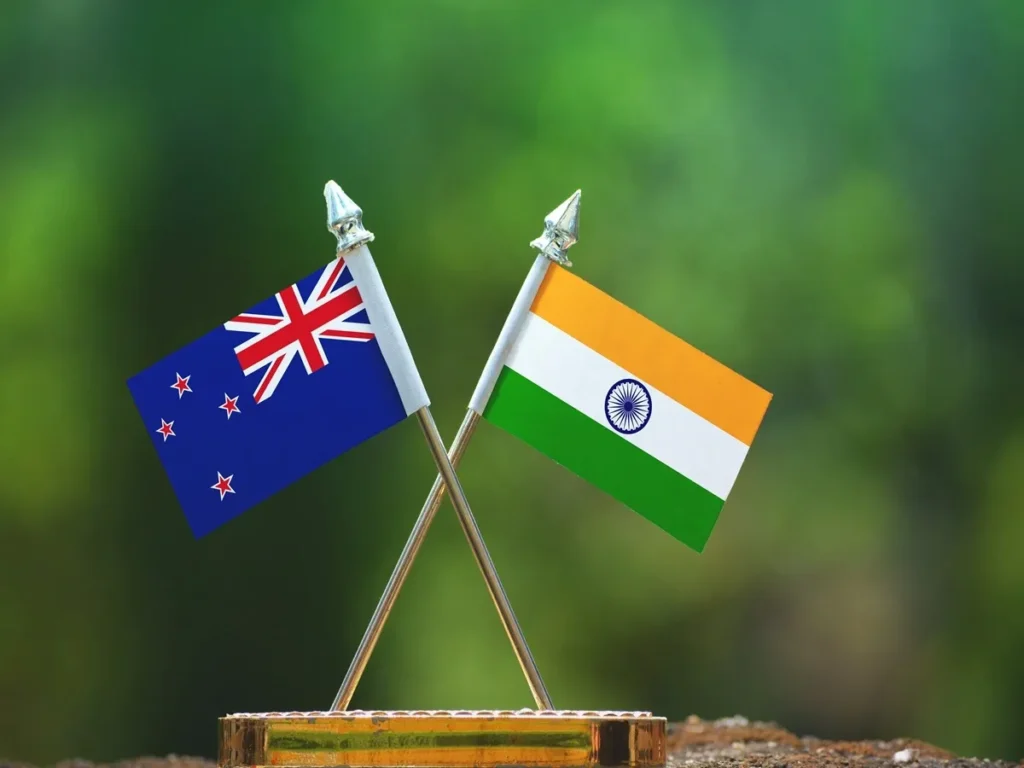
With the India–New Zealand FTA set to be implemented in 2026, New Zealand companies that prepare early will capture the maximum cost and supply-chain advantage. Sourcing from India under an FTA framework is not complex—but it does require the right sequencing and partners
.1. Identify FTA-Eligible Products & Categories
The first step is understanding which products qualify for zero-duty access. Most manufactured goods fall under the eligible categories, but buyers should:
- Map their product requirements to HS codes
- Confirm FTA coverage and rules of origin
- Prioritise high-volume or high-duty-impact items
This ensures duty benefits are fully realised once the agreement goes live.
2. Shortlist Export-Ready Indian Manufacturers
Not all suppliers are equally prepared for FTA-led trade. New Zealand buyers should look for manufacturers that:
- Already export to regulated markets
- Follow international quality and documentation standards
- Can support repeat production and scaling
Early supplier validation reduces onboarding risk and speeds up procurement once zero-duty trade begins.
3. Run Pilot Orders Before Full-Scale Sourcing
Smart buyers will not wait for formal implementation. Running trial or pilot orders allows companies to:
- Validate quality and consistency
- Test lead times and communication
- Fine-tune specifications and tolerances
By the time the FTA is active, these buyers are ready to scale immediately.
4. Lock Pricing & Capacity Ahead of Demand
As zero-duty access increases demand for Indian manufacturing, early movers gain leverage. Forward-looking New Zealand companies can:
- Secure favourable pricing
- Reserve production capacity
- Build priority supplier relationships
This is especially critical for CNC machining, fabrication, and injection molding, where capacity tightens quickly.
5. Build a Long-Term India Sourcing Strategy
The FTA is designed for long-term trade stability, not short-term arbitrage. Companies that benefit most will treat India as:
- A core manufacturing base
- A partner for co-development and customization
- A scalable extension of their supply chain
This strategic approach delivers compounding cost and reliability advantages over time.
Indian manufacturers preparing for New Zealand exports?
The India–New Zealand FTA opens a developed market—but execution matters.
Partner with Manufyn to access global buyers under FTA-ready sourcing.
Where Manufyn Fits In for India–New Zealand FTA Sourcing
While the India–New Zealand FTA removes tariffs, execution remains the real challenge. Finding the right manufacturers, validating quality, managing communication, and scaling production are where most sourcing initiatives succeed—or fail. This is exactly where Manufyn plays a critical role.
Manufyn is built to help New Zealand companies source confidently from India and enable Indian manufacturers to scale exports under policy-backed trade frameworks like the India–New Zealand FTA.
A Single Gateway to Verified Indian Manufacturers
Manufyn connects buyers to a curated network of export-ready Indian manufacturers across:
- CNC machining & precision parts
- Sheet metal fabrication
- Injection molding & plastics
- Industrial assemblies & mass manufacturing
Every supplier on Manufyn is vetted for capability, quality standards, and production reliability—reducing onboarding risk for New Zealand buyers entering India sourcing for the first time.
Built for FTA-Led, Zero-Duty Sourcing
With zero-duty access changing cost structures, buyers need clarity and speed, not fragmented supplier discovery. Manufyn simplifies:
- RFQs and supplier matching
- Cost benchmarking under zero-duty scenarios
- Production feasibility and manufacturability alignment
This allows New Zealand companies to translate FTA benefits into real landed-cost savings, not just theoretical advantages.
Ideal for New Zealand SMEs and Growing Businesses
Most New Zealand companies are small to mid-sized and need flexibility. Manufyn is designed for:
- Low-to-medium volume sourcing
- Custom specifications and iterative development
- Gradual scale-up as demand grows
Instead of managing multiple suppliers independently, buyers work through a single sourcing interface backed by manufacturing depth.
A Growth Platform for Indian MSMEs
For Indian manufacturers, Manufyn acts as a market-access engine:
- Exposure to global buyers actively sourcing under FTAs
- Support in export documentation, quality expectations, and communication
- Long-term sourcing relationships rather than one-off orders
This aligns perfectly with the FTA’s goal of MSME globalisation and export-led growth.
Why the India–New Zealand FTA Is a Long-Term Manufacturing Shift (Not a Short-Term Deal)
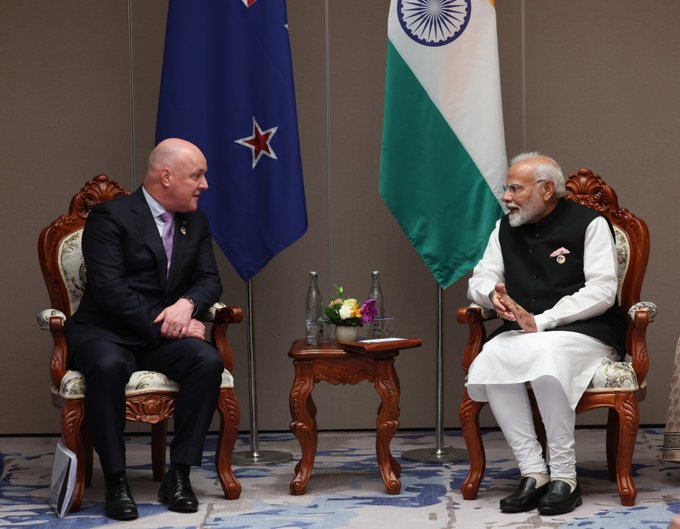
The India–New Zealand FTA is designed to re-architect supply chains, not deliver a one-time pricing bump. Zero duty changes procurement math immediately, but the real impact compounds over time—as buyers lock in partners, co-develop products, and scale production with confidence.
What makes this shift durable:
- Policy-backed certainty: Businesses can plan multi-year sourcing without tariff volatility.
- Manufacturing-first focus: Engineered goods, components, and assemblies—not just commodities—sit at the core of trade growth.
- Supply-chain resilience: Diversification away from single-country dependency is structurally enabled.
- Capacity alignment: India’s scale meets New Zealand’s need for flexible volumes and customization.
For New Zealand companies, this means predictable costs and reliable capacity. For Indian manufacturers and MSMEs, it means repeat demand, higher export maturity, and global credibility.
What Businesses Should Do Before the FTA Is Implemented (2025–2026)
Early movers will capture outsized gains. A practical, pre-implementation checklist:
- Map FTA eligibility: Align HS codes and rules of origin for priority SKUs.
- Shortlist suppliers now: Validate quality, compliance, and communication before demand spikes.
- Run pilot orders: De-risk production, timelines, and specifications.
- Model zero-duty pricing: Lock margins and retail pricing scenarios ahead of launch.
- Secure capacity: Reserve tooling and production slots for scale-up.
Companies that wait until implementation risk capacity constraints and higher competition for the same suppliers.
FAQs: India–New Zealand FTA, Zero-Duty Trade & Manufacturing Sourcing
It means New Zealand importers will pay no customs duty on eligible Indian-manufactured goods. This directly lowers landed costs, improves margins, and makes India more competitive than suppliers from countries without an FTA—especially for manufacturing and engineered products.
The FTA covers 100% of Indian exports, including manufactured goods such as CNC-machined parts, sheet metal components, injection-molded plastics, auto components, industrial assemblies, electrical parts, and consumer products—subject to standard rules of origin.
In many categories, yes. With zero-duty access, India’s cost advantage increases significantly—especially for custom manufacturing, low-to-mid volumes, and precision parts, where China and SEA often carry higher MOQs or rising costs.
The safest approach is to:
- Start with verified, export-ready suppliers
- Run pilot orders before scaling
- Ensure quality standards and documentation are aligned
- Work with sourcing platforms that manage vetting, communication, and execution
This reduces quality, timeline, and compliance risk.
Common risks include supplier reliability, quality inconsistency, and communication gaps. These are avoided by:
- Using vetted manufacturers
- Setting clear specifications and tolerances
- Running controlled trial orders
- Centralising sourcing through a managed platform
FTA access reduces cost risk—but execution discipline remains critical.
Yes. In fact, SMEs benefit the most. Zero duty reduces entry barriers, and India’s manufacturing ecosystem supports flexible volumes, customization, and gradual scale-up—ideal for growing New Zealand businesses.
Now. Companies that prepare before 2026 can:
- Validate suppliers early
- Lock pricing and capacity
- Scale immediately once zero-duty trade begins
Late movers risk higher competition and limited supplier availability.
Typically, buyers will need:
- A valid certificate of origin
- Correct HS code classification
- Standard import/export documentation
Working with experienced sourcing partners helps ensure compliance from day one.
Manufyn connects New Zealand buyers with verified Indian manufacturers, manages RFQs and supplier matching, supports pilot orders, and enables scalable sourcing—helping companies convert FTA benefits into real cost savings and reliable supply.
Independent sourcing often leads to trial-and-error, delays, and quality risk. Manufyn provides:
- Pre-vetted suppliers
- Manufacturing expertise across key sectors
- Faster onboarding and execution
- A single sourcing interface built for FTA-led trade
This makes India sourcing faster, safer, and more predictable.
Sourcing CNC, sheet metal, injection molding, or industrial components from India?
Zero-duty access changes pricing—but only if suppliers are export-ready.
Get matched with verified manufacturers on Manufyn.
Connect With Manufyn