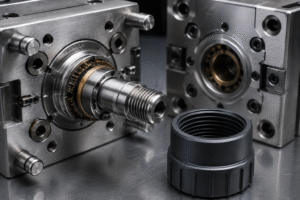
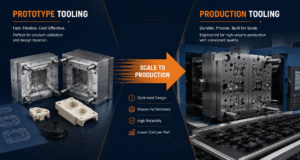
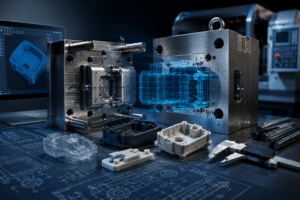
Manufyn analyzes material flow to prevent filling defects.
(Material Selection, Performance & Manufacturing Considerations)
Material selection is one of the most critical decisions in injection molding, as it directly influences part performance, durability, manufacturability, tooling cost, and long-term production stability. While tooling and processing parameters can be optimized later, the choice of material sets the foundation for how a part will behave during molding and throughout its lifecycle.
This guide focuses on advanced material selection for injection molding, explaining how different plastic materials perform, how they are classified, and how early material decisions impact real manufacturing outcomes. The objective is to help engineers and decision-makers choose materials that balance performance, cost, and scalability.
Material decisions made early reduce risk later.
Explore Material Selection Guidance
Why Material Selection Matters in Injection Molding
In injection molding, material selection goes far beyond choosing a plastic that “works.” Each material behaves differently under heat, pressure, and cooling, which directly affects dimensional stability, surface quality, cycle time, and rejection rates. A material that performs well in theory may fail in production if its behavior is not aligned with part geometry, tolerance requirements, or volume expectations.
Material choice influences several critical aspects of injection molding. It determines how easily the plastic flows into the mold cavity, how much it shrinks during cooling, how resistant it is to heat or chemicals, and how well it maintains strength under load. It also affects tooling decisions, as some materials accelerate tool wear or require specific surface finishes and processing windows.
Many injection molding issues—such as warpage, sink marks, brittle failure, or inconsistent part quality—can often be traced back to material decisions made early in the project. Changing the material after tooling is developed can be expensive and time-consuming, which is why material feasibility should be evaluated before committing to mold design or large-scale production.
From a commercial perspective, material selection also impacts cost predictability and supply stability. Availability, price fluctuation, recyclability, and compliance requirements all play a role in long-term manufacturing planning.
If you are evaluating materials for a new part or considering a change from an existing resin, early clarity helps avoid redesign and retooling.
How Injection Molding Materials Are Classified
Injection molding materials are typically classified based on their performance characteristics, cost, and application suitability. Understanding these classifications helps narrow down material options early and prevents over-engineering or under-specifying parts.
The most common classification groups used in injection molding are commodity plastics, engineering plastics, and high-performance plastics. In addition, materials are often categorized as filled or unfilled, depending on whether reinforcements or additives are used.
Commodity plastics are widely used for high-volume, cost-sensitive applications where moderate mechanical performance is acceptable. Materials such as polypropylene (PP) and polyethylene (PE) fall into this category and are commonly used in consumer goods, packaging, and non-structural components.
Engineering plastics offer higher mechanical strength, better thermal resistance, and improved dimensional stability compared to commodity plastics. Materials like ABS, Nylon (PA), Polycarbonate (PC), and Acetal (POM) are typically selected for parts that experience load, impact, or repeated use in industrial and consumer products.
High-performance plastics are used in demanding environments involving high temperatures, aggressive chemicals, or long service life. These materials are generally more expensive and are selected only when standard engineering plastics cannot meet application requirements.
Another important distinction is between filled and unfilled materials. Fillers such as glass fibers or minerals are added to improve stiffness, strength, and dimensional stability. However, filled materials also introduce trade-offs, including reduced surface finish quality, increased tool wear, and more complex processing behavior.
Selecting the right material class early helps balance performance, cost, and manufacturability.
Get Help Shortlisting the Right Material Class
Key Material Properties That Matter in Injection Molding
Once materials are classified, the next step is understanding which material properties directly influence injection molding performance and part behavior. Not all properties are equally important for every application, which is why material selection must be application-driven rather than specification-driven.
Mechanical strength and impact resistance determine how well a part withstands load, shock, and repeated use. These properties are especially important for structural components, enclosures, and mechanical assemblies.
Thermal resistance, often measured by heat deflection temperature (HDT), defines how well a material maintains its shape under elevated temperatures. This becomes critical for parts exposed to heat sources, electrical components, or outdoor environments.
Electrical insulation properties are essential for components used in electrical and electronic applications, where leakage, tracking, or breakdown can lead to functional failure.
Chemical resistance affects how a part performs when exposed to oils, fuels, cleaning agents, or environmental contaminants. A material that degrades chemically may fail prematurely even if its mechanical properties are adequate.
Wear and friction behavior matters for moving parts, snap fits, and mating components where repeated contact occurs.
Aesthetic and surface finish capability influences whether a part can achieve the required visual quality, texture, or color consistency without secondary finishing operations.
Finally, cost and availability at scale play a major role in long-term production planning. A technically ideal material may not be commercially viable if supply is inconsistent or pricing is unstable.
Discuss Material Trade-offs with an Engineer
Material properties should always be evaluated in context, not in isolation.
Common Injection Molding Materials and Their Applications
Selecting the right material for injection molding is a balance between mechanical performance, environmental resistance, manufacturability, surface quality, and long-term cost. While hundreds of plastic grades exist, a relatively small set of materials accounts for the majority of injection molded components used across consumer, industrial, electrical, automotive, and medical products. Understanding how these materials behave in real manufacturing conditions, not just datasheets, is critical to avoiding part failure, tooling issues, and post-production surprises.
-
ABS (Acrylonitrile Butadiene Styrene)
ABS is one of the most widely used engineering plastics in injection molding due to its balanced combination of strength, toughness, and surface finish capability. It offers good impact resistance, reasonable heat performance, and excellent aesthetic properties, making it a preferred choice for visible and consumer-facing components.
From a manufacturing perspective, ABS flows well, fills complex geometries reliably, and responds predictably during cooling. This makes it suitable for parts with fine details, textured surfaces, and cosmetic requirements. ABS also accepts secondary operations such as painting, plating, and laser marking very well.
Typical applications include:
- Consumer electronics housings and enclosures
- Appliance covers and panels
- Automotive interior components
- Industrial equipment housings
ABS is often selected when appearance, dimensional control, and impact resistance are more important than extreme temperature or chemical resistance.
-
Polypropylene (PP)
Polypropylene is a lightweight, flexible, and chemically resistant plastic that is extensively used in high-volume injection molding applications. Its ability to withstand repeated flexing without failure makes it particularly well-suited for living hinges and snap-fit components.
From a cost and scalability standpoint, PP is attractive due to its low density and material cost. However, it exhibits higher shrinkage compared to many engineering plastics, which must be accounted for during design and tooling. Surface finish is generally more utilitarian than aesthetic, although textured finishes are commonly used to mask flow lines.
Typical applications include:
- Living hinges and flip-top closures
- Automotive under-hood and interior parts
- Chemical containers and caps
- Flexible clips and enclosures
Polypropylene is often chosen when fatigue resistance, chemical stability, and cost efficiency are key requirements.
-
Nylon (Polyamide – PA6 / PA66)
Nylon is a high-strength engineering plastic known for its excellent mechanical performance, wear resistance, and thermal stability. It is commonly used for load-bearing and functional components where durability and strength are critical.
One of Nylon’s key advantages is its ability to replace metal in many applications, reducing weight while maintaining performance. However, Nylon absorbs moisture from the environment, which can affect dimensions and mechanical properties over time. This behavior must be considered during part design and tolerance definition.
Typical applications include:
- Structural brackets and housings
- Automotive engine bay components
- Gears, bushings, and mechanical parts
- Industrial and electrical components
Nylon is well-suited for demanding environments but requires careful material conditioning and design consideration to ensure long-term stability.
-
Polycarbonate (PC)
Polycarbonate is valued for its exceptional impact resistance, clarity, and dimensional stability. It is one of the strongest transparent plastics available and is often selected when both strength and visibility are required.
From a processing standpoint, PC requires higher molding temperatures and tighter process control compared to ABS or PP. However, when processed correctly, it delivers highly consistent parts with excellent mechanical integrity.
Typical applications include:
- Transparent covers and protective guards
- Optical components and light diffusers
- Electrical enclosures and safety housings
- High-impact consumer and industrial parts
Polycarbonate is commonly used in applications where safety, visibility, and toughness must coexist.
-
Acetal (POM – Polyoxymethylene)
Acetal is a precision engineering plastic characterized by low friction, high stiffness, and excellent dimensional stability. It is particularly suitable for components involving sliding motion, tight tolerances, and repeated mechanical interaction.
POM machines and molds exceptionally well, allowing for accurate reproduction of fine features. It also exhibits low moisture absorption, making it more dimensionally stable than Nylon in humid environments.
Typical applications include:
- Precision gears and mechanical components
- Clips, latches, and snap-fit assemblies
- Bearings and low-friction parts
- Mechanical linkages and moving assemblies
Acetal is often selected when dimensional accuracy and mechanical repeatability are more important than cosmetic appearance.
-
Glass-Filled and Reinforced Plastics
Glass-filled plastics are created by adding glass fibers or mineral fillers to base polymers such as Nylon, PP, or PBT. These reinforcements significantly improve stiffness, strength, and dimensional stability, especially in high-load or high-temperature environments.
While glass-filled materials reduce shrinkage and improve structural performance, they introduce trade-offs such as increased tool wear, directional strength variation, and reduced surface finish quality. These materials require careful gating, orientation control, and tooling design.
Typical applications include:
- Structural automotive and industrial components
- Electrical housings requiring rigidity
- Parts exposed to heat and mechanical load
- Metal replacement applications
Glass-filled plastics are typically used where performance outweighs cosmetic requirements.
Choosing the Right Material Is an Engineering Decision
There is no universally “best” injection molding material. The right choice depends on how the part will be used, the environment it will operate in, the volume it will be produced at, and the tolerance expectations.
Many manufacturing issues — including warpage, excessive shrinkage, brittle failure, or cosmetic rejection — are not tooling problems but material mismatch problems. This is why material selection should be treated as a core engineering decision rather than a procurement afterthought.
Material Selection Based on Application Requirements
Material selection in injection molding should always begin with how and where the part will be used, not with what material is popular or inexpensive. A plastic that performs exceptionally well in one application may fail quickly in another if the operating environment, mechanical loads, or lifecycle expectations are different.
This section breaks down material selection by application type, helping engineers and product teams align functional requirements with the right material characteristics from the start.
-
Consumer Products and Enclosures
Consumer-facing products place strong emphasis on appearance, tactile quality, and dimensional consistency, often alongside moderate mechanical requirements. Materials selected for these applications must mold cleanly, accept textures or finishes well, and maintain consistent color across large production runs.
ABS is commonly used for consumer housings due to its balance of impact resistance and surface finish quality. Polycarbonate is selected when higher impact resistance or transparency is required, such as in protective covers or visible structural elements. For cost-sensitive, high-volume products where flexibility is acceptable, polypropylene may also be considered.
Key considerations for consumer applications include:
- Surface finish and cosmetic defect sensitivity
- Color consistency across batches
- Dimensional stability for snap-fits and assemblies
- Scalability for mass production
Material decisions here directly affect brand perception and customer experience.
-
Industrial and Mechanical Components
Industrial components are typically designed for function and durability, often operating under mechanical load, vibration, or repeated use. In these cases, strength, wear resistance, and dimensional stability outweigh cosmetic considerations.
Nylon (PA6 or PA66) is frequently selected for structural brackets, load-bearing housings, and mechanical parts due to its strength and thermal performance. Acetal (POM) is preferred for precision components such as gears, levers, and sliding parts where low friction and tight tolerances are required. Glass-filled materials are often used when stiffness and metal replacement are key objectives.
Important factors for industrial parts include:
- Load-bearing capability and fatigue resistance
- Wear behavior under repeated motion
- Tolerance retention over time
- Compatibility with lubrication or contact surfaces
Selecting the wrong material in industrial applications often results in premature failure rather than visible defects.
-
Electrical and Electronics Applications
Electrical and electronic components introduce additional requirements related to insulation, heat resistance, and safety compliance. Materials used in these applications must maintain electrical properties under thermal stress and prolonged use.
Plastics such as ABS, Polycarbonate, and specialized electrical-grade materials are commonly used for enclosures, connectors, and switchgear components. For higher-temperature or load-bearing electrical parts, glass-filled or reinforced materials may be required to maintain structural integrity.
Key considerations include:
- Electrical insulation and tracking resistance
- Heat deflection temperature
- Flame retardancy and compliance standards
- Dimensional stability around inserts and terminals
Material selection here directly impacts safety and regulatory compliance, making early validation essential.
-
Automotive and Mobility Applications
Automotive and mobility components face some of the most demanding operating conditions, including temperature variation, vibration, chemical exposure, and long service life. Materials used in these applications must perform consistently over time while meeting strict quality and safety standards.
Nylon, glass-filled plastics, and reinforced polymers are commonly used for under-the-hood components, brackets, housings, and structural elements. For interior components where aesthetics matter, ABS or PC blends may be selected.
Critical factors include:
- Resistance to heat, oils, and fuels
- Long-term mechanical stability
- Weight reduction compared to metal
- Compliance with automotive standards
Material choice in automotive applications often balances performance, cost, and weight reduction goals.
-
Medical and Regulated Applications
Medical and regulated applications require materials that meet strict compliance, cleanliness, and traceability requirements. In addition to mechanical and thermal performance, these materials must be suitable for sterilization and regulatory approval.
Commonly used materials include medical-grade ABS, Polycarbonate, and specialized polymers approved for contact with patients or medical equipment. Even minor material substitutions in these applications require revalidation, making early material decisions critical.
Key considerations include:
- Biocompatibility and regulatory approval
- Sterilization resistance
- Consistency and traceability
- Risk mitigation through proven material grades
In regulated industries, material selection errors are expensive and time-consuming to correct.
-
Material Selection Is Context-Driven
There is no universal material that works across all applications. The correct choice emerges only when performance requirements, environment, manufacturing constraints, and lifecycle expectations are evaluated together.
Material selection should therefore be treated as a core engineering decision, not a late-stage sourcing activity.
If your application spans multiple requirements or uncertain conditions
early material evaluation can prevent redesign and tooling changes later.
How Material Choice Affects Manufacturability
Material selection in injection molding does not only determine how a part performs in use; it directly influences how reliably, efficiently, and consistently the part can be manufactured. Many production challenges—such as long cycle times, high scrap rates, tooling wear, or unstable dimensions—are often consequences of material behavior rather than tooling errors.
Understanding how material choice affects manufacturability allows teams to anticipate production risks early and design parts that are not only functional, but also scalable and cost-effective.
-
Flow Behavior and Fill Consistency
Different plastics flow very differently under injection pressure. Materials with lower viscosity fill complex geometries more easily, while higher-viscosity or reinforced materials require higher pressures and more careful gating strategies.
Poor flow behavior can result in short shots, weld lines in critical areas, or uneven packing. Materials that appear suitable based on mechanical properties alone may struggle to fill thin walls, deep ribs, or intricate features consistently across cavities.
From a manufacturing perspective, predictable flow behavior simplifies process setup and improves repeatability across production batches.
-
Shrinkage and Dimensional Stability
All injection molded materials shrink as they cool, but the magnitude and predictability of shrinkage vary significantly by material. Some plastics shrink uniformly and stabilize quickly, while others continue to change dimensions over time or under environmental exposure.
Materials with high or uneven shrinkage increase the risk of dimensional variation, assembly misfit, and tolerance stack-up issues. Reinforced materials often reduce overall shrinkage but introduce directional behavior that must be carefully managed.
Stable shrinkage behavior is especially important for high-volume production, where even small dimensional drift can result in large numbers of rejected parts.
-
Cycle Time and Production Efficiency
Material properties such as melt temperature, cooling rate, and crystallization behavior directly affect cycle time. Materials that require higher processing temperatures or longer cooling periods naturally increase cycle time, impacting throughput and part cost.
In high-volume programs, even a small increase in cycle time can significantly affect overall production economics. Selecting a material that balances performance with reasonable cycle time is often more cost-effective than choosing the highest-performing plastic available.
-
Tool Wear and Maintenance Requirements
Some materials are inherently more abrasive than others. Glass-filled and mineral-filled plastics, while offering superior stiffness and strength, accelerate tool wear and increase maintenance requirements.
Unfilled materials generally extend tool life and reduce polishing and refurbishment frequency. This trade-off between performance and tooling cost must be considered early, especially for long-term, high-volume production programs.
Material choice directly impacts tooling investment, maintenance schedules, and long-term manufacturing stability.
-
Scrap Risk and Process Stability
Certain materials have narrower processing windows, making them more sensitive to temperature variation, moisture content, or processing inconsistencies. These materials may produce excellent parts under ideal conditions but show higher scrap rates if process control is not tightly maintained.
From a manufacturability standpoint, materials with broader processing windows are often preferred for scalable production, as they reduce dependency on constant micro-adjustments and operator intervention.
-
Manufacturability Is a Strategic Consideration
A material that performs perfectly in testing but creates instability in production is rarely the right choice. Manufacturability should be evaluated alongside mechanical and environmental performance, not after tooling is complete.
Material decisions that account for flow behavior, shrinkage stability, cycle time, tool wear, and process robustness result in lower risk, lower cost, and more predictable production outcomes.
If you are balancing performance requirements with production scalability
an early manufacturability review can provide valuable clarity.
When Should You Re-evaluate Material Selection?
Material selection in injection molding is not always a one-time decision. While the initial choice may be correct for early prototypes or pilot runs, real-world conditions often introduce new constraints that require a careful reassessment. Recognizing when to re-evaluate material selection can prevent long-term manufacturing inefficiencies, quality issues, and cost overruns.
One of the most common triggers for material re-evaluation is design evolution. As products move from concept to detailed engineering, changes in wall thickness, geometry, or functional features can significantly alter how a material behaves during molding. A plastic that worked well in an early design may no longer meet dimensional or performance requirements after design refinement.
Another frequent trigger is scaling from prototype to mass production. Materials that perform acceptably at low volumes may introduce instability, higher scrap rates, or excessive cycle times when production is ramped up. At higher volumes, even small inefficiencies become costly, making manufacturability and process robustness more critical than during early development.
Cost pressure is also a major factor. Fluctuations in raw material pricing, supply chain constraints, or competitive cost targets may require evaluation of alternative materials that offer similar performance at lower or more stable costs. In such cases, material substitution must be evaluated carefully to avoid introducing new risks related to shrinkage, strength, or surface quality.
Material re-evaluation is also necessary when field performance feedback reveals issues such as cracking, wear, discoloration, or dimensional drift over time. These problems often indicate that the original material selection did not fully account for environmental exposure, load conditions, or lifecycle expectations.
Finally, changes in regulatory or compliance requirements can necessitate material reassessment, particularly in electrical, automotive, or medical applications. Updates to flame retardancy standards, environmental regulations, or material traceability requirements may limit the continued use of certain resins.
Re-evaluating material selection does not always mean changing the material. In many cases, it involves confirming that the current choice remains valid under updated conditions or making minor adjustments such as selecting a different grade within the same material family.
If your part has changed, your volumes have increased, or your cost targets have shifted
it is often worth reassessing whether the original material choice still supports your goals.
How Manufyn Helps with Material Selection for Injection Molding
Material selection is most effective when it is treated as an engineering exercise, not a catalogue decision. At Manufyn, material selection is approached by evaluating how the part will function, how it will be manufactured, and how it will scale over time. The objective is not to recommend the most advanced plastic, but the most appropriate material for the application, volume, and lifecycle.
Manufyn supports material selection by starting with a clear understanding of part requirements, including mechanical loads, operating environment, tolerance expectations, surface finish needs, and production volumes. This application-led approach ensures that material recommendations are grounded in real usage conditions rather than theoretical performance.
During early design stages, material feasibility is reviewed alongside part geometry to identify potential risks related to flow behavior, shrinkage tendency, dimensional stability, and surface quality. This allows potential issues to be addressed before tooling decisions are finalized, reducing the likelihood of costly redesign or rework later in the project.
For projects transitioning from prototype to production, Manufyn helps evaluate whether the existing material choice remains suitable at scale. This includes assessing cycle time impact, scrap risk, tool wear implications, and long-term cost stability. In cases where alternative materials may offer better manufacturability or commercial viability, trade-offs are clearly outlined to support informed decision-making.
Manufyn also supports material changes when required due to cost pressure, supply constraints, or performance feedback from the field. Rather than treating material substitution as a simple swap, the impact on dimensions, aesthetics, tooling, and process stability is evaluated holistically.
This structured approach allows teams to move forward with confidence, knowing that material decisions are aligned with both engineering intent and manufacturing reality.
If you are evaluating materials for a new part or reassessing an existing design
a structured review can provide clarity without committing to changes prematurely.
Conclusion
Material selection is one of the most influential decisions in injection molding, shaping not only how a part performs, but also how reliably it can be manufactured at scale. While tooling and process parameters can be adjusted later, the material choice defines the boundaries within which manufacturing must operate.
By understanding how materials are classified, how their properties influence part behavior, and how application requirements drive material suitability, teams can avoid many common issues related to dimensional instability, cosmetic defects, and production inefficiency. Treating material selection as a core engineering decision rather than a late-stage sourcing task leads to more predictable outcomes and smoother scale-up.
An effective material strategy balances performance, manufacturability, cost, and long-term stability. When these factors are evaluated together, material selection becomes a strength rather than a risk in injection molding projects.
If material selection is still an open question for your project
early guidance can help reduce uncertainty and prevent avoidable changes later.
Frequently Asked Questions (FAQs)
How do I choose the right material for injection molding?
Choosing the right material for injection molding depends on how the part will be used, the environment it will operate in, and the expected production volume. Factors such as mechanical strength, heat resistance, chemical exposure, surface finish requirements, and long-term dimensional stability should be evaluated together. Material selection is most effective when done early, before tooling decisions are finalized.
What is the most commonly used material in injection molding?
ABS and polypropylene are among the most commonly used materials in injection molding due to their versatility, availability, and cost effectiveness. However, the “most suitable” material always depends on application requirements. Engineering plastics like Nylon, Polycarbonate, and Acetal are often selected when higher strength or performance is required.
Are glass-filled plastics always better than unfilled plastics?
Glass-filled plastics are not always better. While they offer improved stiffness and reduced shrinkage, they can increase tool wear, reduce surface finish quality, and introduce directional strength variation. Unfilled plastics are often preferred for aesthetic parts and applications where appearance and processing stability are critical.
Can material be changed after injection molding tooling is made?
Material changes after tooling is made are possible but should be approached carefully. Changing materials can affect shrinkage, flow behavior, surface finish, and dimensional accuracy, which may require tooling modifications. This is why material feasibility should ideally be confirmed before mold design is finalized.
How does material choice affect production cost in injection molding?
Material choice influences production cost through raw material pricing, cycle time, scrap rates, tooling wear, and long-term process stability. A lower-cost material may increase rejection or tooling maintenance costs, while a slightly higher-cost material may improve consistency and reduce overall manufacturing risk.
When should material selection be re-evaluated in injection molding projects?
Material selection should be re-evaluated when the part design changes, production volumes increase, field performance issues arise, or cost and supply constraints change. Re-evaluation does not always mean changing the material; it often confirms whether the original choice remains valid under new conditions.