Manufacturers today face rising pressure to produce faster, reduce waste, and maintain near-zero downtime. Traditional optimization methods are no longer enough. This is where Digital Twins — virtual replicas of physical machines, processes, or entire factories — are becoming one of the most powerful tools in modern manufacturing.
Digital twins allow companies to simulate, monitor, and optimize production in real time, long before making a single physical change. From predictive maintenance to rapid design validation, this technology is reshaping how manufacturers operate, scale, and stay competitive in an Industry 4.0 world.
As global manufacturing shifts toward automation and data-driven decision-making, digital twins are emerging as a must-have, not a luxury.
What Is a Digital Twin (In Real Manufacturing Terms)?

A digital twin is a virtual replica that mirrors the actual behavior, performance, and condition of a physical asset. Unlike traditional simulations, which use fixed assumptions, a digital twin continuously updates itself using real-time data collected from IoT sensors and machine controllers across the production floor.
Imagine being able to “see” what every machine is doing without standing next to it, or being able to test a process change digitally before touching the actual assembly line. A digital twin makes that possible.
In a manufacturing environment, a digital twin allows you to:
- Monitor machine health in real time: vibration, temperature, energy consumption, speed, torque, output quality — all visualized instantly.
- Predict failures before they happen: using historical data and AI models.
- Simulate production scenarios: like changing cycle times, adjusting line speeds, altering layouts, or adding new machines.
- Conduct digital prototyping: testing new designs and products in a virtual environment.
- Optimize processes continuously: because the system keeps learning and updating based on real-world performance.
Instead of reacting to issues after they occur, manufacturers gain the power to anticipate problems and optimize efficiency at every stage — from production planning to execution.
Why Digital Twins Matter: The Shift from Guesswork to Precision
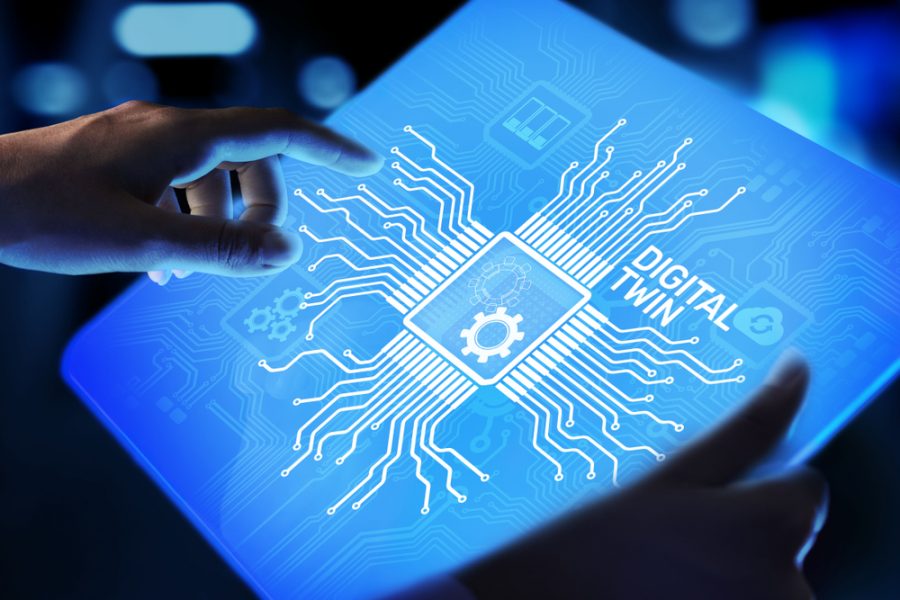
Digital twin technology is gaining adoption because it directly tackles the biggest challenges manufacturers face today: downtime, inefficiency, wastage, and inconsistent quality.
1. Real-Time Visibility — Without Being on the Factory Floor
Plant managers no longer need to walk between machines or rely on manual logs to understand what’s happening. A digital twin provides a complete, real-time operational picture, accessible from anywhere. This visibility uncovers bottlenecks, abnormal patterns, and workflow disruptions instantly — enabling faster and more accurate decision-making.
2. Predictive Maintenance Becomes Reality
Most manufacturers still use scheduled or reactive maintenance. Both are costly. Digital twins eliminate guesswork by predicting failures before they occur. When a motor overheats, a bearing wears out, or a conveyor begins lagging, the digital twin identifies the anomaly early — helping maintenance teams intervene at the right moment. This alone can reduce unplanned downtime by 20–40%.
3. Wastage and Rework Drop Dramatically
Because digital twins track every micro-interaction within a process, manufacturers can pinpoint exactly where defects originate. Whether it’s improper temperature control, uneven pressure, tooling errors, or inconsistent raw material quality, the system highlights the root cause and lets teams correct it faster.
4. Faster Product Development and Prototyping
Instead of spending weeks building physical prototypes, engineers can test hundreds of variations digitally. Digital twins help simulate stress, load, thermal behavior, material interactions, and assembly performance, dramatically accelerating the design-validation cycle.
5. Higher Manufacturing Efficiency at Lower Operating Costs
With accurate, real-time insights into performance, manufacturers can adjust workflows, balance line loads, optimize cycle times, and improve throughput. Combined with predictive maintenance and reduced wastage, digital twins consistently drive measurable gains in OEE (Overall Equipment Effectiveness).
Key Applications of Digital Twins in Modern Manufacturing
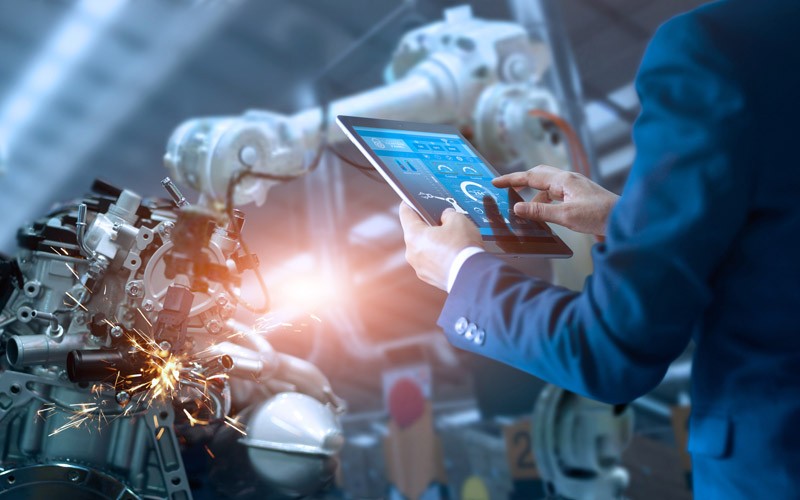
The impact of digital twin technology becomes even more powerful when you examine its real-world applications across different stages of manufacturing. This is not a futuristic concept anymore, global manufacturers in automotive, electronics, pharmaceuticals, FMCG, and heavy engineering are already leveraging digital twins to streamline operations and boost profitability.
1. Predictive Maintenance That Cuts Downtime
Unplanned downtime is one of the most expensive problems in manufacturing. A single machine failure can halt an entire production line and result in massive losses. Digital twins create a predictive maintenance environment by constantly analyzing the condition of machines and identifying early signs of failure.
By monitoring vibration patterns, power fluctuations, temperature spikes, lubrication inconsistencies, and other micro-level data points, digital twins can warn maintenance teams well before a part breaks. This ensures repairs happen at the right time, not too early, not too late. The result is lower maintenance cost and a significant increase in production uptime.
2. Process Optimization and Waste Reduction
Manufacturers deal with waste in many forms, material waste, time waste, energy waste, and manpower inefficiencies. Digital twins give a complete, granular view of every stage of the production process. This helps teams identify bottlenecks, uneven cycle times, poorly calibrated machines, or redundant steps that may be slowing down output.
Because every change can be tested virtually, manufacturers can experiment with new process flows, adjust machine settings, balance workloads, or improve resource allocation without disrupting the factory floor. This ability to optimize continuously leads to better quality, faster throughput, and drastically reduced wastage.
3. Improved Product Design and Faster Prototyping
Design and R&D teams often spend months iterating prototypes. But with a digital twin, they can simulate performance, stress behavior, temperature response, durability, and other key design factors in minutes. Instead of producing multiple physical samples, engineers can rapidly test digital prototypes at scale.
This not only speeds up the development cycle but also improves the quality of the final product. The design team can detect issues early, test multiple variations, and bring products to market significantly faster — giving manufacturers a competitive edge.
4. Real-Time Quality Control
Quality issues often arise from subtle changes in material properties, environmental conditions, or machine settings. Digital twins help detect quality deviations as soon as they occur. By comparing real-time production data with the ideal digital model, manufacturers can instantly identify errors and correct them before entire batches are wasted.
This real-time quality control approach ensures consistency, reduces rework, and enhances customer satisfaction — especially in industries where precision is non-negotiable.
5. Supply Chain and Production Line Simulation
Advanced manufacturers use digital twins to simulate complete production lines or even entire supply chains. This allows them to predict how changes — like increased demand, supply delays, workforce shortages, or machine upgrades — will impact production.
Instead of reacting to crises, digital twins allow companies to build resilient, future-proof supply chain strategies. They can test different scenarios and choose the most efficient solution long before implementing it.
Digital Twins, AI & IoT: The Industry 4.0 Power Trio
Digital twins are powerful on their own — but when combined with IoT sensors and AI analytics, they become a full-fledged smart manufacturing ecosystem capable of continuous learning, prediction, and optimization.
IoT Sensors: The Eyes and Ears of the Digital Twin
IoT sensors installed on machines capture real-time data such as temperature, pressure, vibration, torque, speed, environmental conditions, and product measurements. This data flows into the digital twin, ensuring the virtual model always reflects real-world conditions.
Without IoT, a digital twin is just a static model. With IoT, it becomes a living digital organism that’s constantly updated.
AI & Machine Learning: The Brain Behind Insights
AI analyses the massive amount of data generated by IoT sensors, identifying patterns, anomalies, and predictive insights. It can detect inefficiencies that humans may overlook and recommend the best course of action — whether it’s adjusting machine speed, predicting a failure, or optimizing energy consumption.
AI also enables continuous learning. As more data flows through the system, the digital twin becomes smarter and more accurate at predicting outcomes.
Digital Twin: The Control Center for Smart Manufacturing
The digital twin visualizes the entire ecosystem — giving manufacturers a unified, interactive view of operations through dashboards and simulations. Operators can monitor performance, run experiments, and make decisions based on real-time insights rather than assumptions.
When these three technologies work together, manufacturers can achieve:
- Adaptive automation
- Real-time optimization
- Accurate forecasting
- Data-driven planning
- Higher operational efficiency with lower costs
This integration is what makes digital twins one of the most valuable tools in the Industry 4.0 transformation journey.
Real-World Case Studies: How Digital Twins Deliver Measurable Results
Digital twins are no longer experimental — they are producing measurable ROI across global manufacturing giants. Here are a few real-world examples that show the true potential of this technology.
Case Study 1: Automotive Manufacturer Cuts Downtime by 30%
A leading automotive plant implemented digital twins across its stamping and assembly lines. By analyzing vibration and load data, the digital twins identified early-stage failures in robotic arms that previously went undetected. With predictive maintenance in place, unplanned downtime dropped by nearly 30%, saving millions in losses.
Case Study 2: FMCG Company Reduces Wastage by 22%
A major consumer goods manufacturer used digital twins to simulate mixing and packaging processes. AI-driven insights showed inconsistencies in raw material viscosity during certain temperature fluctuations. Adjusting machine parameters based on digital twin feedback reduced product wastage by 22% within three months.
Case Study 3: Heavy Engineering Firm Accelerates R&D by 40%
A heavy machinery manufacturer shifted from physical prototyping to digital twin simulations for new equipment. Engineers tested hundreds of virtual prototypes under varying stress and load levels, helping them finalize the design faster. This reduced the R&D cycle by 40% while improving product durability.
Case Study 4: Chemical Plant Improves Quality Control
By comparing real-time sensor data with its ideal digital twin, a chemical processing unit identified early deviations in pressure and thermal profiles. Corrective action was taken instantly, reducing defects and maintaining uniform product quality across batches.
These examples illustrate how digital twins drive significant, tangible improvements — from productivity and reliability to cost savings and innovation speed.
Challenges in Implementing Digital Twins — And How Manufacturers Can Overcome Them
While digital twins offer immense value, many manufacturers hesitate due to concerns around cost, complexity, and integration. Understanding these challenges — and knowing how to overcome them, is crucial for a successful digital transformation.
1. Integrating with Legacy Systems
Many manufacturing plants run on a mix of old and new technologies. Connecting outdated PLCs and analog machines to IoT sensors can feel overwhelming.
Solution:
Start with a small pilot line. Use IoT retrofitting devices that allow older machines to transmit real-time data without requiring full replacements. Gradually scale to additional lines once the model proves its value.
2. Data Overload and Lack of Analytics Expertise
Digital twins generate massive volumes of data. Without the right analytics, this data becomes noise instead of value.
Solution:
Adopt platforms with built-in AI and machine learning dashboards. Choose vendors who provide data interpretation support or integrate with existing MES/SCADA dashboards to simplify insights.
3. High Initial Investment Concerns
Manufacturers often worry about the upfront cost of sensors, IoT infrastructure, and integration.
Solution:
Most digital twin providers now offer modular, scalable pricing, allowing manufacturers to start small with one asset or one line. Once ROI is demonstrated (often within months), expanding becomes far easier and more cost-effective.
4. Cybersecurity Risks
Real-time data flow between machines and cloud systems raises questions about security.
Solution:
Use secure, encrypted IoT gateways, private cloud setups, and role-based access. Cybersecurity frameworks and audits ensure the entire digital twin environment remains protected.
5. Skill Gaps in Workforce
Adopting new technology often requires upskilling operators and maintenance teams.
Solution:
Rolling out digital twins with hands-on training, visual dashboards, and guided analytics helps bridge the skill gap. Many manufacturers report that workers adapt quickly because digital twins make daily operations simpler.
Digital twin adoption isn’t just a technological upgrade, it requires a strategic approach. By addressing these challenges with the right partners and scalable execution, manufacturers can unlock transformative efficiency improvements.
How Manufyn Helps Manufacturers Implement Digital Twins Effectively
Implementing digital twins requires much more than sensors and software — it demands a strategic, end-to-end transformation partner who understands real shop-floor challenges. This is where Manufyn stands apart.
Manufyn enables manufacturers to adopt digital twin technology with speed, precision, and measurable ROI, combining deep industry expertise with advanced IoT, AI, and automation capabilities.
✔ End-to-End Digital Twin Deployment
From asset-level modeling to complete production line digitalization, Manufyn builds accurate, real-time digital replicas tailored to your plant’s unique processes. Every twin is engineered to deliver actionable insights, not just visual dashboards.
✔ IoT Sensor Integration & Retrofitting for Old Machines
Most factories rely on legacy equipment and replacing them isn’t always feasible.
Manufyn retrofits existing machines with IoT sensors, enabling them to transmit real-time data without operational disruption. This ensures 100% visibility, even across mixed-technology shop floors.
✔ AI-Powered Predictive Maintenance
Manufyn’s AI models analyze vibration, temperature, cycle times, tool wear, and power consumption to predict failures days or even weeks in advance. This reduces unplanned downtime, extends machine life, and significantly improves OEE.
✔ Real-Time Production Monitoring & Alerts
Manufyn consolidates all machine data into a centralized, intuitive dashboard. Manufacturers can monitor output, quality, cycle time deviations, tool wear, energy usage, and more from anywhere. Instant alerts notify teams when abnormalities occur, enabling quick corrective action.
✔ Process Simulation & Efficiency Optimization
With digital twins built on real-time data, Manufyn helps manufacturers simulate:
- cycle time adjustments
- new layout changes
- workload balancing
- raw material variations
- throughput improvement
This allows improvements to be tested digitally before implementation, reducing risk and cost.
✔ Scalable, Modular & Quick to Deploy
Unlike complex Industry 4.0 platforms that require months of setup, Manufyn’s architecture is modular, allowing manufacturers to start with one machine, one line, or one process and scale across the plant as results appear.
✔ Proven Results Across Industries
Manufacturers using Manufyn typically achieve:
- 20–40% reduction in unplanned downtime
- 10–25% improvement in throughput
- Up to 22% reduction in process wastage
- Faster decision-making with real-time visibility
These gains directly translate into higher profitability and competitive advantage.
Why Manufyn Is the Ideal Digital Twin Partner
Manufyn brings together deep manufacturing expertise and advanced Industry 4.0 technologies to deliver results that matter:
- Real-time shop floor visibility
- Predictive failure detection
- Process and energy optimization
- Digital-enabled workforce efficiency
- Data-driven operational excellence
Manufyn doesn’t just provide technology; it delivers a complete manufacturing transformation.
How to Get Started With Digital Twin Implementation

For many manufacturers, adopting digital twins can feel overwhelming — especially if they’re starting from legacy equipment or fragmented data systems. But the shift doesn’t have to be complicated. The most successful manufacturers follow a phased approach that delivers value early and scales smoothly across the plant.
1. Start With a Clear, Measurable Goal
Before choosing technology or platforms, define what you want to achieve.
Examples:
- Reduce downtime by 15%
- Improve OEE by 10 points
- Reduce energy consumption per batch
- Shorten production cycles
This ensures your digital twin is built around ROI, not experiments.
2. Begin With One Line, One Asset, or One Process
A full factory transformation isn’t necessary at the start. Smart manufacturers begin with a pilot deployment, such as:
- A CNC line
- A packaging area
- A high-wear machine
- A bottleneck workstation
A successful pilot sets the foundation for scaling confidently.
3. Integrate IoT Sensors and Connect Data Streams
Real-time data is the backbone of every digital twin. IoT sensors are used to capture:
- Vibration
- Temperature
- Energy consumption
- Cycle times
- Tool wear
- Machine idle time
Connecting these data points creates the live, breathing model that fuels predictive insights.
4. Build the Digital Twin Model and Run Simulations
Once the data starts flowing, a virtual replica of the machine or line is created. This allows operations teams to simulate different scenarios, adjusting cycle speed, machine parameters, or line balancing, before making changes on the shop floor.
5. Deploy AI Analytics for Predictive Insights
AI makes the digital twin truly intelligent. Predictive models help identify early-stage failures, process delays, and energy inefficiencies, allowing teams to intervene before issues escalate.
6. Scale Across the Plant Once ROI Is Proven
After a successful pilot, extend the digital twin to more machines, more lines, and eventually the full factory. This phased method ensures:
- Lower upfront investment
- Faster wins
- Easier training for teams
- Stronger adoption at the shop floor level
This is where partnering with a platform like Manufyn accelerates deployment, reduces complexity, and ensures measurable outcomes from day one.
Conclusion: Digital Twins Are the Future — And the Future Is Now
Digital twins are no longer an innovation reserved for large automation-driven factories. They have become a practical, high-impact tool that manufacturers of all sizes can implement to unlock efficiency, reliability, and operational excellence.
By bringing together real-time IoT data, AI-driven analytics, and powerful simulation capabilities, digital twins empower manufacturers to:
- Predict failures before they disrupt production
- Minimize downtime and maintenance costs
- Improve throughput and product quality
- Reduce wastage and energy consumption
- Accelerate design, prototyping, and decision-making
- Operate with confidence in an increasingly competitive market
Manufacturers who embrace digital twins today won’t just optimize their current operations — they’ll build smarter, more resilient factories prepared for tomorrow’s challenges.
This is the future of manufacturing. And with the right partner, it’s closer and more accessible than you think.
FAQs on Digital Twins in Manufacturing
A digital twin in manufacturing is a real-time virtual replica of a physical machine, production line, or entire plant. It mirrors actual operating conditions using data from IoT sensors, machine controllers, and software systems. This allows manufacturers to monitor performance, predict machine failures, simulate process changes, and optimize efficiency without interrupting production. Unlike traditional simulations, a digital twin continuously updates itself based on live shop-floor data, making it far more accurate and actionable.
Digital twins improve manufacturing efficiency by providing real-time visibility, predictive insights, and data-driven optimization. They help manufacturers reduce downtime through predictive maintenance, minimize wastage by identifying process bottlenecks, improve throughput by optimizing workflows, and enhance product quality through precise monitoring. With continuous analytics and simulations, digital twins enable faster decision-making and measurable improvements in Overall Equipment Effectiveness (OEE).
While digital twin technology may seem costly, most modern deployments are modular and scalable, allowing manufacturers to start small — with one asset or one production line — and expand gradually. The return on investment is often rapid due to reduced downtime, lower maintenance costs, improved efficiency, and faster prototyping cycles. Many manufacturers recover their investment within months, not years. Platforms like Manufyn also offer retrofitting options that keep implementation costs low by using existing machines.
A successful digital twin implementation typically requires IoT sensors, a secure data connectivity layer, an AI or machine-learning engine for analytics, and a visualization platform for monitoring and simulation. These components work together to collect real-time machine data, analyze it for performance patterns, and create a virtual model that evolves continuously. Platforms such as Manufyn combine all these layers into a unified solution, reducing complexity and accelerating deployment.
Yes. Digital twins can absolutely work with legacy machines. Modern IoT retrofitting devices allow older equipment — even those without built-in sensors — to send real-time data to the digital twin model. Manufyn specializes in connecting mixed shop floors with both old and new machines, ensuring full visibility without requiring costly equipment replacement. This makes digital twin adoption viable for manufacturers at every stage of digital transformation.
Digital twins are widely used across automotive, FMCG, pharmaceuticals, textiles, heavy engineering, chemicals, consumer electronics, and energy production. Any industry that relies on continuous production, high machine utilization, or complex processes can benefit from digital twins. They are especially effective in environments where even small inefficiencies or downtime can lead to substantial operational losses.
Most manufacturers begin seeing measurable ROI within the first 3–6 months. Predictive maintenance alone can reduce unplanned downtime by 20–40%, while process optimization improves throughput and reduces wastage. Faster prototyping, better scheduling, and improved workforce efficiency further accelerate returns. With a phased approach, companies achieve ROI quickly and can scale digital twins across more lines for compounding gains.
Manufyn provides end-to-end support — from IoT sensor integration and machine connectivity to dashboard setup, AI-driven analytics, and process simulation. The platform seamlessly connects legacy and modern machines, offering real-time monitoring, predictive insights, and digital twin modeling. Manufacturers get a unified system that boosts OEE, reduces downtime, improves quality, and optimizes energy usage. With fast deployment and modular scalability, Manufyn makes digital twin adoption accessible and ROI-driven.
Ready to improve your manufacturing efficiency with digital twins?
Book a Free Digital Twin Consultation with Manufyn
Learn how your plant can boost uptime, reduce waste, and unlock Industry 4.0 performance in weeks, not months.